Custom Deli Paper & Food Wrapping Paper: A 2026 Buyer's Guide
Custom deli paper is the quiet workhorse of food branding: it lines the basket, wraps the sandwich, and puts your logo in the customer's hands for a few cents per serving. It is also a category full of near-identical names. Deli paper, wax paper, greaseproof paper, parchment, butcher paper: suppliers use them loosely, and picking the wrong one means soggy baskets or a wrap that fails on hot food.
This guide sorts the paper types out, collects typical 2026 prices for custom food wrapping paper, and covers the decisions that matter before you order: sheet sizes, minimum quantities, food-contact questions to ask any supplier, and the honest case for when a sticker on plain paper beats printed paper entirely.
What Is Custom Deli Paper, and Which Paper Type Do You Need?
"Deli paper" is the umbrella term for food-grade sheets used to wrap, line, and serve. The label on the listing matters less than what the paper is actually made to do:
| Paper type | What it is | Heat and grease behavior | Typical uses |
|---|---|---|---|
| Dry wax / wax paper | Paper with a wax treatment | Good moisture barrier; wax can soften with high heat | Cold sandwiches, bakery counter sheets, basket liners |
| Greaseproof paper | Densely refined paper, usually uncoated | Resists oil soak-through; suited to warm holding, not oven use | Burgers, fries, pastries, tray and basket liners |
| Parchment | Silicone-treated paper | Heat-tolerant and nonstick | Baking, oven applications |
| Butcher / kraft sheets | Heavier uncoated paper | Little grease resistance unless treated | Dry goods, wrapping, presentation |
For most cafes, burger spots, delis, and bakeries, custom printed food wrapping paper means one of the first two rows. If you are choosing between greaseproof and parchment specifically, the differences are covered in detail in our greaseproof vs. parchment guide.
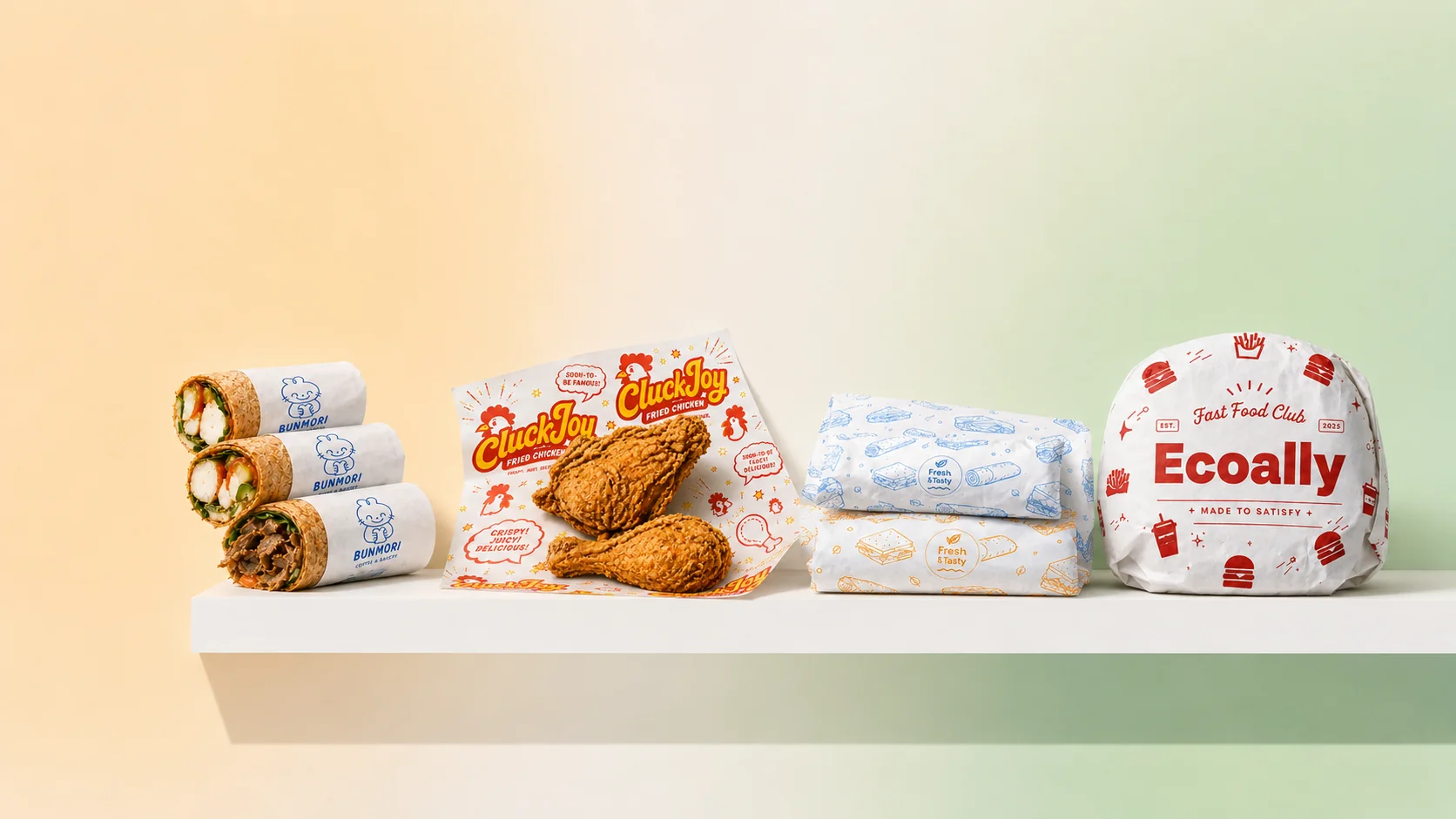
Ecoally's custom food wrapping paper and custom deli paper are printed on a 38 gsm uncoated greaseproof base in white or kraft, which covers the warm, oily jobs (burgers, fries, pastries) as well as dry wrapping.
How Much Does Custom Deli Paper Cost in 2026?
Surveying published US prices in August 2026, custom printed food wrapping paper falls into familiar tiers:
| Buying route | Typical 2026 pricing | Best for |
|---|---|---|
| Online short-run printing | Entry packs roughly $19–$110; small quantities land around $0.10–$0.75 per sheet | First orders, testing a design, low-volume food businesses |
| Mid-volume online printing | Roughly $0.05–$0.15 per sheet at 1,000–5,000 sheets | Food trucks and single locations reordering monthly |
| Bulk / factory-direct | Roughly $0.03–$0.10 per sheet at 10,000+ | Multi-location operations with stable artwork |
As a live example of the curve, Ecoally's custom food wrapping paper starts at 250 sheets around $0.61 per sheet and steps down to about $0.04 per sheet at 20,000 sheets, with the full tier table shown on the current product page.
The cost drivers are the same ones that govern all custom paper printing: quantity, number of ink colors and coverage, sheet size, and printing method. One extra factor is specific to food papers: the base stock itself. Greaseproof and treated papers cost more than plain kraft, so a listing that looks cheap may be quoting an untreated sheet that will not survive a basket of fries.
Standard Sizes for Deli Paper and Basket Liners
Custom food papers are usually sold in square and near-square sheets. Ecoally's current listings run from 6×6 in up to 20×20 in across eleven sizes, which maps to the common jobs like this:
| Sheet size | Typical use |
|---|---|
| 6×6 – 8×8 in | Cookies, pastries, small basket liners, cheese slips |
| 10×10 – 12×12 in | Sandwich wraps, burger wraps, standard basket liners |
| 12×16.5 – 15×15 in | Large wraps, tray liners, burritos and subs |
| 16×18 – 20×20 in | Full tray lining, oversized wraps, counter sheets |
The test worth doing before you order: wrap your actual best-seller in a plain sheet of the candidate size. A wrap needs enough paper to fold over itself and hold; a liner only needs to cover the basket with a modest overhang. Buying one size that does both jobs passably usually beats stocking two sizes early on.
Minimum Orders: What Counts as Small for Food Papers
Because food papers are consumed daily, minimums read differently than for other packaging. A cafe wrapping 60 sandwiches a day goes through roughly 1,800 sheets a month, so even a few thousand sheets is weeks of stock rather than a year of it.
- Entry packs (25–500 sheets) exist mainly for design testing and very low-volume sellers such as market-stall bakers.
- 250–2,000 sheets suits a single location proving out its branding. Ecoally's minimum is 250 sheets.
- 10,000+ sheets is where per-sheet prices get attractive, and where a busy shop realistically lands once the design is settled.
Run the consumption math before choosing a tier: sheets per day × trading days ≈ monthly burn. Order what you will use in three to six months. Food paper stores well flat and dry, but menus, logos, and health-driven layout changes arrive faster than most owners expect. The same buy-small-first logic applies across packaging types, covered in our low-MOQ packaging guide.
Printed Paper vs. a Sticker on Plain Paper
Ask food-truck owners where they get custom deli paper and a common answer is: they don't. They buy plain sheets in bulk and seal the wrap with a printed label. It is worth taking that argument seriously, because it is right at certain volumes.
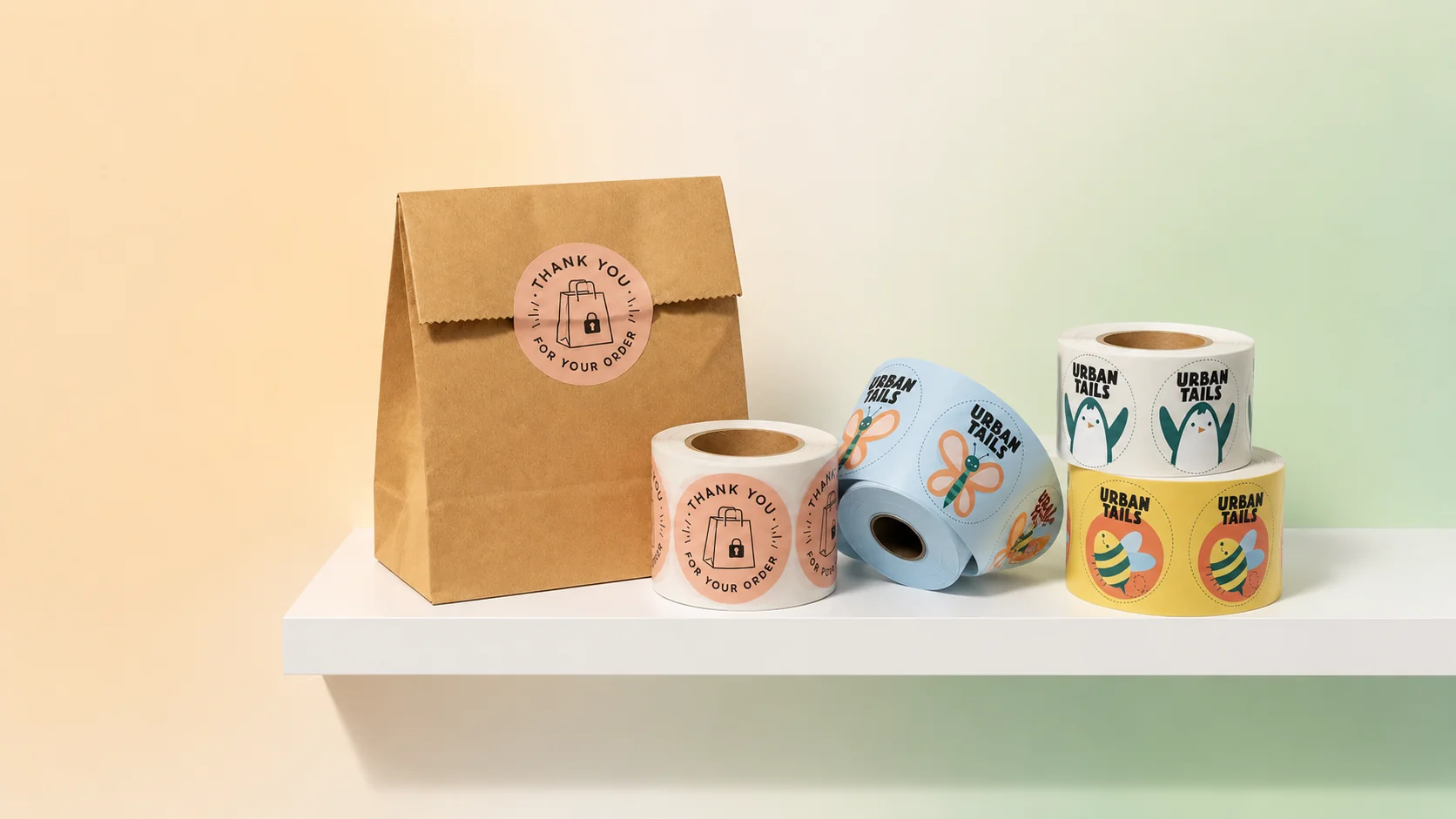
- Labels win when volume is low or artwork changes often. A roll of custom stickers plus commodity paper can cost less per serving, and the same sticker also seals boxes and bags.
- Printed paper wins on speed and coverage. There is no second item to peel and place during a rush, the branding covers the whole wrap instead of one spot, and at moderate volume the printed sheet often costs about the same as sheet-plus-label once you count the sticker and the labor.
A reasonable path for a new food business: start with plain paper and a good label, and switch to printed sheets when daily volume makes the label step feel slow. If you already use branded stickers, Ecoally also prints tamper-proof sticker rolls that pair with either approach.
Food-Safety Questions to Ask Any Supplier
You do not need to be a materials engineer, but four questions separate serious food-paper suppliers from print shops that happen to sell paper:
- Is the paper rated for direct food contact? Get the claim in writing on the listing or spec sheet.
- What are the inks? For paper that touches food, water-based food-safe inks are the standard answer. Ecoally prints its food papers with water-based inks rated for food contact.
- What is the heat guidance? Greaseproof sheets handle warm holding; oven and fryer-adjacent use needs parchment-class paper. A supplier should say plainly what their sheet tolerates.
- Which side is printed? Food papers are typically printed on one side, with food on the unprinted side. Confirm the print is on the outside of the fold for your use.
On disposal: uncoated printed paper is often accepted in composting where soiled paper is collected, while wax-treated and foil-lined sheets usually are not, and acceptance varies by locality. If sustainability is part of your pitch, ask for the uncoated option and check local guidance rather than printing a blanket claim on the menu.
How to Order Custom Food Wrapping Paper Online
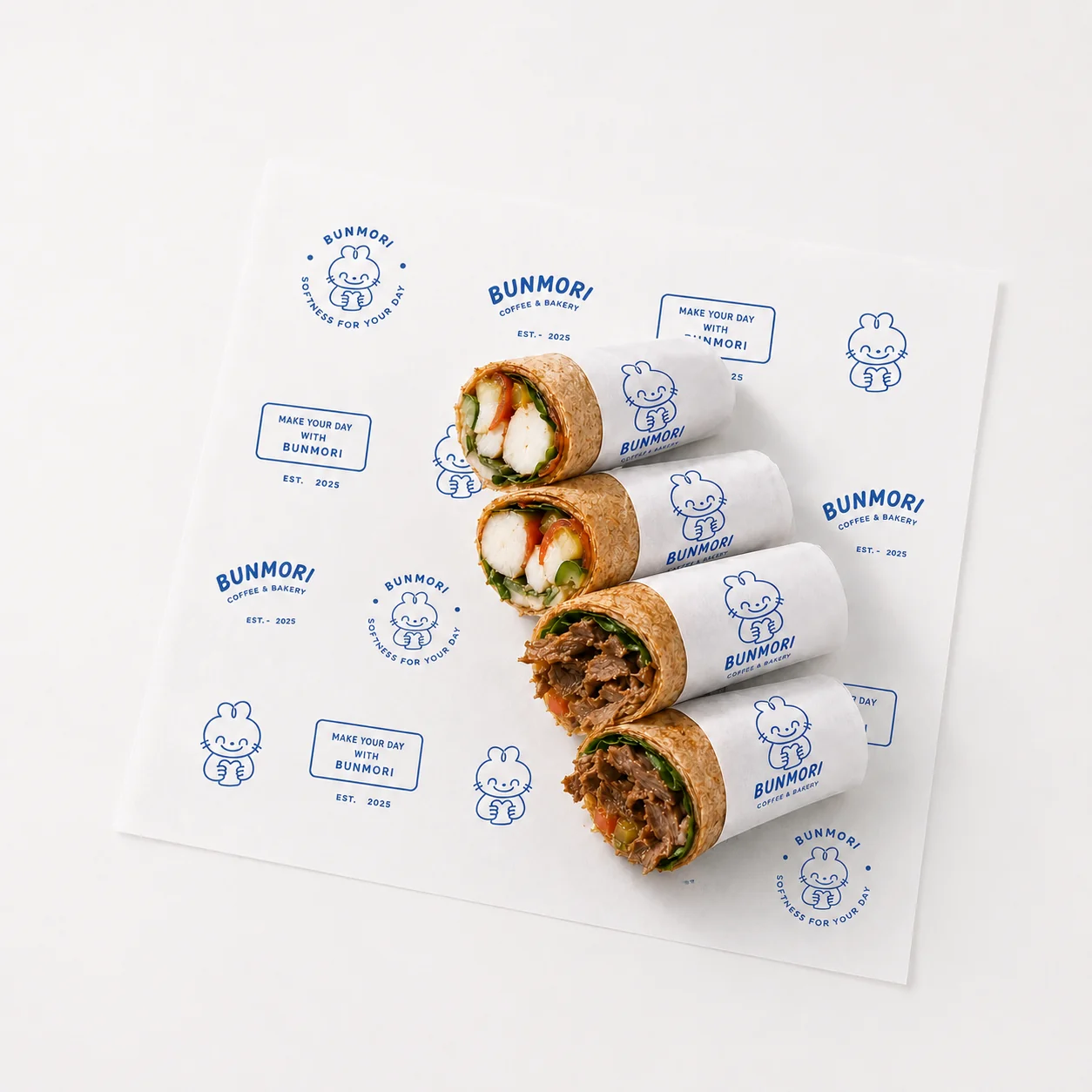
- Pick the base: white shows colors accurately and reads clean behind food photography; kraft suits rustic and handmade positioning. Both take one-color logos or full-color prints; a simple one-color repeat is the budget option.
- Preview the repeat: upload your logo and check scale and spacing on the product before production. Ecoally's product pages preview the artwork on the sheet in 3D, which catches logo-too-big and repeat-too-sparse mistakes early.
- Start one tier smaller than you think: confirm the paper performs with your actual food (grease, heat, fold) before committing to the deep end of the price curve.
For adjacent formats, the same artwork usually transfers directly to custom sandwich bags and burger wrapping paper, and the wider takeout picture is covered in our restaurant takeout packaging guide.
Frequently Asked Questions
What is custom deli paper used for?
Wrapping sandwiches and burgers, lining baskets and trays, separating baked goods, and counter service. One printed sheet does presentation and function at once, which is why delis, cafes, food trucks, and bakeries standardize on it.
How much does custom deli paper cost?
In 2026, roughly $0.10–$0.75 per sheet in small online orders, $0.05–$0.15 per sheet around 1,000–5,000 sheets, and $0.03–$0.10 per sheet in bulk. Watch for whether the quote is for treated greaseproof stock or plain paper.
What is the difference between deli paper and wax paper?
"Deli paper" describes the job; wax paper is one material for it. Wax-treated sheets are a moisture barrier best for cold items, while greaseproof sheets resist oil and suit warm food. Check the material line on the listing, not just the product name.
Can custom printed paper touch hot, greasy food?
Greaseproof-based sheets are made for exactly that: burgers, fries, warm pastries. They are not oven papers, and printed sheets should carry food on the unprinted side. Ask the supplier for heat guidance in writing.
What is the minimum order for custom food wrapping paper?
Online suppliers commonly start between 25 and 500 sheets; Ecoally's food papers start at 250 sheets. True bulk pricing typically begins around 10,000 sheets. Order three to six months of stock, not more, while your branding is still evolving.
What size deli paper should I buy?
Measure by wrapping your actual product: sandwiches and burgers usually need 10×10 to 12×12 in, basket liners 8×8 to 12×12 in, and tray liners 15×15 in and up. One versatile mid-size beats stocking several sizes early on.
Put Your Logo on the Wrap
A printed sheet costs a few cents and gets looked at for the entire meal. Upload your logo to Ecoally's custom food wrapping paper or custom deli paper page, preview the repeat in 3D, and start at 250 sheets to see your branding on the counter before committing to bulk.