Restaurant Takeout Packaging Guide: Bags, Cups & More
Takeout and delivery are no longer side businesses — for many independent restaurants they account for a large share of revenue, and the bag on the counter is the only "dining room" those customers ever see. That makes eco-friendly restaurant takeout packaging one of the highest-leverage decisions a small operation can make. The right containers protect food in transit, signal your values before the first bite, and show up in customer photos every night. This guide covers the takeout formats every restaurant needs, compares the main eco-friendly materials, explains why US regulations keep pushing operators away from foam, and shows how to choose sizes, order small quantities, and brand everything on a realistic budget.
The Restaurant Takeout Packaging Supplies Every Kitchen Needs
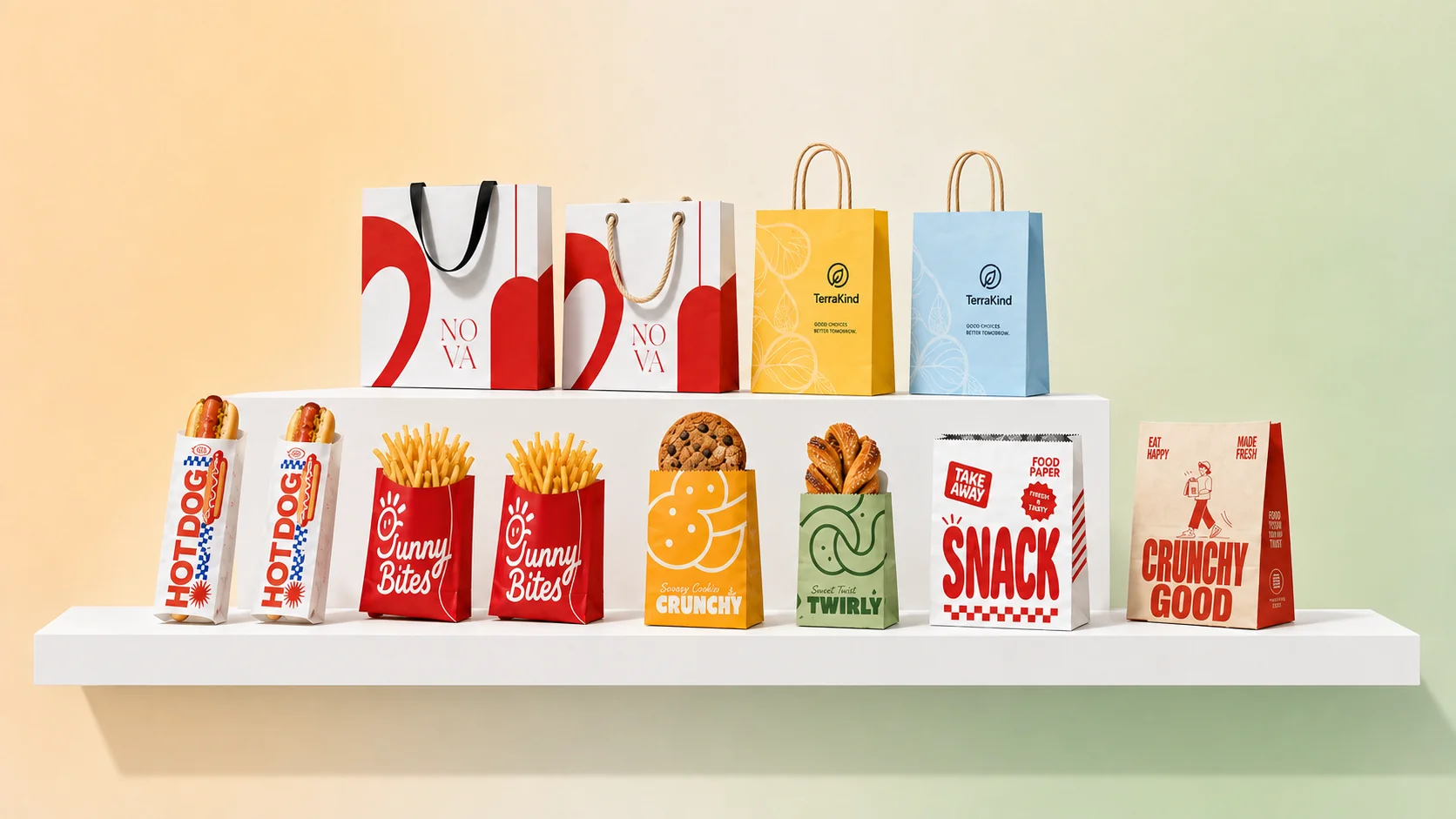
Before comparing materials, take inventory of the formats your menu actually requires. Most restaurants can cover the entire menu with five categories.
Takeout bags
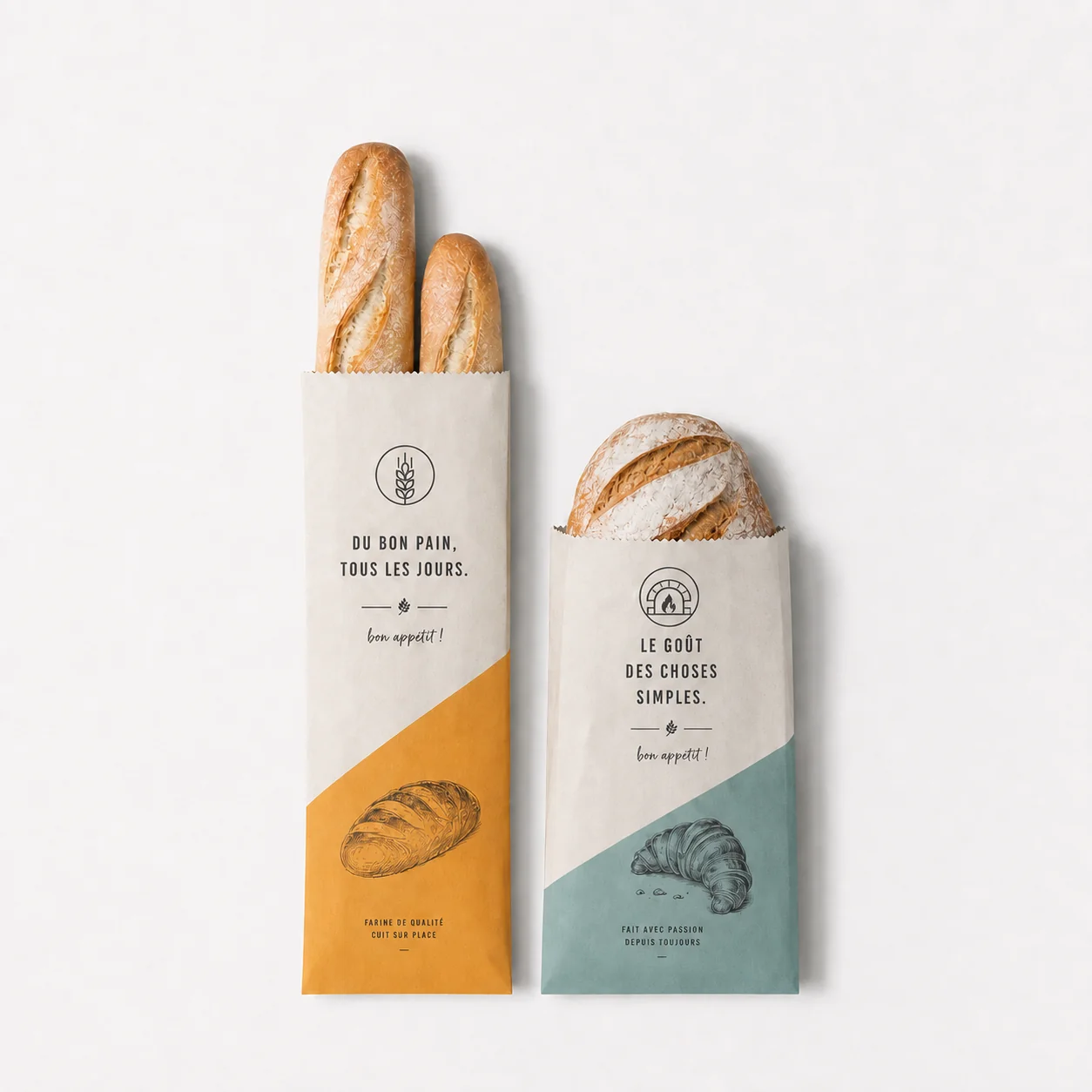
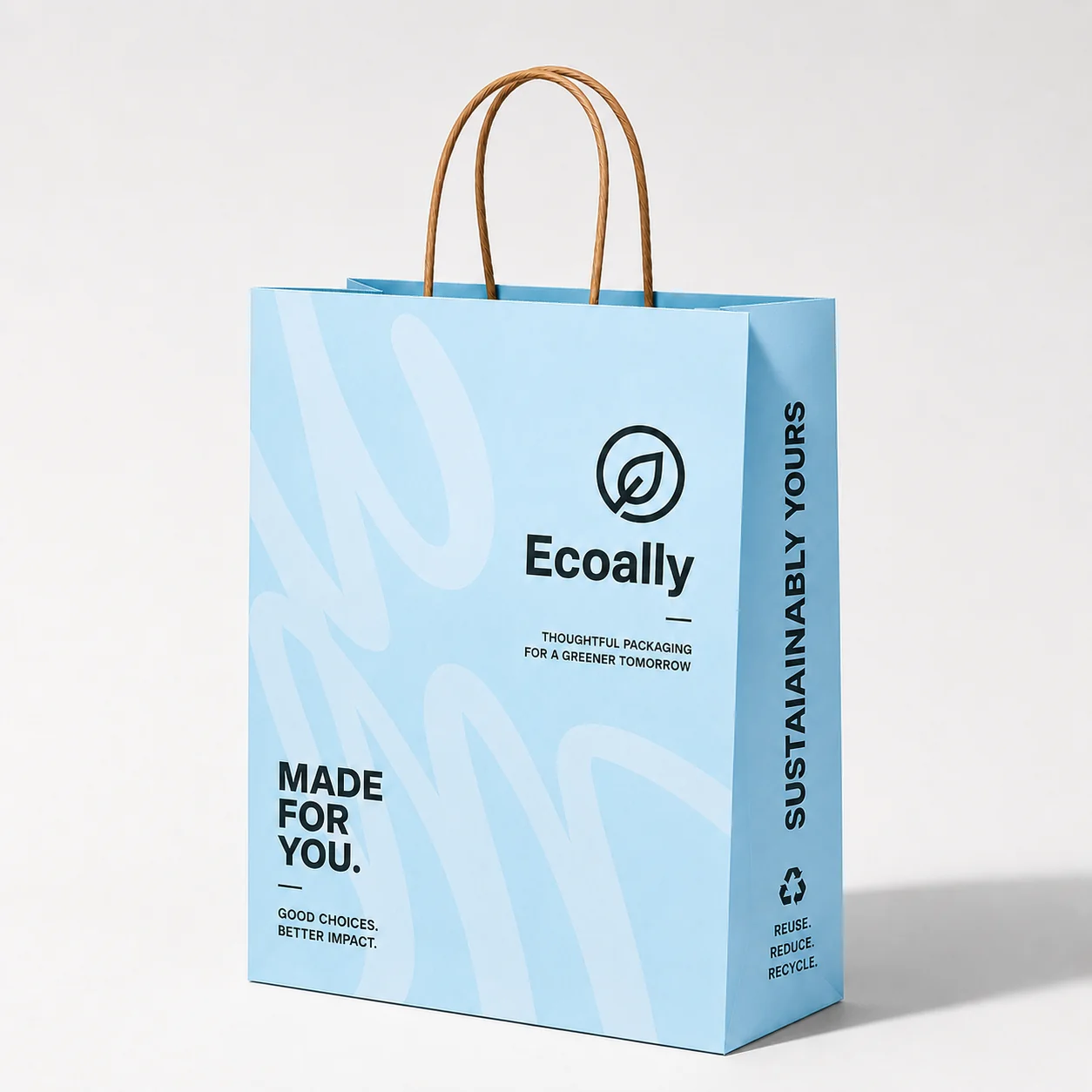
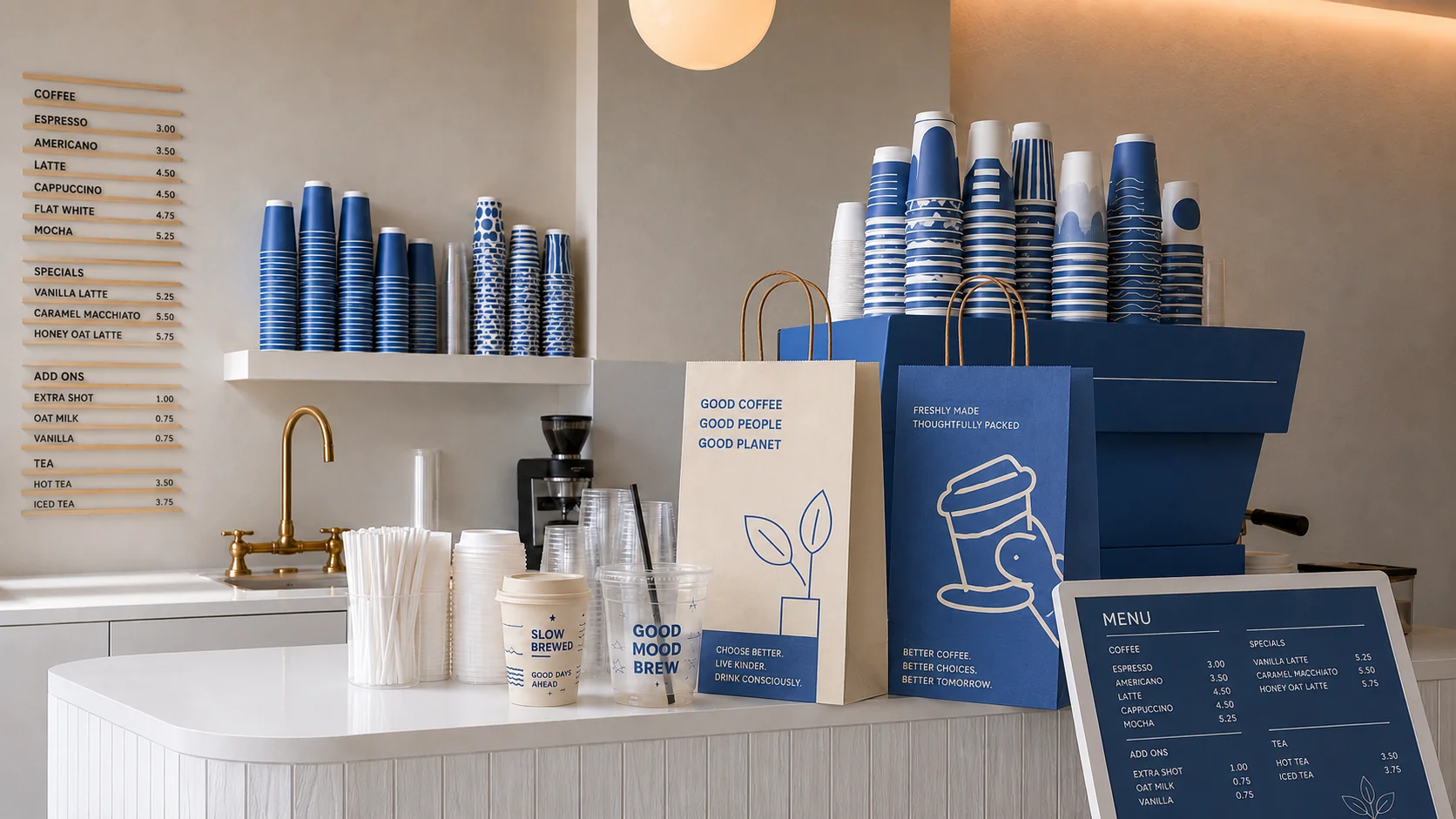
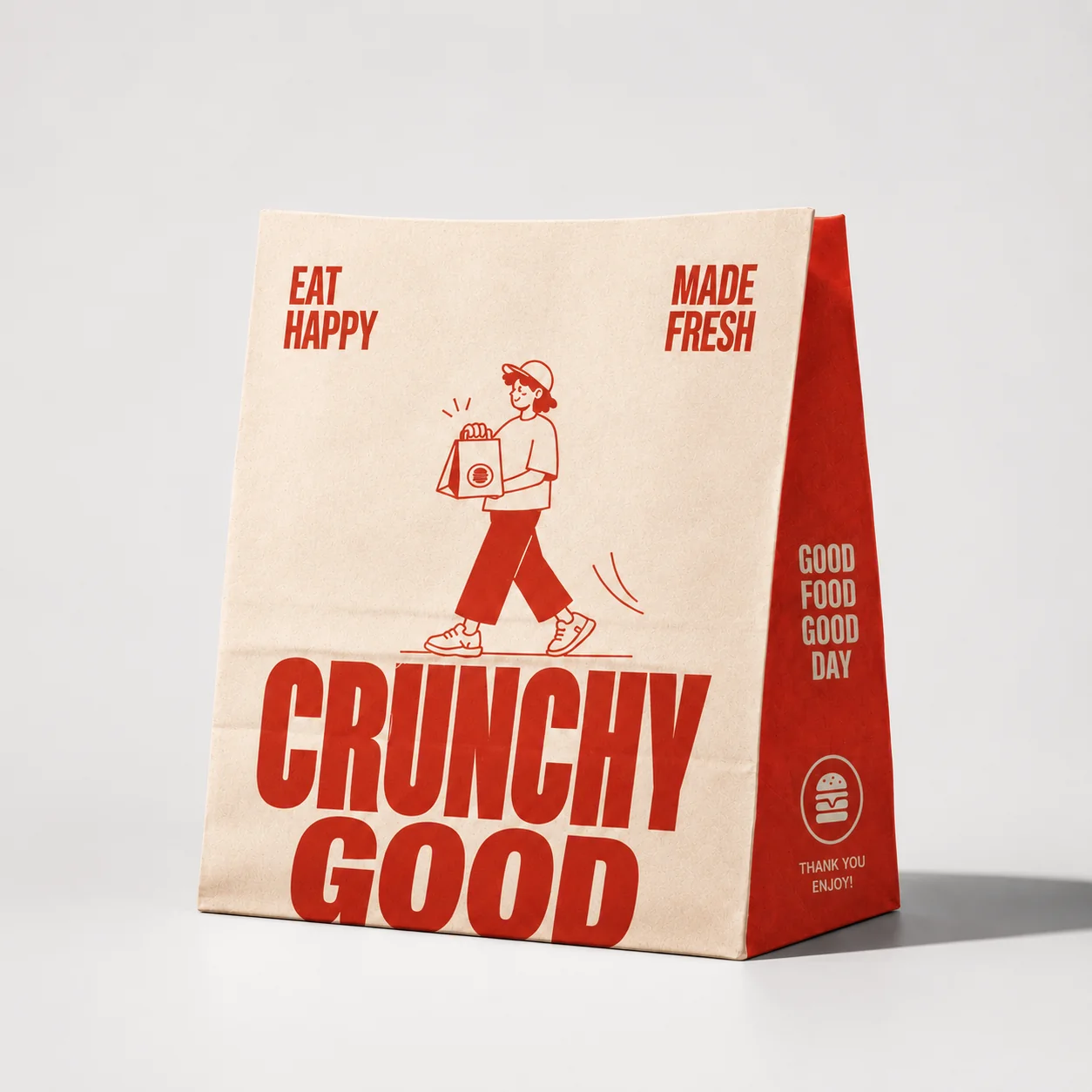
The bag is your street-level billboard — it rides in the passenger seat, sits on desks, and swings from the driver's hand. Kraft paper bags with sturdy handles carry multi-item orders, condiments, and utensils, and their natural finish prints beautifully with a bold logo. For individual fried items, vented custom fry bags let steam escape so food stays crisp, while custom sandwich bags keep handhelds tidy and grease off the customer's hands. When entrees need to arrive hot, custom insulated foil bags — standing gusseted bags in 75gsm foil-faced paper — hold serving temperature through delivery.
Boxes and containers
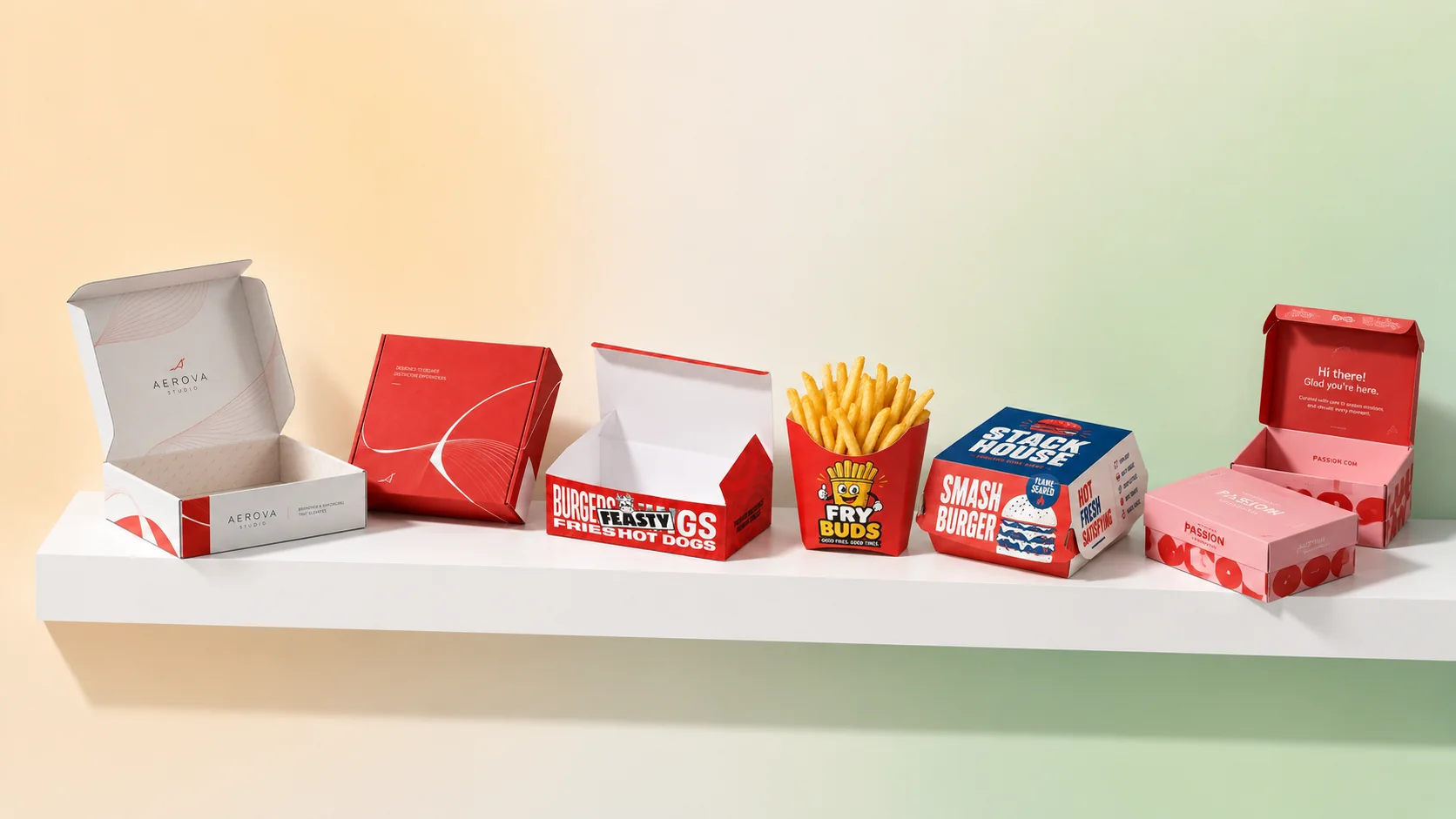
Entrees, rice bowls, noodles, and combo meals need structure. Paperboard boxes and containers hold their shape when stacked in a delivery bag and retain heat better than flimsy alternatives. Format matters as much as material: custom burger boxes with ventilation keep buns from steaming soggy, while tuck-top boxes contain sauces and keep plated presentations intact.
Cups and lids
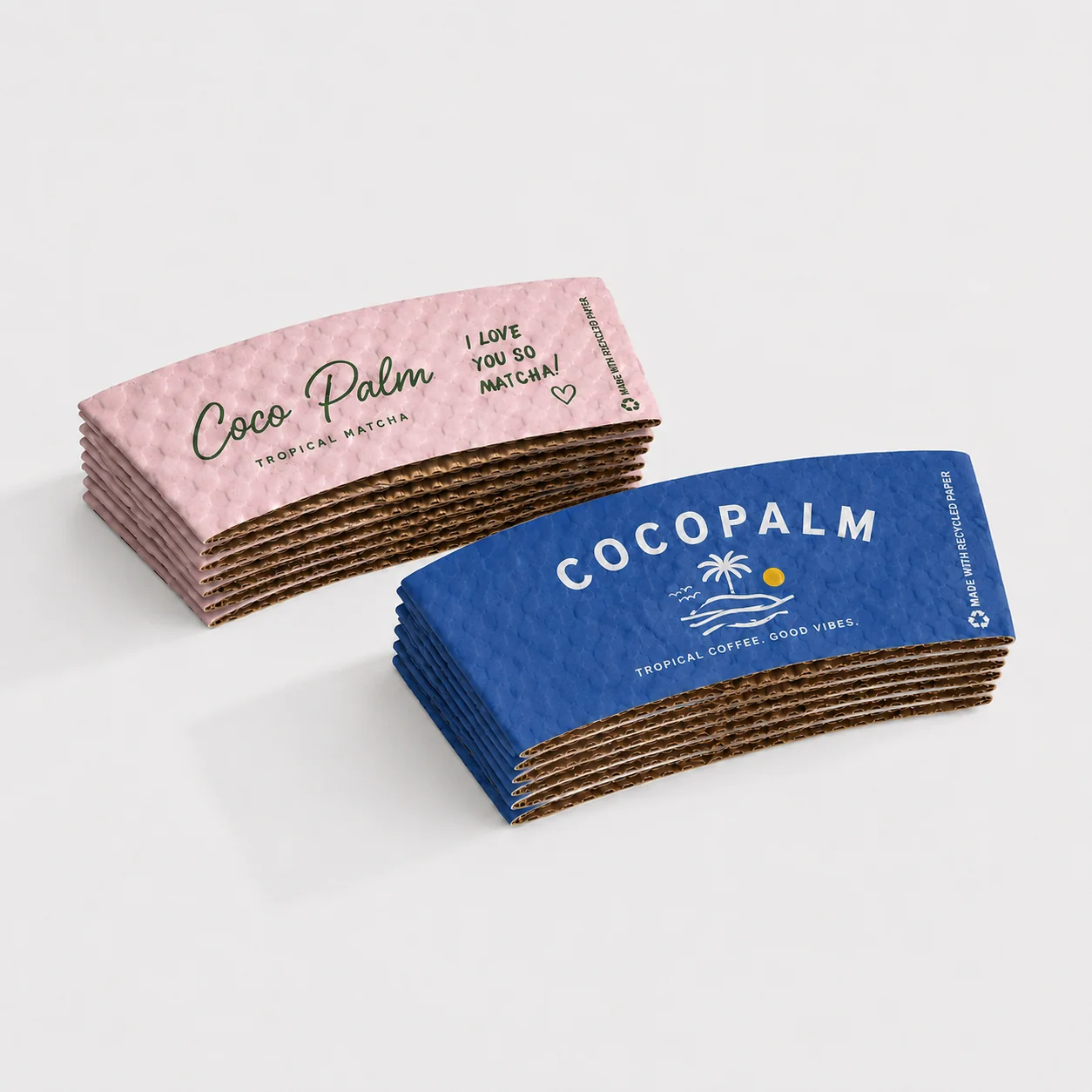
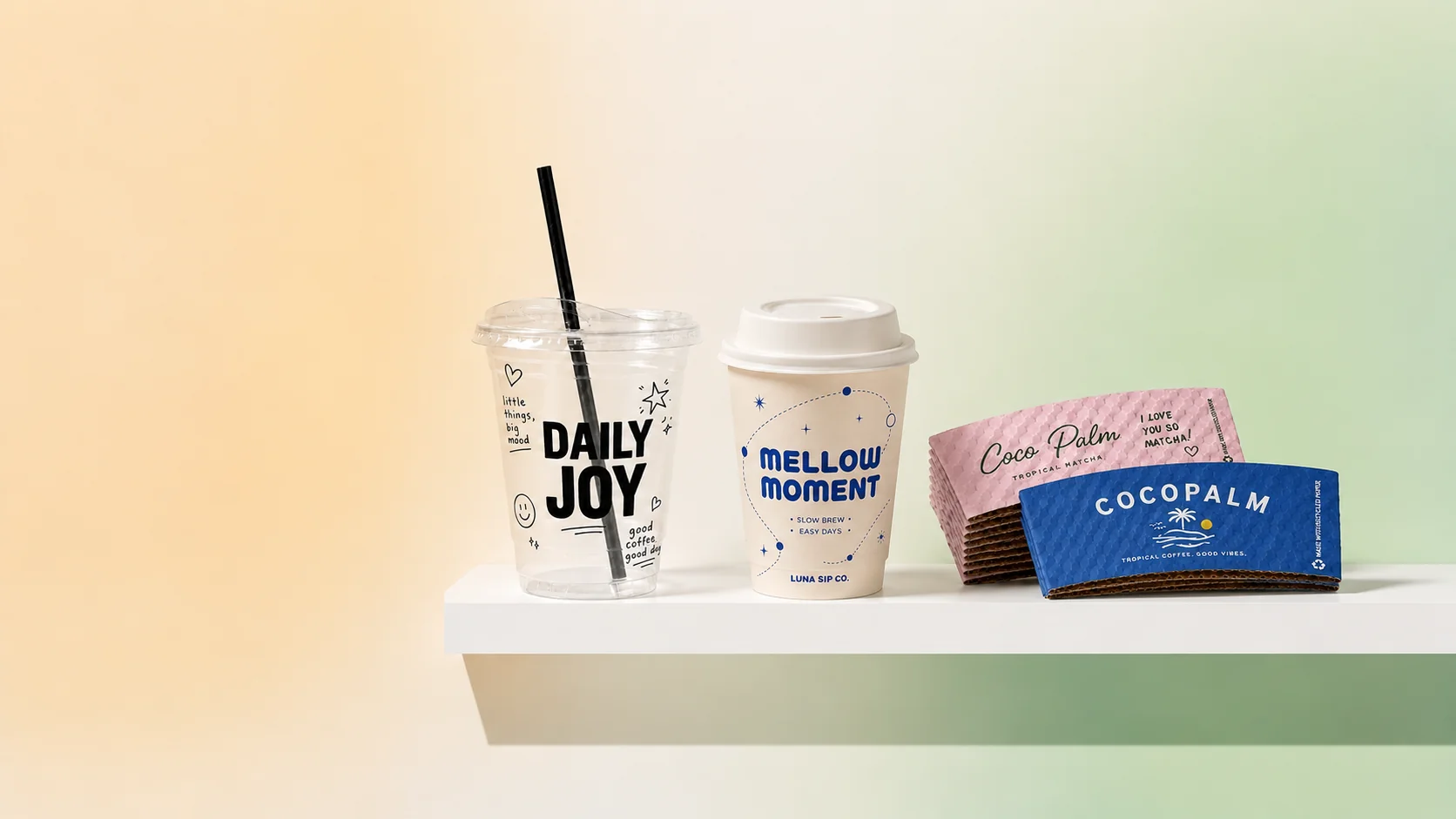
Drinks ride along on most takeout orders, and they generate more complaints per unit than any other item. Custom recyclable paper cups with lids cover hot and cold programs while keeping your logo in the customer's hand — and in the background of every desk-lunch photo.
Wrapping papers and liners
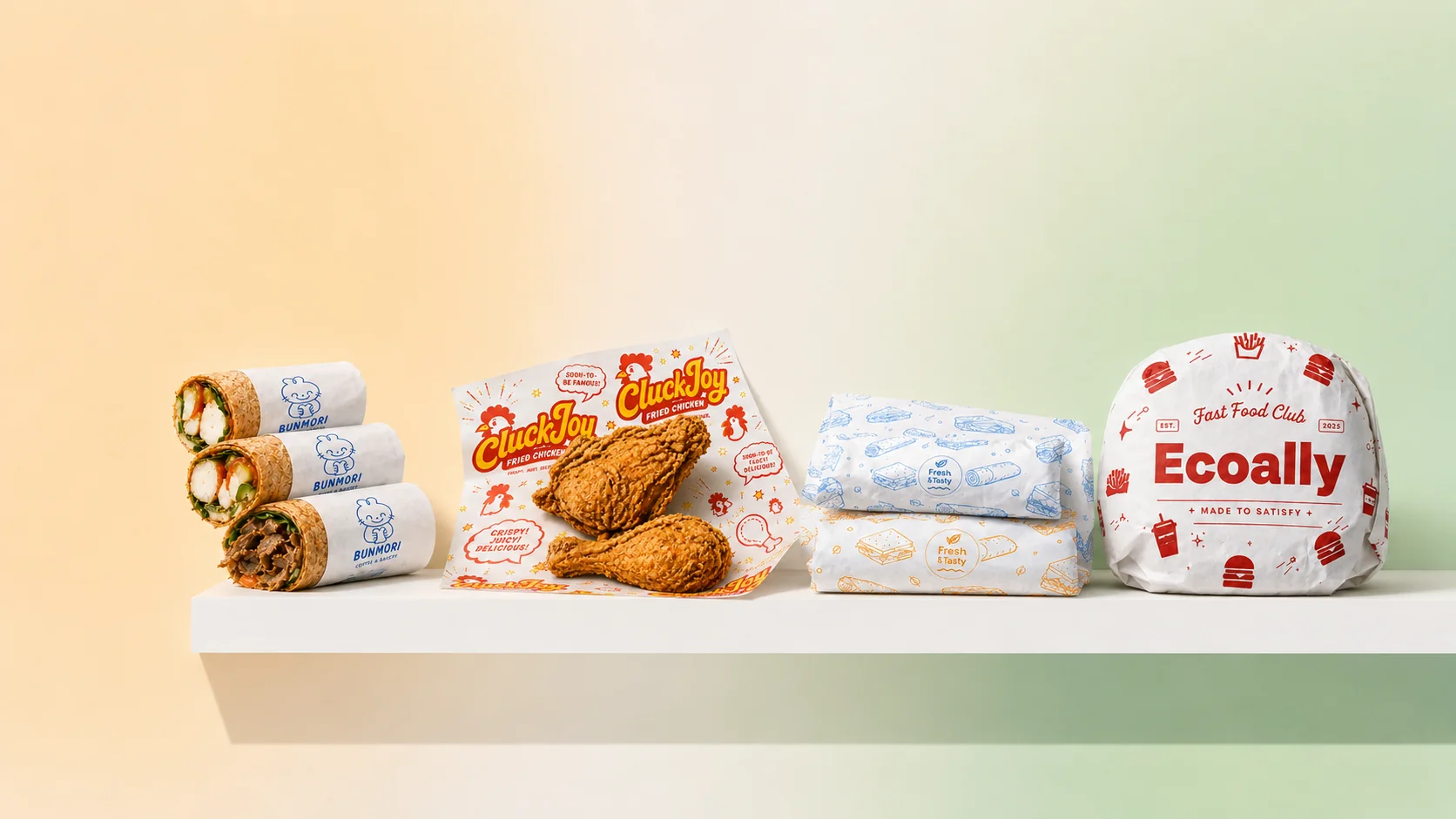
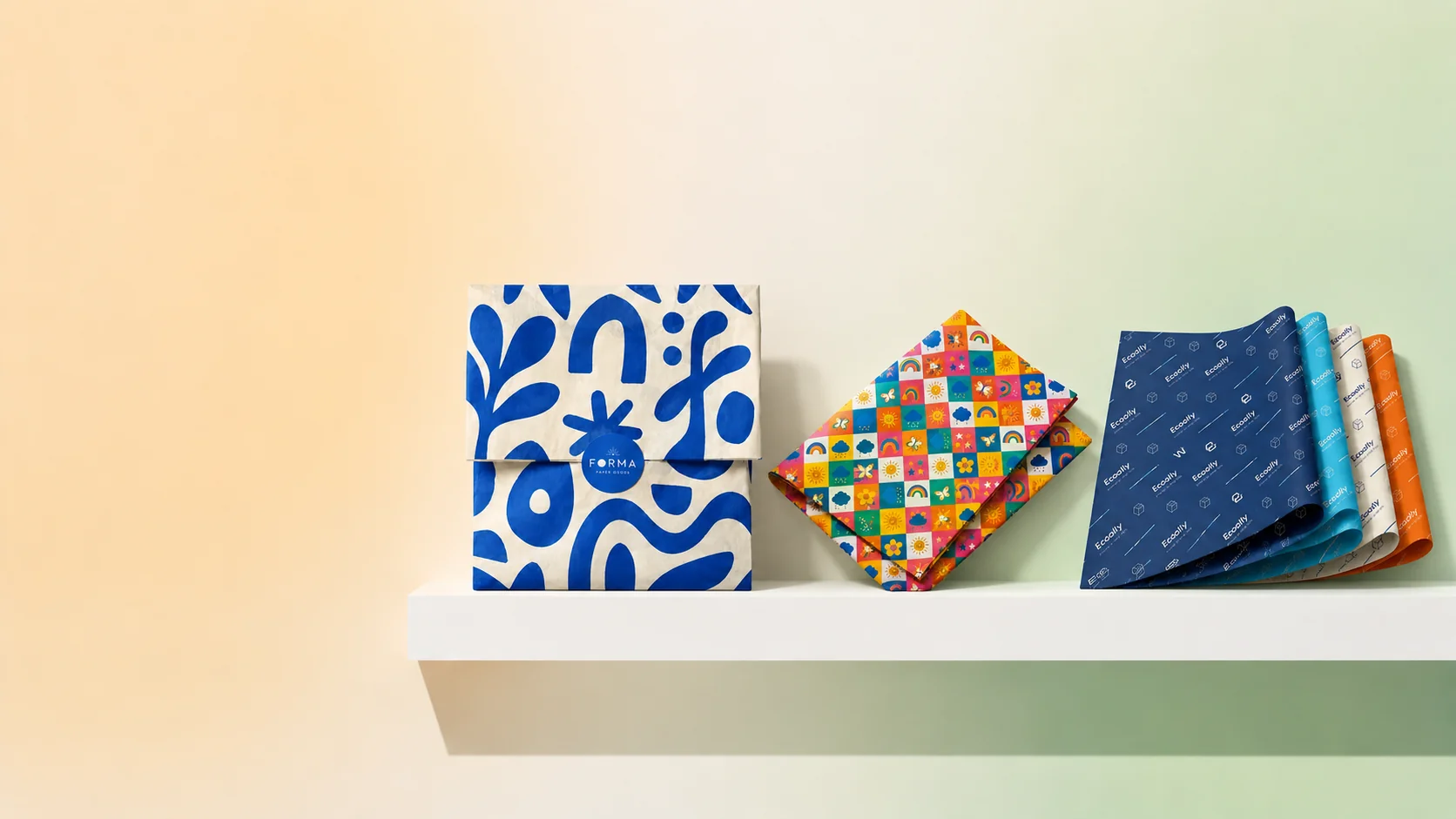
Wrapping paper is the cheapest brand surface per square inch you can buy. Custom burger wrapping paper turns every unwrap into a brand moment, and custom greaseproof paper lines baskets, boxes, and bags so oil never reaches the outer packaging. A repeating pattern on the wrap reads far more premium than it costs.
Stickers and seals
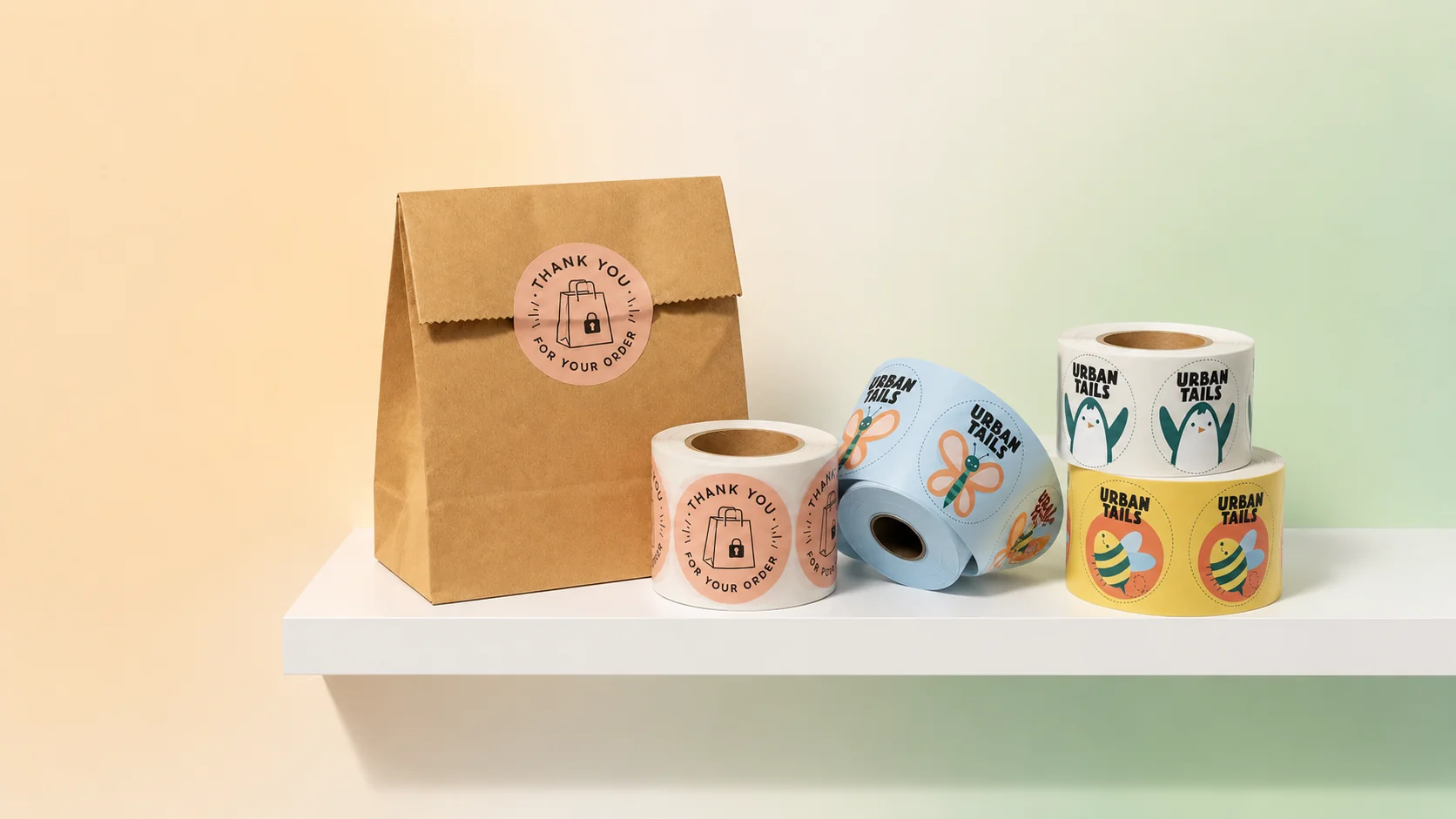
Stickers and labels close bags, add tamper evidence for third-party delivery, and carry promo codes or social handles. They are also the fastest way to brand plain stock packaging while you wait for a full custom run.
Eco-Friendly Restaurant Takeout Packaging Materials Compared
"Eco-friendly" covers several distinct materials, and the right one depends on what you serve and how your customers dispose of packaging. Here is how the common options compare:
| Material | Best for | Grease & liquid resistance | End of life |
|---|---|---|---|
| Uncoated kraft paper & board | Bags, wraps, dry or lightly oily items | Moderate — pair with a greaseproof liner for oily food | Widely curbside recyclable |
| Greaseproof paper | Burgers, fries, pastries, basket liners | High grease resistance without a plastic film | Recyclable or compostable in many programs |
| PLA-lined paper | Hot cups, soup containers, saucy entrees | Strong liquid barrier | Commercially compostable; not curbside recyclable |
| Molded fiber (bagasse) | Clamshells, bowls, trays | Handles hot, moist food well | Commercially compostable |
Two details trip up a lot of operators. First, PLA is a plant-based lining that performs like plastic in use but needs a commercial composting facility to break down — it does not belong in the recycling bin. Second, "compostable" claims are only as good as their certification; in the US, look for certification from BPI, which verifies that a product breaks down under commercial composting conditions. If most of your customers only have curbside recycling, uncoated kraft and paperboard are often the more honest choice. For a deeper breakdown of how these materials behave and degrade, see our biodegradable materials guide.
US Regulations Are Pushing Restaurants Toward Eco-Friendly Takeout Packaging
Sustainable restaurant packaging is no longer just a values decision — in a growing number of US jurisdictions, it is a compliance one. Several states and many cities have banned expanded polystyrene foam containers outright, and some go further, requiring takeout packaging to be recyclable or compostable. Accessory rules — utensils, straws, and condiment packets provided only on request — are spreading too.
The specifics vary by city and county, so check your local requirements before your next big packaging order. But the direction of travel is consistent and one-way: away from foam and hard-to-recycle plastics, toward paper, fiber, and certified compostables. Restaurants that switch before they are forced to avoid the last-minute scramble, get to choose packaging on merit rather than under deadline, and can put "foam-free" or "compostable" messaging to work in their marketing instead of treating the change as a pure cost.
How to Choose Sizes and Quantities (Low MOQ for Small Restaurants)
Sizing: cover the menu with as few formats as possible
Map your top ten menu items by order volume, then choose the smallest set of containers that fits them. Most independent restaurants can run their whole menu on two or three box sizes, one or two bag sizes, and a single wrap. Right-sizing matters more than it looks: oversized boxes let food slide around and arrive messy, waste material you paid for, and eat shelf space in a cramped kitchen. Order samples and test them with your actual food — a box that looks right on a spec sheet can fail with your sauciest entree in real transit conditions.
Quantities: start small, then scale the winners
Traditional packaging suppliers often require thousands of units per design, which forces small restaurants into generic stock packaging or a storage room full of boxes they cannot change. Low-MOQ custom printing flips that: order enough for a few weeks of service, see how the packaging survives real deliveries, then reorder in volume once a format proves itself. That freedom matters most when menus move — limited-time offers, seasonal items, and ghost-kitchen sub-brands all deserve matching packaging without a warehouse commitment. Ecoally's minimums are designed for exactly this kind of small-batch iteration.
For a full breakdown of what small-batch ordering changes for independent food businesses, read our guide to low MOQ packaging for small businesses.
Branding Your Takeout Packaging on a Budget
You do not need an agency retainer to make takeout packaging work. The strongest independent-restaurant packaging usually follows a simple formula:
- Lead with the logo. A bold one- or two-color logo on natural kraft reads premium precisely because it is restrained. Custom takeout bags with a single well-placed mark outperform cluttered full-color designs.
- Pick one accent color and repeat it. Use the same color on the box exterior, the wrap pattern, and the sticker seal. Repetition across pieces is what makes packaging feel designed rather than assembled.
- Use sticker seals as your entry point. If a full custom run is not in this month's budget, branded sticker seals on plain kraft packaging deliver most of the branding effect at a fraction of the cost — and add the tamper evidence delivery customers actively want.
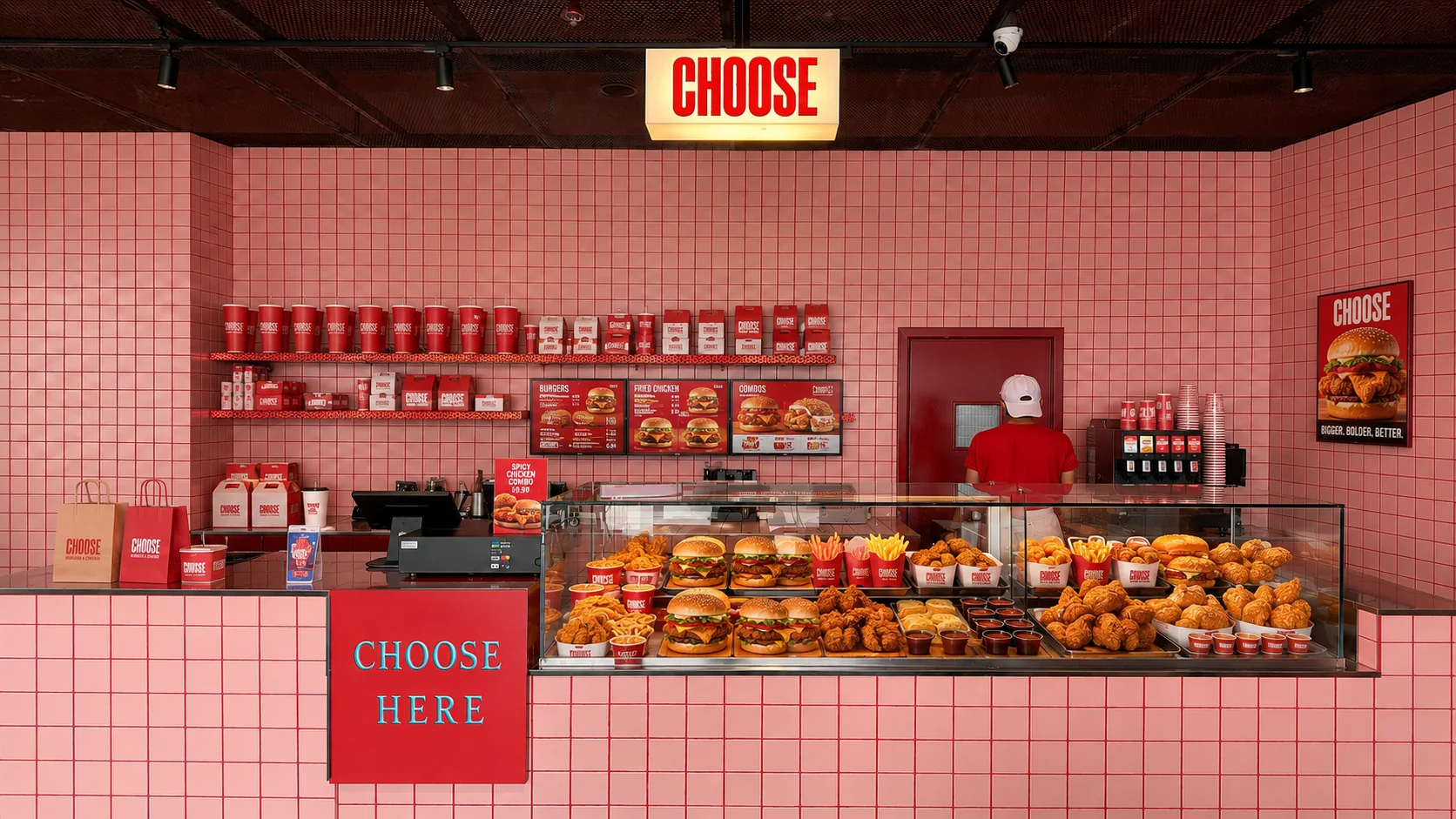
- Design the unboxing, not just the box. The customer experiences a sequence: bag, seal, box, wrap. Make each layer consistent and the phone comes out. Customer photos of a recognizable kraft box are marketing you do not pay for.
Match the packaging to your menu, your delivery-app photos, and your storefront. Customers remember the whole experience, and consistency is what turns one order into a habit.
Preview It in 3D Before You Order
Print surprises are expensive. Ecoally's online 3D editor lets you upload a logo, place it on the actual bag, box, cup, or wrap, and rotate the result before committing to production — so you catch a logo that wraps awkwardly around a corner or type that shrinks too small to read. Pair the 3D preview with a physical sample order and you will know exactly what lands in your customer's hands. Our step-by-step guide to designing custom packaging walks through the whole process.
Frequently Asked Questions
What's the best eco-friendly takeout packaging for greasy food?
Greaseproof paper and grease-resistant paperboard handle most fried and oily menus without plastic film. Line boxes and baskets with greaseproof sheets so oil never reaches the outer packaging, and use vented formats for fried items so steam escapes instead of soaking in. For very saucy or soupy items, PLA-lined or molded fiber containers provide the strongest liquid barrier.
Are the inks on custom food packaging safe?
Food packaging should always be printed with food-safe, low-migration inks — typically water- or soy-based systems designed for food-contact applications. This matters most for direct-contact items like wrapping paper and deli sheets. Ecoally prints with inks intended for food packaging use; if you have a direct-contact application, confirm the spec for that specific product before ordering.
Do compostable takeout containers make sense for my restaurant?
They make the most sense where customers have access to commercial composting, either through curbside organics collection or in-store bins. PLA-lined and bagasse products generally need commercial facilities rather than backyard piles, so tell customers how to dispose of them with a printed note or sticker. If your area only has standard recycling, recyclable kraft and paperboard may be the more honest sustainable choice.
How long does custom takeout packaging take to arrive?
Plan for a proofing step, production, and shipping — and build in extra time for your first order, since that is when sizing and design tweaks happen. Low-MOQ digital printing generally moves faster than traditional overseas plate-printed runs. Order samples well before a launch date rather than alongside it.
Can a small restaurant afford custom takeout bags?
Yes — this is exactly what low minimums change. Small-batch runs let a single-location restaurant or food truck order branded bags in quantities that match actual weekly volume instead of a distributor's warehouse math. Starting with one hero format — a printed bag plus sticker seals on stock boxes — keeps the initial spend small while still making every order look branded.
How do I keep fried food crispy in transit?
Steam is the enemy: never seal hot fried food in an airtight container. Use vented french fry boxes or open-top fry bags, keep fried items in separate packaging from steamy entrees, and skip the lid where food safety allows. Greaseproof liners absorb surface oil without trapping moisture the way plastic does.
Ready to upgrade? Start with the format your customers see most — usually the bag — and build the system out from there. Browse the full range of restaurant takeout packaging to see what fits your menu.