Coffee Shop Packaging Guide: Cups, Bags & Custom Branding
Walk into any busy coffee shop and count the branded touchpoints: the cup in a customer's hand, the sleeve wrapped around it, the bag holding a croissant, the sticker sealing that bag shut. Every takeaway order is a marketing impression that walks out the door — and shows up in social photos, on office desks, and on the street. This guide covers the coffee shop packaging supplies every café actually needs, which eco-friendly materials to choose, how to brand each piece so it works hard for you, and what custom printing realistically costs when you order at independent-café volumes rather than chain volumes.
The Coffee Shop Packaging Supplies Every Shop Needs
Six items cover the vast majority of café orders. You don't need to customize all of them on day one — most shops brand one or two pieces first, then expand — but you should know what each one does.
Hot cups and lids
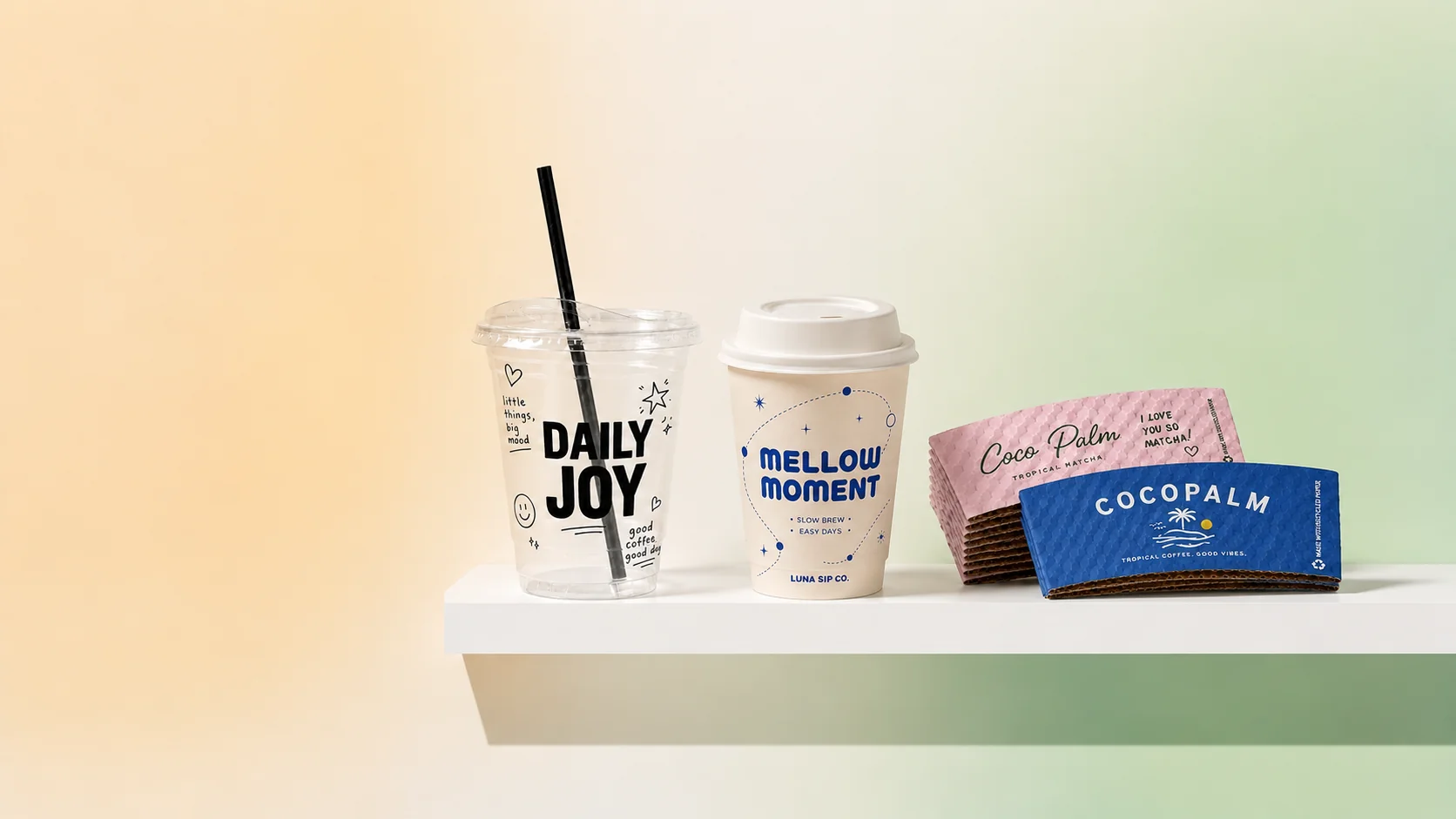
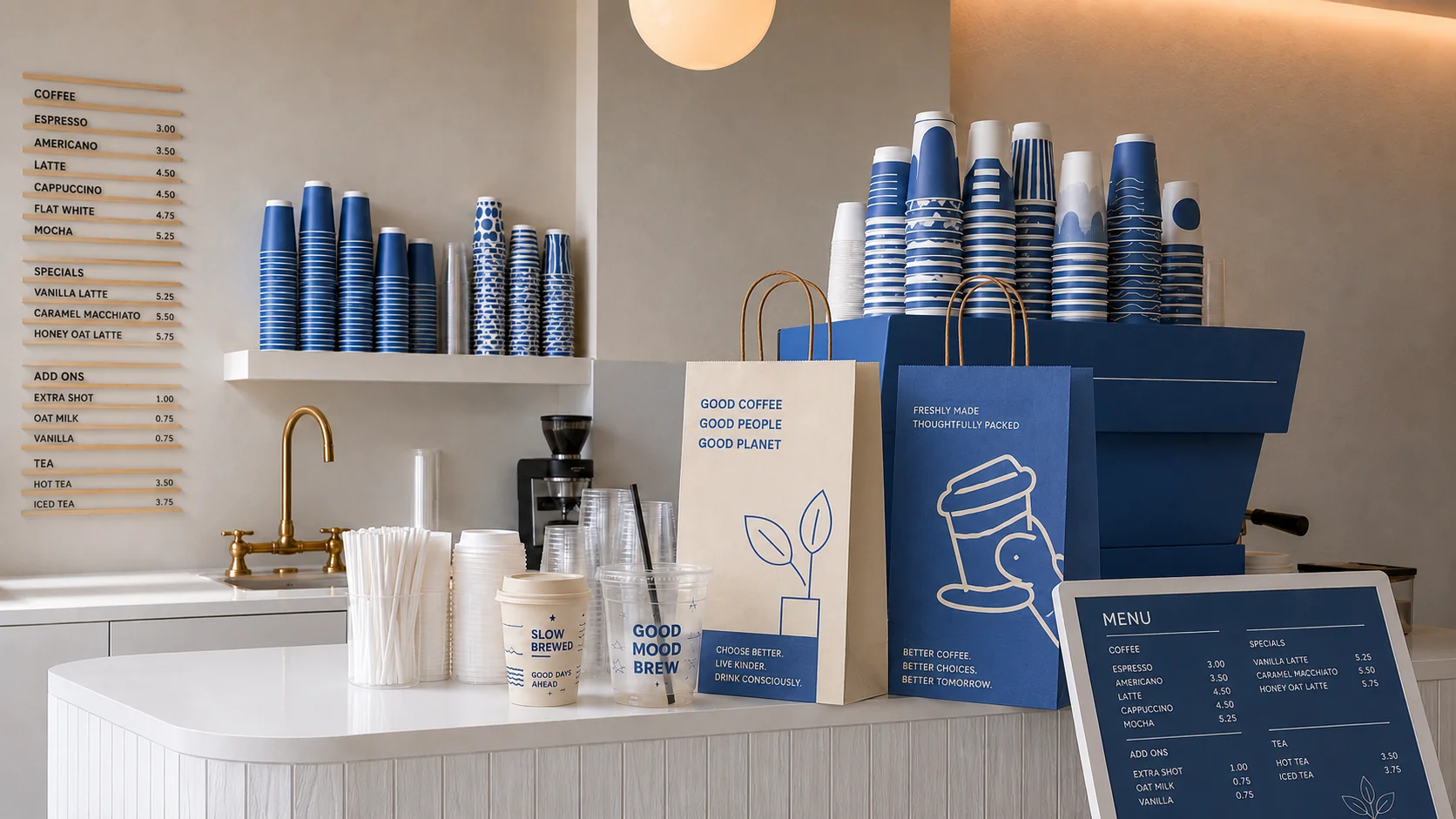
Your highest-volume item and your primary brand carrier. A logo on a cup gets carried through offices, parks, and commutes, which makes it the single most visible piece of branded coffee shop packaging you own. Standard hot cup sizes run from small espresso servings up to large drip and latte sizes, and a matching lid that fits securely matters as much as the print: a leaky lid undoes any brand goodwill the design earns. If sustainability is part of your pitch, custom recyclable paper cups with lids let the cup itself back up the claim. Browse the full cups and sleeves range to compare formats side by side.
Cold cups
Iced drinks are a growing share of café sales, and they need their own format. Clear cups show off layered lattes and fruit refreshers — free visual marketing — while a printed logo anchors the brand. Custom recyclable plastic cups with lids cover the cold menu without forcing customers to guess which bin the cup belongs in.
Custom coffee cup sleeves
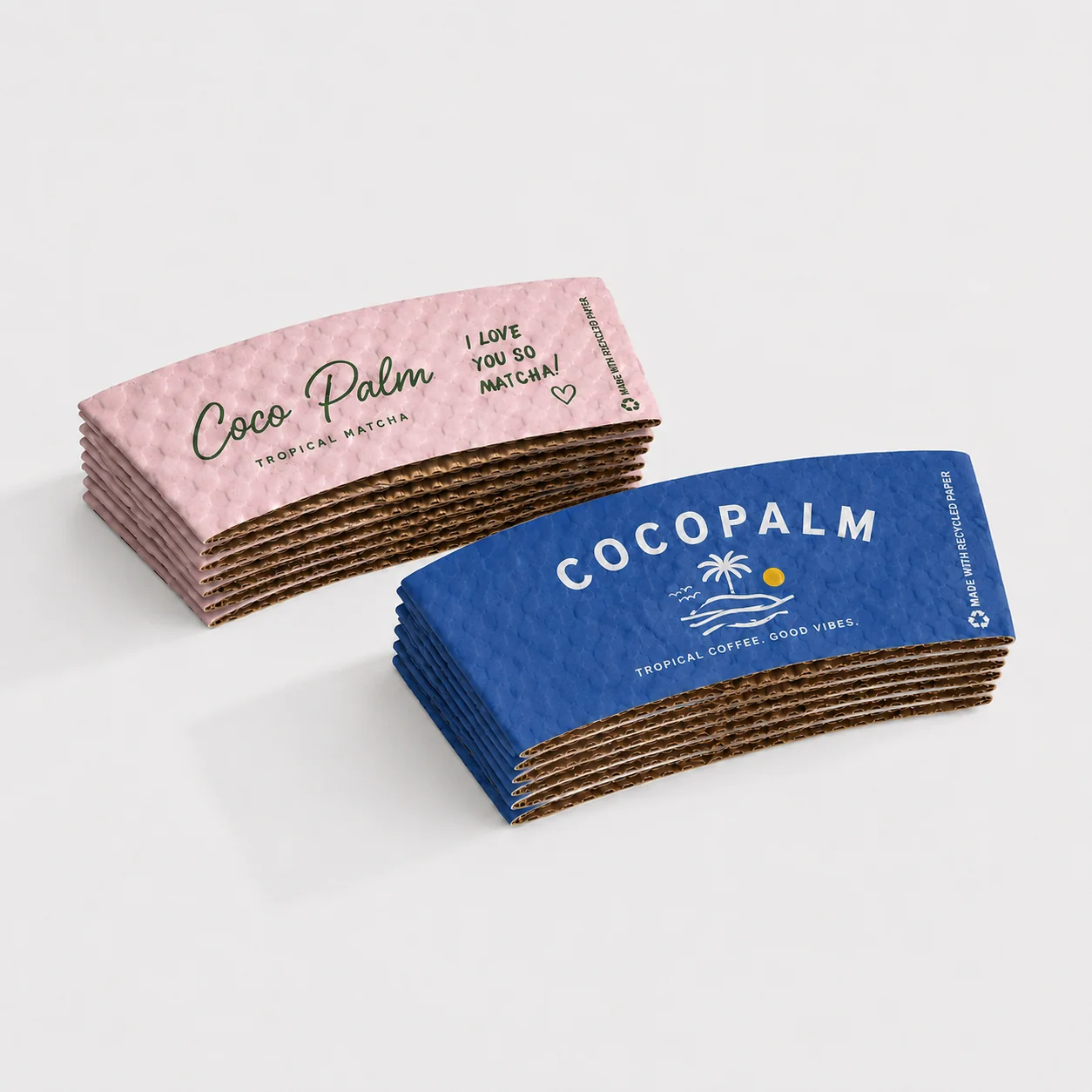
Sleeves do two jobs: they protect hands from heat, and they give you a second print surface that costs less to customize than the cup itself. Many cafés start their branding with custom coffee cup sleeves over plain stock cups — you get the branded look at a fraction of the commitment. Sleeves are also the natural home for QR codes linking to a loyalty program, tip page, or seasonal menu. See custom coffee cup sleeves for print options.
Takeaway bags
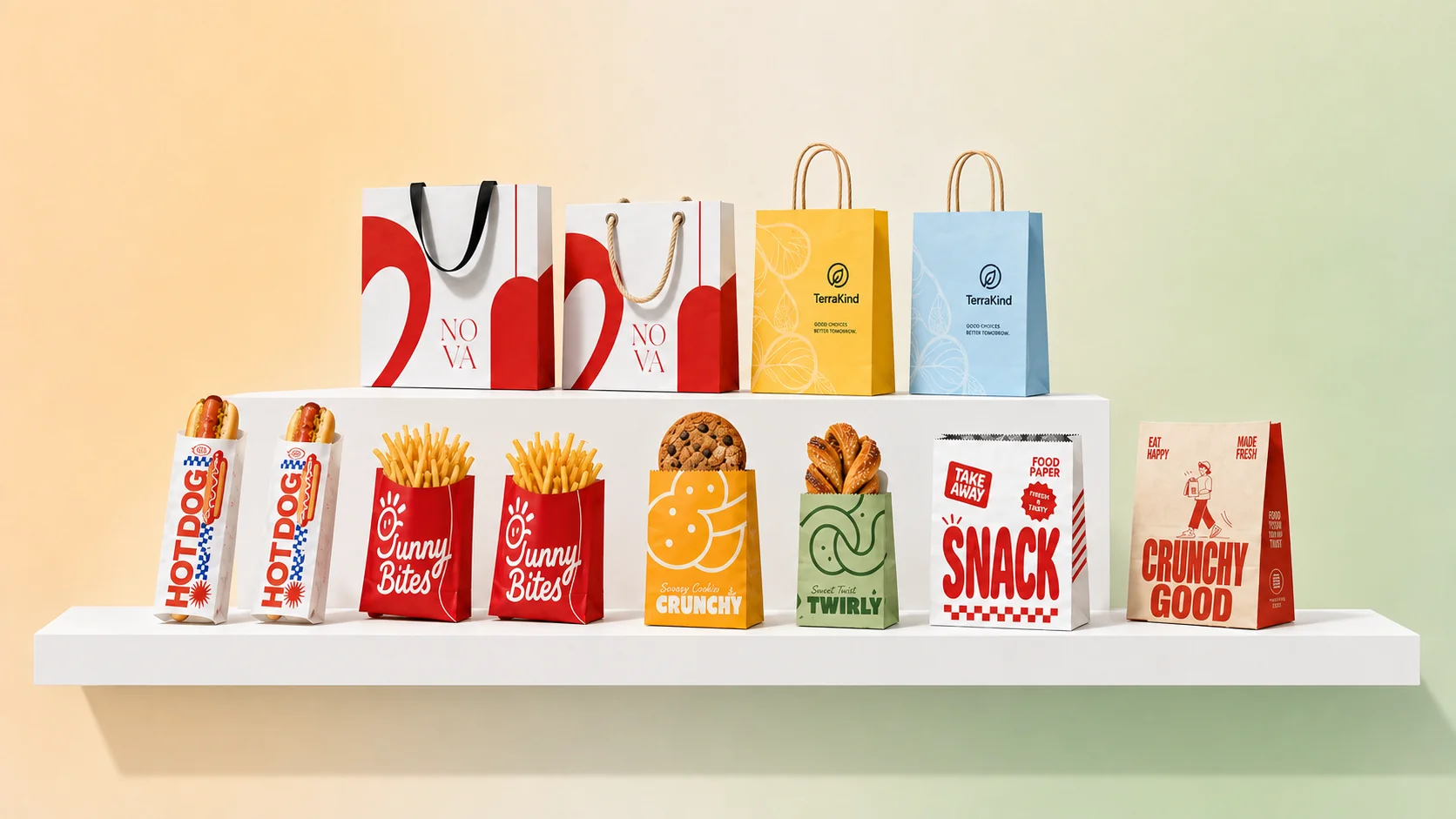
The moment an order includes a pastry or a second drink, it goes in a bag — and a kraft bag with your logo is a walking billboard with a large, flat print area. Paper bags handle multi-item orders and merchandise, while custom bakery bags suit single croissants, cookies, and muffins at the register.
Pastry and food wrapping paper
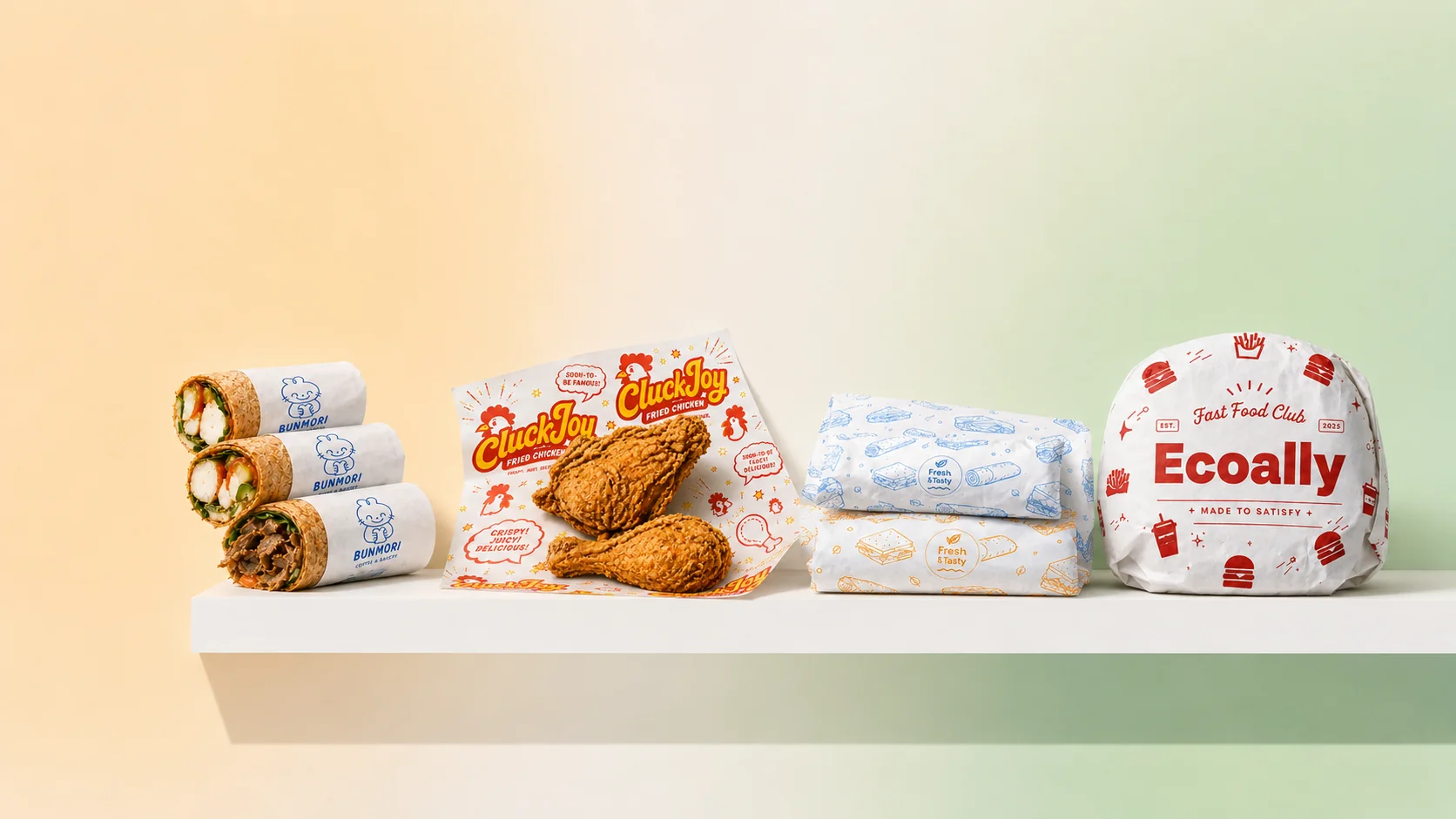
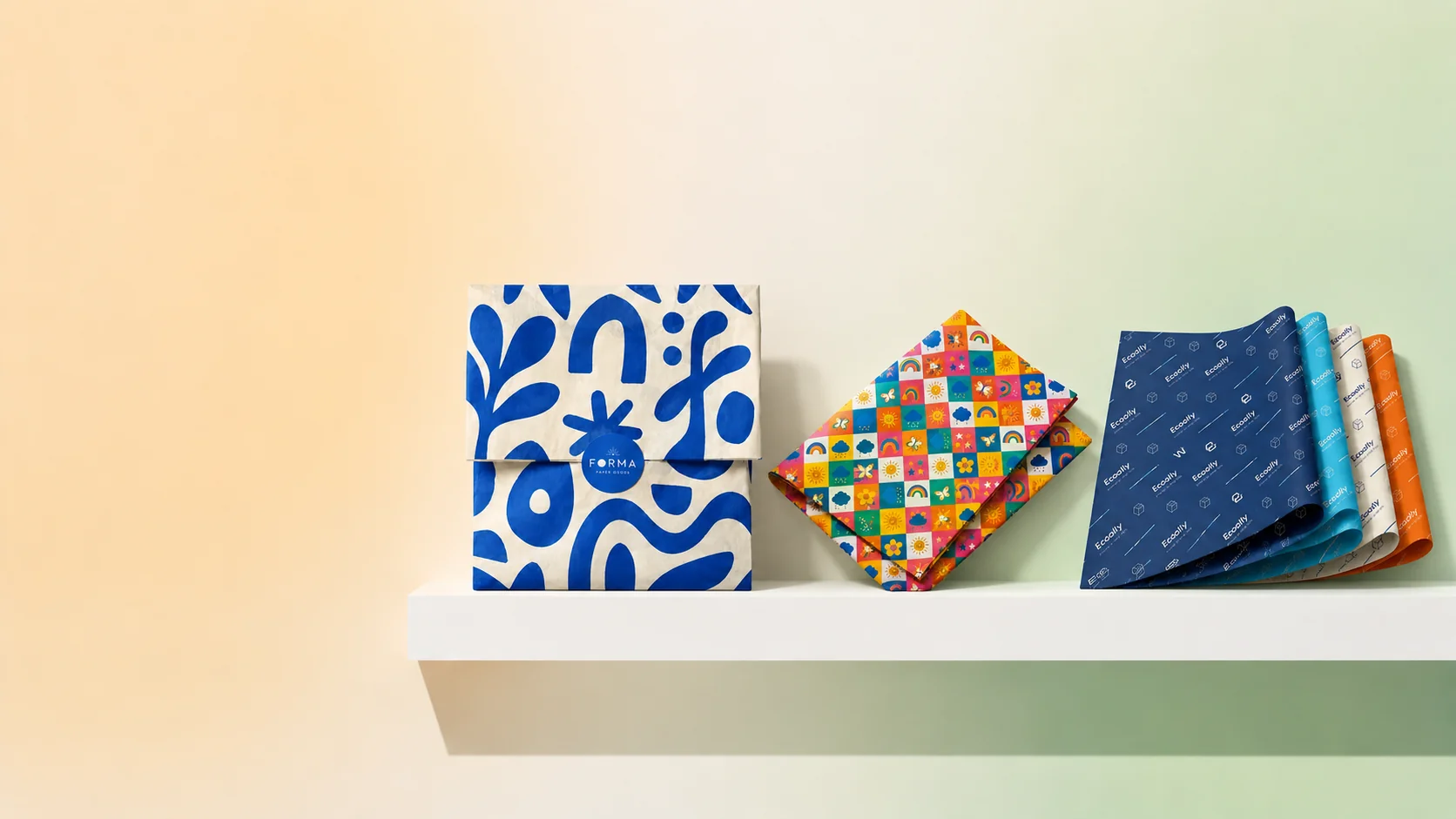
Branded custom food wrapping paper lines trays, wraps sandwiches, and cushions pastries inside bags. It's an inexpensive detail that makes a to-go order feel deliberate instead of improvised, and it keeps grease off the bag.
Stickers and labels
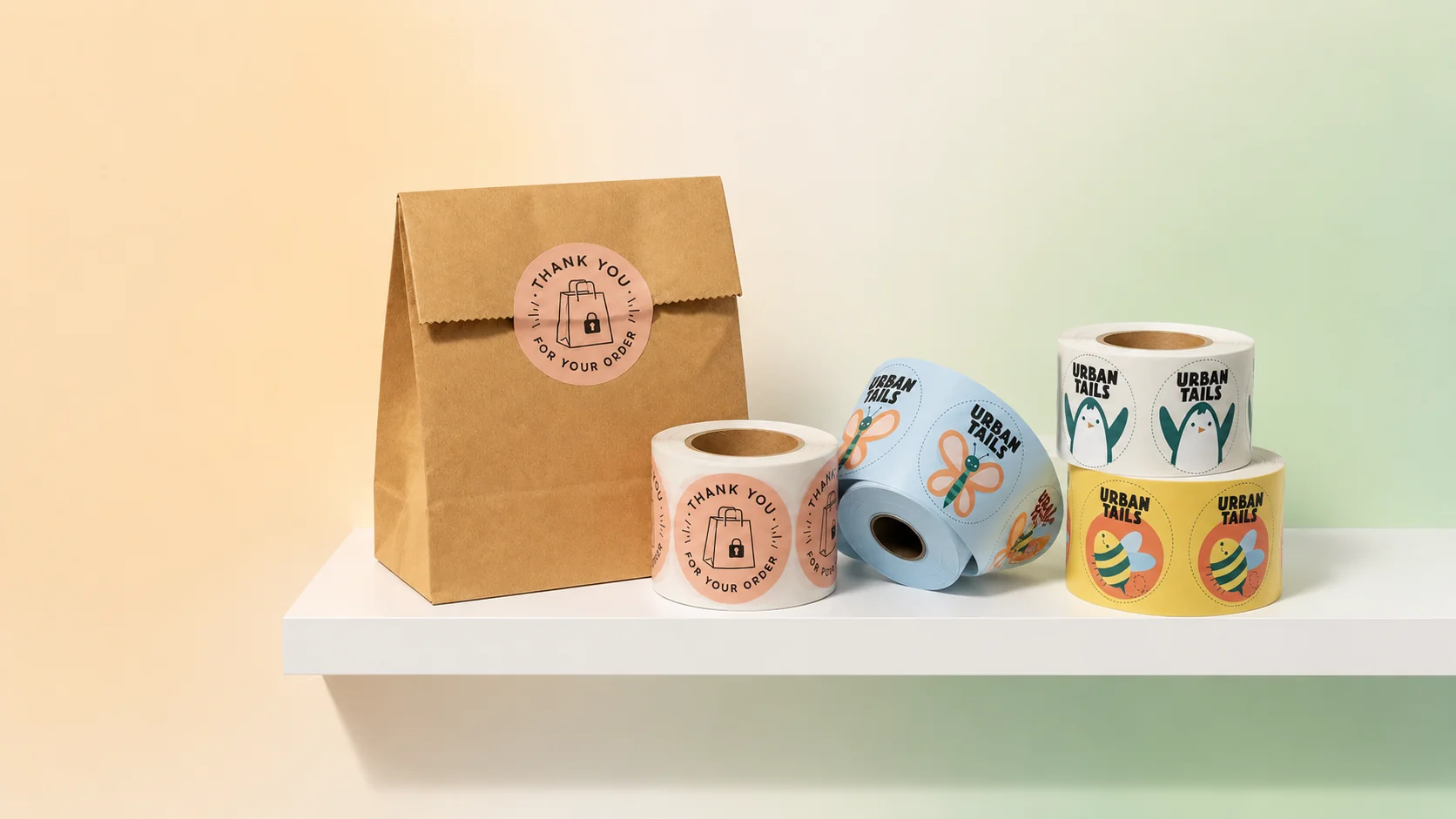
Stickers seal bags, flag drink orders for mobile pickup, label retail bean bags with roast dates and origin notes, and turn a plain box into a branded one. They're the cheapest way to extend your logo across items you haven't custom-printed yet.
Eco-Friendly Materials for Coffee Shop Packaging
Coffee customers skew environmentally aware, and they notice what their drink comes in. The good news: the eco-friendly options for cafés are mature and affordable.
Kraft paper is the workhorse. It's strong, made from renewable wood fiber, widely recyclable, and its natural brown tone reads artisan without any printing at all. Kraft takes dark, simple ink beautifully, which is why one-color logo printing on kraft is the default look for independent cafés.
Recyclable cup options deserve a closer look than they usually get. Conventional paper cups are lined with plastic that many recycling facilities can't separate, so a "paper" cup often isn't recyclable in practice. Cups engineered with recyclable barrier linings are designed to go into paper recycling streams — check the product specifications, and check what your local facility accepts.
Compostable versus recyclable is the distinction that trips up the most café owners. Compostable cups and linings (often plant-based PLA) typically require industrial composting facilities, not a backyard pile — certification bodies like BPI verify which products break down in those conditions. Recyclable packaging depends on your local recycling stream instead. Neither claim is universally "better": the right choice is the one your city's infrastructure actually supports, communicated clearly to customers so the packaging ends up in the correct bin. For a full breakdown of kraft, PLA, and fiber-based materials, read our biodegradable and compostable materials guide.
Branding Your Coffee Shop Packaging
Good branding on packaging isn't about covering every surface in logos. It's about a few deliberate decisions applied consistently.
Put the logo where the camera sees it
On cups, center the logo where a hand naturally holds the cup — that's what appears in every photo. On sleeves, keep the front panel clean: logo, maybe a tagline, nothing else. On bags, use the main face panel and let the gussets stay plain. A logo that reads clearly at small sizes beats an intricate one every time; simplify fine lines and drop tiny taglines before they hit print.
Get color right on kraft
Kraft paper absorbs ink differently than white board. Dark, single-color logos on natural kraft look intentional and eco-conscious; full-color artwork on kraft can turn muddy and may need a white underprint — or a switch to white paper stock — to stay vibrant. Decide whether your brand is "earthy kraft" or "crisp white" early, because that choice cascades through cups, bags, and wraps.
Build a small unboxing moment
Cafés rarely think about unboxing, which is exactly why it works. A bakery bag folded over and sealed with a logo sticker feels like a gift instead of a transaction. Custom stickers and labels are the cheapest branding tool in the entire kit: one sticker design can seal bags, top cup lids for mobile orders, and label retail beans.
Use seasonal runs without waste
Pumpkin season sleeves, a local artist collaboration, a single-origin launch — limited designs create urgency and give regulars something to notice. Because low minimum orders make small runs practical, you can print what the season needs and return to core branding after, with no pallet of leftover stock.
What Do Custom Coffee Shop Packaging Supplies Cost?
Custom printing costs come down to three drivers: quantity, printing method, and material.
Quantity matters because traditional packaging suppliers built their pricing around plate-based printing, which carries setup costs that only make sense spread across thousands — sometimes tens of thousands — of units. That's why so many café owners get quoted minimums that would fill a storage room. Digital printing changed the math: with no plates to produce, small runs became economical, and per-unit prices still fall as quantities rise.
Printing method follows from quantity. Digital printing suits small and mid-size runs and seasonal designs; plate-based methods reward very large, unchanging runs. For most independent cafés, digital-first low-MOQ ordering is the practical entry point.
Material is the smallest lever. Kraft and standard white stocks are economical; specialty coatings and premium finishes add cost per unit.
The budget-smart sequence: pick one hero item — usually sleeves or bags — order a small branded run, watch customer reaction for a few weeks, then expand to cups and wraps as volume justifies it. Ecoally's minimums are set low enough that a single-location café can order realistic quantities instead of chain-scale inventory.
For a deeper look at why order minimums matter more than per-unit price for small operations, see low MOQ packaging for small businesses.
Preview Your Coffee Shop Packaging in 3D Before You Order
Flat mockups hide problems: a logo that wraps awkwardly around a cup's curve, text that lands in a bag's fold, colors that read differently on kraft. Ecoally's online 3D editor solves this — upload your logo, set colors, and rotate a realistic model of the exact cup, sleeve, or bag before anything is printed. You see every panel the way a customer will. Before a full production run, order samples so you can judge print quality, paper weight, and how the piece feels in hand at the counter. For a walkthrough of the design process from artwork upload to approval, read how to design custom packaging.
Start with one format, preview it in 3D, and grow the kit as your shop grows. Branded packaging is how an independent café looks as polished as a national chain — without carrying chain-scale inventory.
Frequently Asked Questions
What is the minimum order for custom coffee cups?
It varies by supplier more than by product. Traditional cup manufacturers commonly require thousands of units per design because plate-based printing demands it. Ecoally uses low minimums so a single café can order a quantity it will actually use before tastes, menus, or seasons change.
Are kraft paper bags food safe?
Food-grade kraft paper is safe for direct contact with dry baked goods like croissants, cookies, and bread. For buttery or oily items, pair the bag with a liner or choose custom greaseproof paper so oil doesn't wick through and stain the print. Always confirm the specific product is rated for food contact rather than assuming all kraft is equal.
How long does custom printing take?
It depends on the product, the quantity, and the printing method — digitally printed small runs generally turn around faster than plate-based production. The practical rule: order your first run well before you need it, build in time for a sample check, and set a reorder point before you run out rather than when you run out.
Should I choose compostable or recyclable cups?
Choose based on your local waste infrastructure. Compostable cups only deliver their benefit where industrial composting exists and customers know to use it; recyclable cups depend on what your local facility accepts. Many cafés run recyclable cups with kraft bags and communicate disposal clearly on the packaging itself.
Can I brand just the sleeve instead of the whole cup?
Yes, and it's a smart starting point. A branded sleeve over a plain stock cup delivers most of the visual impact at lower cost, stores flat, and works across multiple cup sizes. Many shops launch with sleeves and bags, then add custom coffee cups with their logo once daily volume justifies the dedicated stock.
Do I need different packaging for delivery and mobile orders?
Mostly the same items, with two additions: sturdier handled bags that survive transit, and tamper-evident seals. Tamper-proof sticker rolls reassure delivery customers that nobody opened their order — and they double as another branded surface on the porch-photo moment.