Biodegradable & Compostable Food Packaging: A Materials Guide
Walk through any packaging catalog and nearly everything is labeled "eco-friendly." Look closer and the picture gets murkier: biodegradable and compostable food packaging materials differ enormously in how they break down, what foods they can safely touch, and what you can legally print on the label. This guide compares the four materials food brands rely on most — kraft and recycled paper, PLA-lined paperboard, bagasse, and greaseproof paper — along with the certifications that separate real claims from marketing, how disposal actually works in practice, and how long each option takes to break down. Whether you run a coffee shop, a bakery, or a takeout-heavy restaurant, the goal is the same: packaging that fits your menu, your budget, and the waste system your customers actually use.
What Makes Packaging Truly Biodegradable vs. Compostable?
What is biodegradable packaging? In plain terms, it is packaging that microorganisms can break down into water, carbon dioxide, and biomass. The catch: the term sets no deadline and no required conditions. A wrap that disappears in a season and a film that lingers for decades can both technically wear the label.
Compostable is the stricter, more useful claim. Certified compostable food packaging must disintegrate within a defined timeframe under specific composting conditions — in the US, typically ASTM D6400 for compostable plastics or ASTM D6868 for coated paper — without leaving toxic residue in the finished compost. A simple way to remember the relationship: all compostable packaging is biodegradable, but not all biodegradable packaging is compostable.
The compostable vs. biodegradable packaging distinction matters for three practical reasons:
- Disposal reality. Most certified compostable items need an industrial composting facility, which runs hotter and faster than a backyard pile. If your customers have no access to one, a "compostable" cup likely ends up in a landfill anyway.
- Legal exposure. The FTC's Green Guides caution against unqualified "biodegradable" claims, and some states go further — California restricts marketing plastic products as "biodegradable" at all. Vague eco-claims are a compliance risk, not just a branding choice.
- Customer trust. Diners have learned to spot greenwashing. A specific claim — "certified commercially compostable" or "recyclable where clean paper is accepted" — reads as far more credible than a leaf icon and the word "eco."
The takeaway for food brands: prefer materials whose claims are backed by a named standard or certification, and tell customers exactly how to dispose of the package.
The Main Compostable Food Packaging Materials, Compared
Four materials cover the vast majority of eco-friendly food packaging that cafes, bakeries, and restaurants actually buy. Here is how they compare at a glance:
| Material | Compost pathway | Food-contact suitability | Typical uses |
|---|---|---|---|
| Kraft / recycled paper | Home and industrial compostable when uncoated; recyclable when clean | Dry and lightly greasy foods; needs a liner for wet or oily items | Shopping bags, bakery bags, boxes, wraps |
| PLA-lined paperboard | Industrial composting only, where facilities accept it | Hot and cold drinks, soups, wet foods | Hot cups, cold cups, soup containers |
| Bagasse (sugarcane fiber) | Industrial composting; some formats certified home-compostable | Hot, wet, and greasy foods; often microwave-safe | Clamshells, bowls, plates, trays |
| Greaseproof paper | Compostable and recyclable when uncoated and PFAS-free | Direct contact with oily foods | Sandwich wraps, deli sheets, basket liners |
Kraft and Recycled Paper
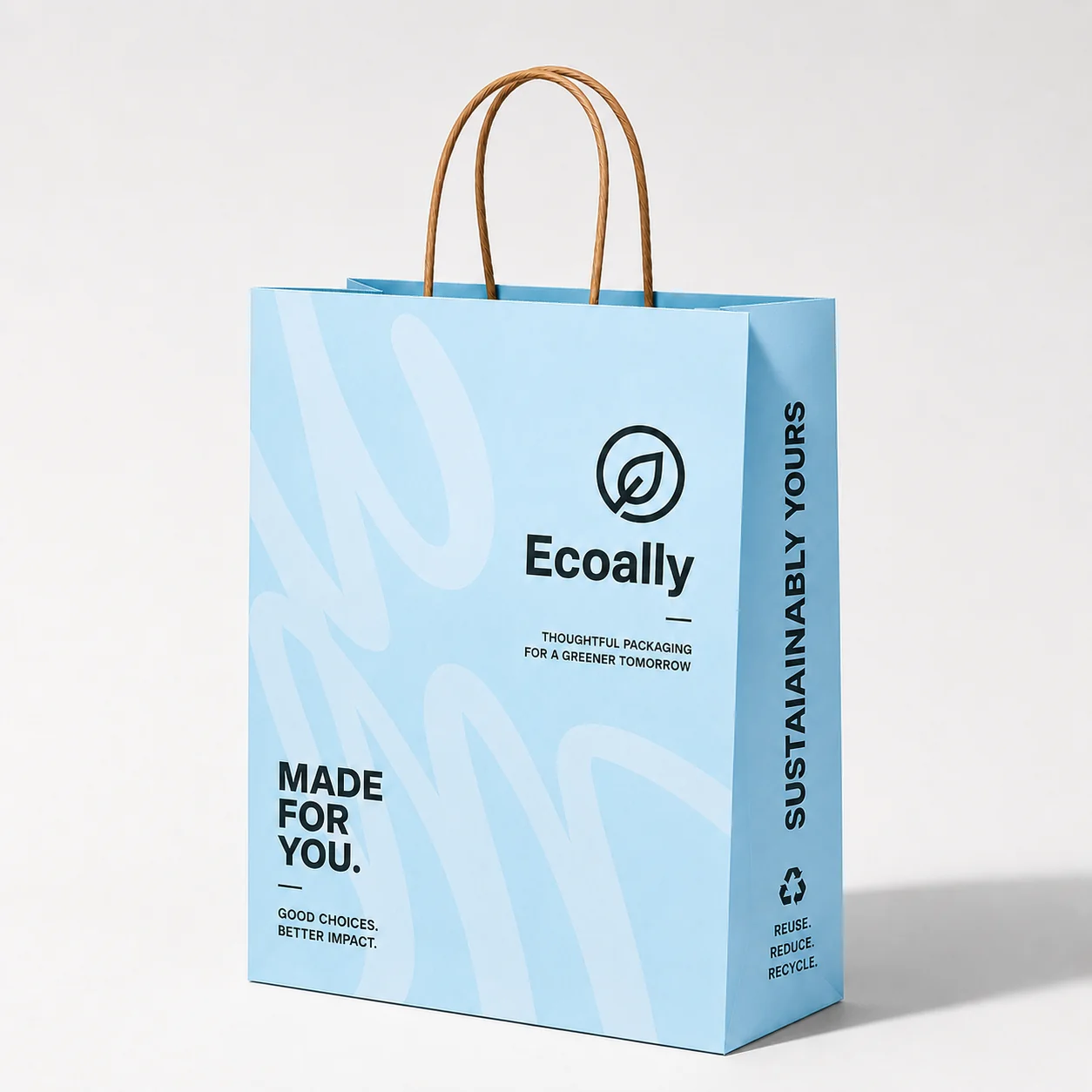
Kraft paper is the workhorse of sustainable food packaging: strong, printable, and made from renewable wood pulp. The sustainability case for kraft paper packaging is easy to explain to customers — it is widely accepted in curbside paper recycling when clean, and uncoated kraft breaks down readily even in home compost. Choosing recycled-content kraft strengthens the story further by cutting virgin fiber use.
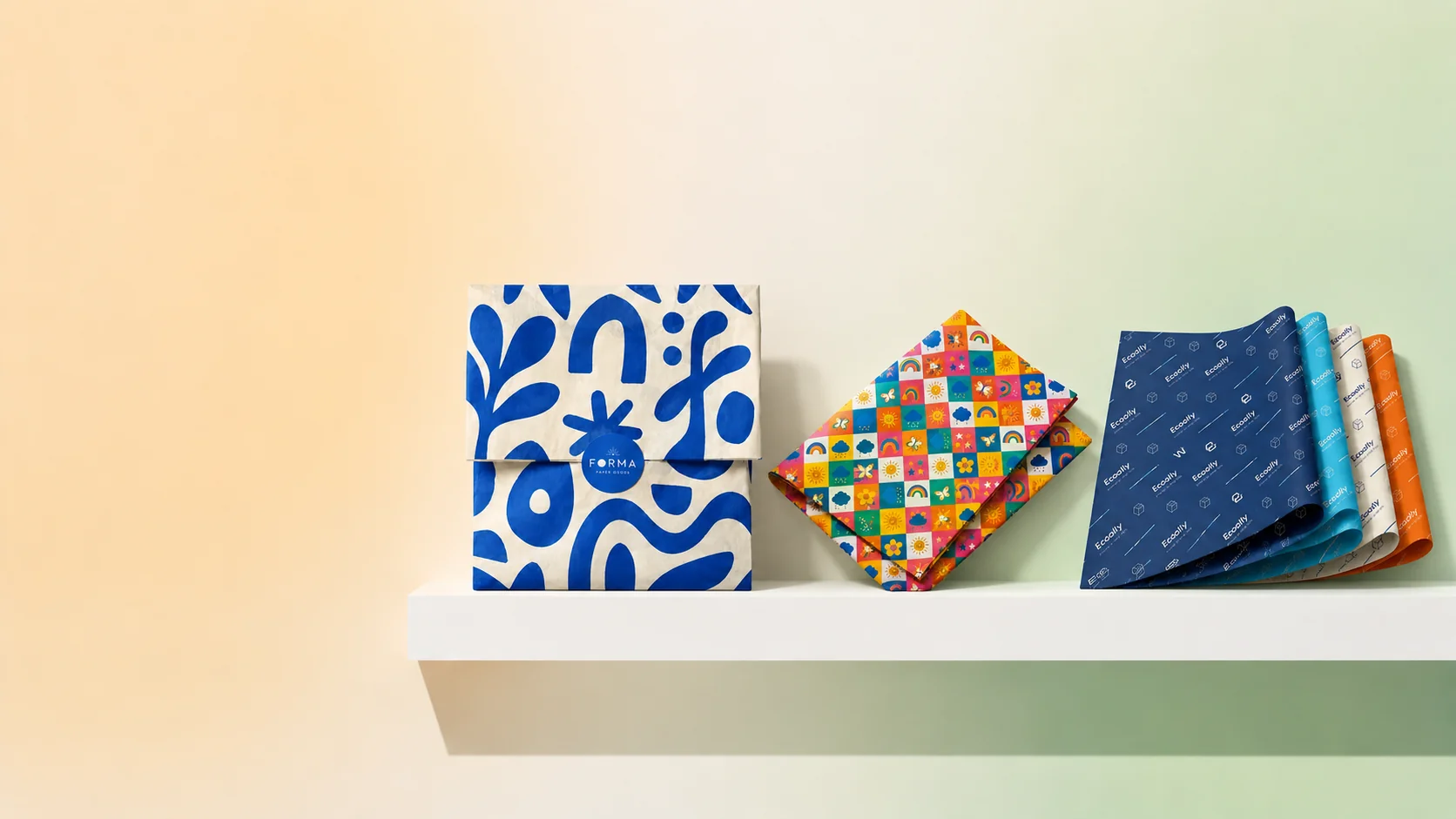
Its limits are grease and moisture: plain kraft handles dry and lightly greasy foods, but wet or oily items need an inner wrap or liner. For most small food brands, custom recycled paper bags and printed paper bags are the lowest-risk starting point — recyclable, compost-friendly, and an excellent print surface for one- or two-color brand marks. The same logic extends to lightweight papers: plain printed tissue and wrapping papers without foil or glitter are typically home-compost friendly, a point covered in more detail in our custom tissue paper guide.
PLA-Lined Paperboard
PLA (polylactic acid) is a plant-based polymer usually made from corn starch or sugarcane. In food service it most often appears as the thin waterproof lining inside paper cups and soup containers, replacing the conventional polyethylene lining that makes standard cups difficult to recycle.
The trade-off: PLA-lined board is generally certified for industrial composting only — it will not break down in a backyard bin, and it does not belong in paper recycling. If your area lacks composting collection, consider recyclable paper cups with lids built with linings designed to separate cleanly in the repulping process instead. Either way, print disposal instructions on the cup — it is the cheapest customer-education channel you own.
Bagasse (Sugarcane Fiber)
Bagasse is the fibrous residue left after sugarcane is pressed for juice — an agricultural byproduct that would otherwise often be burned. Molded into clamshells, bowls, and trays, it is sturdy, naturally grease- and water-resistant, and typically microwave-safe, which makes it the go-to fiber for hot takeout.
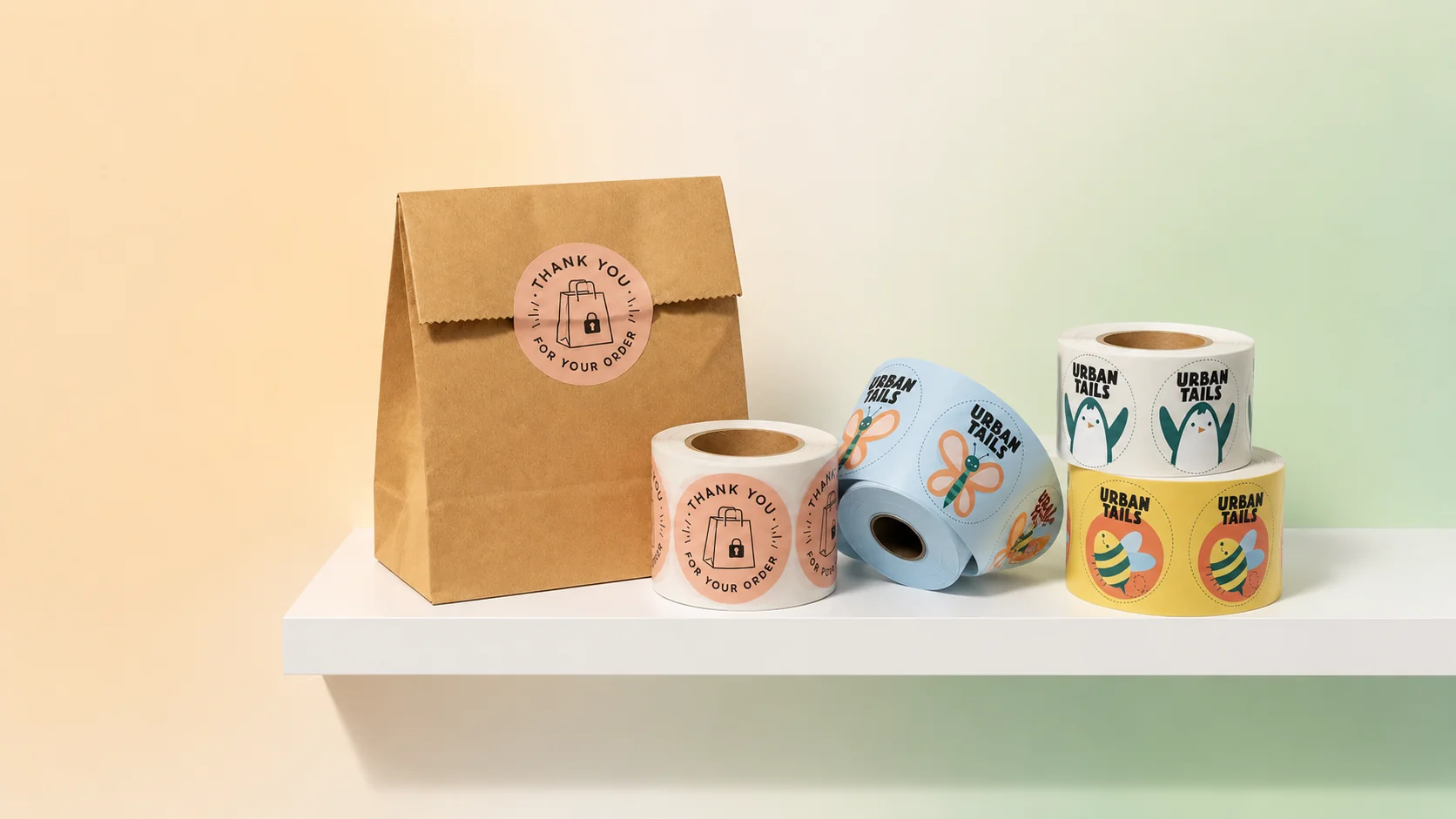
Most bagasse products are certified for commercial composting, and some thinner formats carry home-compost certifications. The main limitation is branding: molded fiber accepts less detailed artwork than flat paperboard, so many brands pair plain bagasse containers with printed wraps, sleeves, or stickers to carry the logo.
Greaseproof Paper
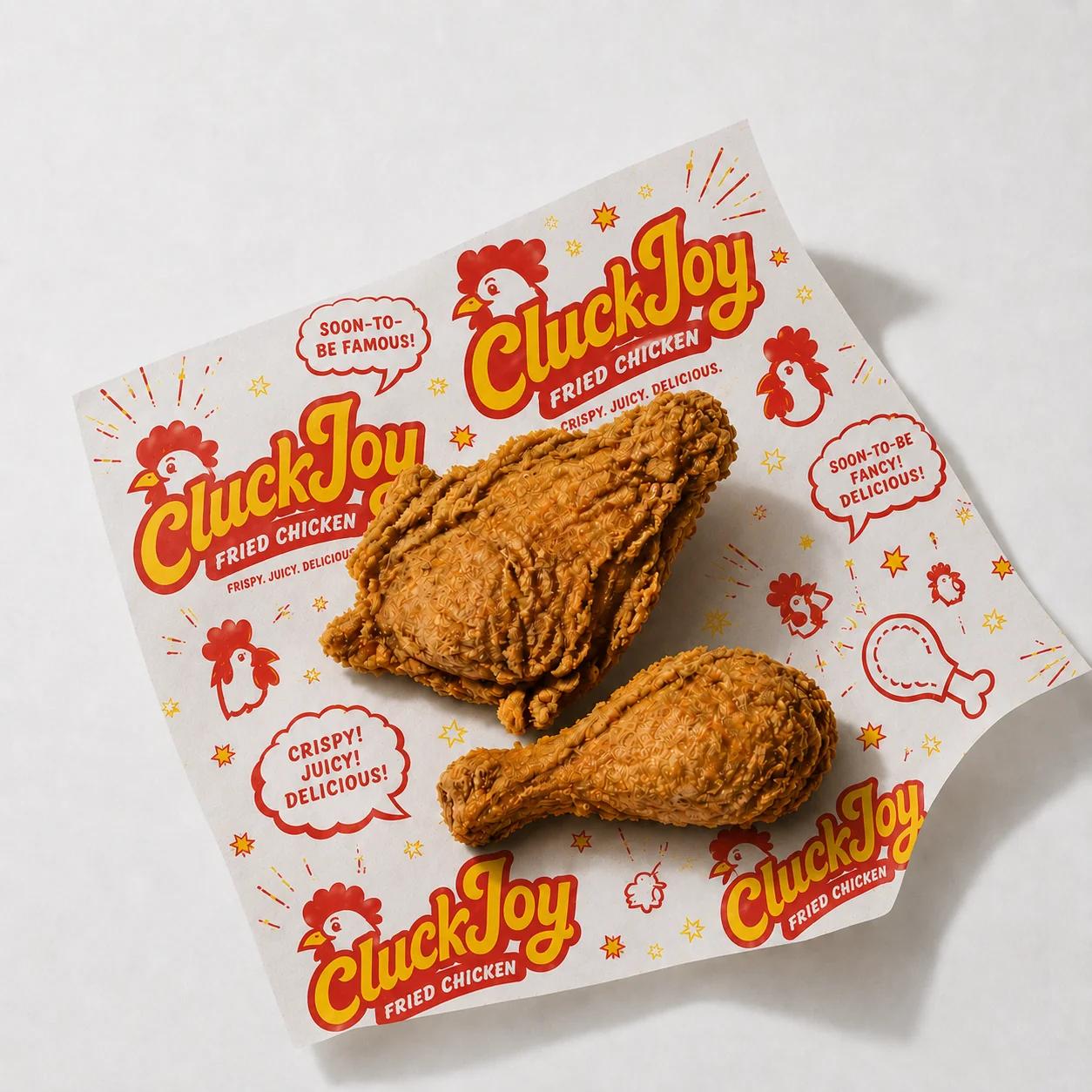
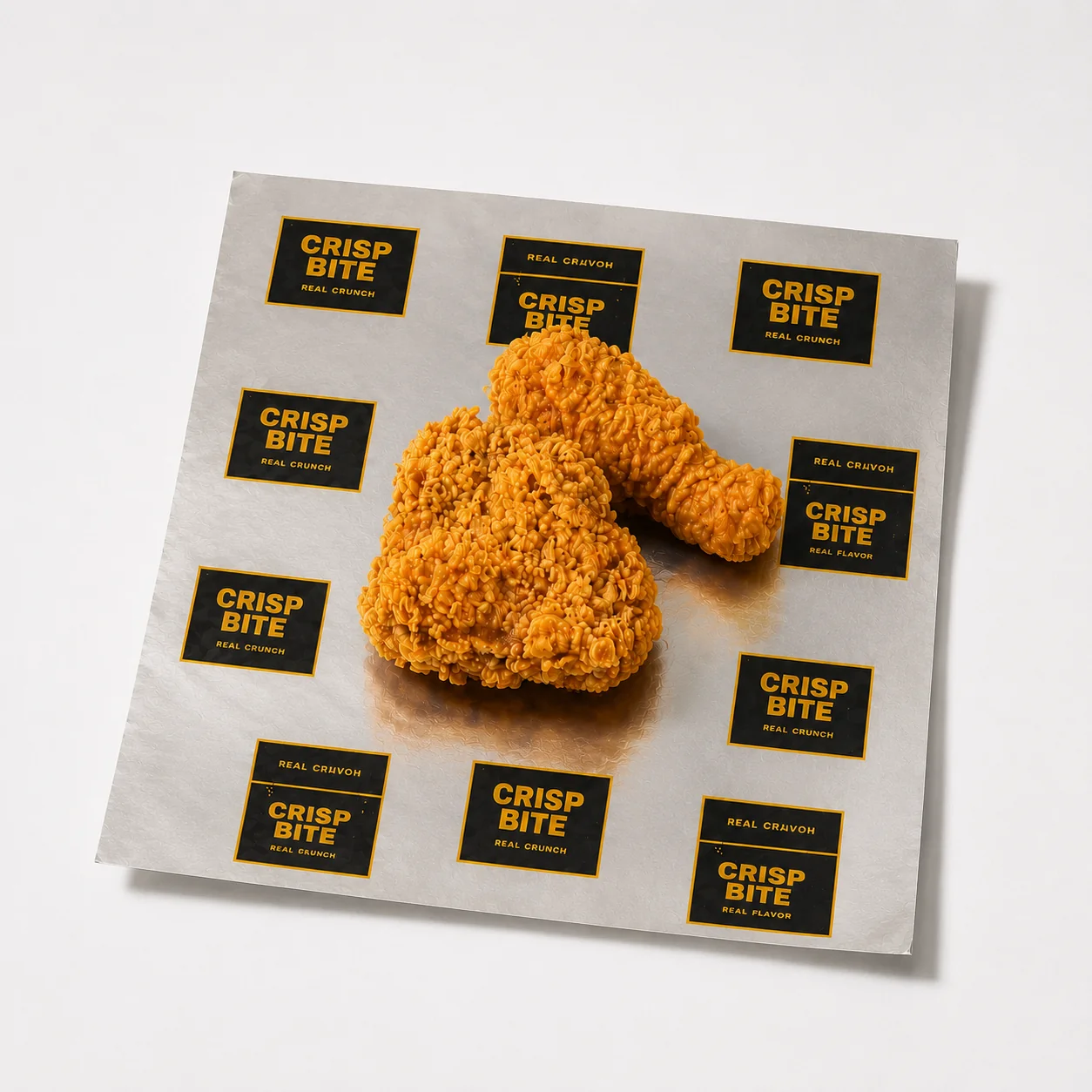
Greaseproof paper resists oil penetration through densely refined fibers rather than a plastic coating — which is exactly what keeps it compostable and recyclable. It is the standard for sandwich wraps, basket liners, deli sheets, and bakery interleaving.
One thing to verify with any supplier: grease resistance in some papers has historically come from PFAS ("forever chemical") treatments, which a growing list of US states now bans in food packaging. Confirm the paper achieves grease resistance mechanically or with PFAS-free coatings. Custom greaseproof paper and printed food wrapping paper also double as branding real estate — the wrap is often the first thing a customer photographs. Current prices, sheet sizes, and minimums for printed food papers are collected in our deli paper and food wrapping guide.
How to Dispose of Compostable Packaging, and How Long It Takes
The question customers ask most — and the one suppliers answer least directly — is what to actually do with compostable packaging, and whether it really breaks down. The honest picture:
- Industrial composting is the intended path for most certified items. US certification standards require disintegration within about 12 weeks and full biodegradation within about 180 days in commercial conditions; in practice, well-run facilities turn certified packaging into finished compost in roughly 45–90 days.
- Home compost is slower and pickier. Items certified home-compostable (such as OK compost HOME) typically need six months to a year in a backyard pile. Uncoated paper products — kraft bags, greaseproof wraps, tissue — break down in weeks to a few months.
- Municipal reality check: many city organics programs accept food scraps but not packaging. Acceptance varies city by city, and some composters take only BPI-certified items or no packaging at all. Check your local hauler's accepted-items list before printing "compostable" on anything; if no facility near you accepts packaging, a certified-compostable cup will realistically go to landfill, where oxygen-starved conditions slow every material down dramatically.
- When in doubt, design for the bin your customers actually have. In areas without composting collection, clean uncoated paper (recyclable and home-compostable) is the more honest default than industrially-compostable bioplastics.
A practical rule for menus and packaging inserts: name the bin, not the ideology — "compost me where accepted, otherwise recycle if clean" beats an unqualified leaf icon.
Certifications to Look For: BPI, OK Compost, and FSC
Certifications turn a vague eco-claim into a verifiable one. Three matter most for food packaging:
BPI (Biodegradable Products Institute)
BPI is North America's main certifier of commercially compostable products. The BPI mark means an independent lab has verified that the item breaks down in industrial composting facilities to ASTM standards without leaving toxic residue. Many US composters accept only BPI-certified packaging, so if industrial compostability is your claim, this is the mark to ask suppliers about.
OK Compost (TÜV Austria)
OK Compost is the leading European certification family, based on the EN 13432 standard, and it comes in two grades: OK compost INDUSTRIAL for facility composting, and OK compost HOME, which certifies breakdown in the cooler, slower conditions of a backyard pile. Home certification is the more demanding of the two — and the more meaningful one if your customers lack composting collection service.
FSC (Forest Stewardship Council)
FSC certifies responsible forestry, not compostability. The FSC label means the paper fiber came from responsibly managed forests, tracked through a chain-of-custody system from forest to finished product. For paper-heavy packaging lineups, FSC is the certification customers most often recognize.
How to validate a compostability claim in practice: ask the supplier for the certificate for the exact product and print process you are ordering, then look the item up in the certifier's public database (BPI and TÜV Austria both run one). Certificates attach to particular materials and facilities, not to a brand as a whole — reputable suppliers will show documentation for the exact item.
What's Changing in Compostable Food Packaging (2026)
Four shifts worth knowing when you compare suppliers this year:
- PFAS-free is becoming the default. With state bans on PFAS in food packaging spreading across the US, grease resistance increasingly comes from mechanical refining or PFAS-free coatings. "Is this PFAS-free?" is now a standard supplier question, and any hesitation is a red flag.
- Home-compostable certification is expanding beyond wraps. Thinner molded-fiber items and coated papers are increasingly certified for home composting, not just industrial — meaningful for the majority of US customers who lack curbside organics service.
- Fiber is replacing plastic accessories. Molded-fiber lids, paper cutlery, and paper-based films are maturing quickly, letting all-paper (single-material) packaging setups replace mixed-material ones — which simplifies the disposal story to a single instruction.
- Producer-responsibility laws are arriving. A growing list of states is phasing in extended producer responsibility (EPR) rules for packaging, which will gradually reward lighter, recyclable, and certified-compostable formats with lower fees. Choosing certified materials now is partly future-proofing.
Choosing Compostable Food Packaging by Business Type
The right material mix depends less on ideology than on what leaves your counter every day.
Coffee Shops
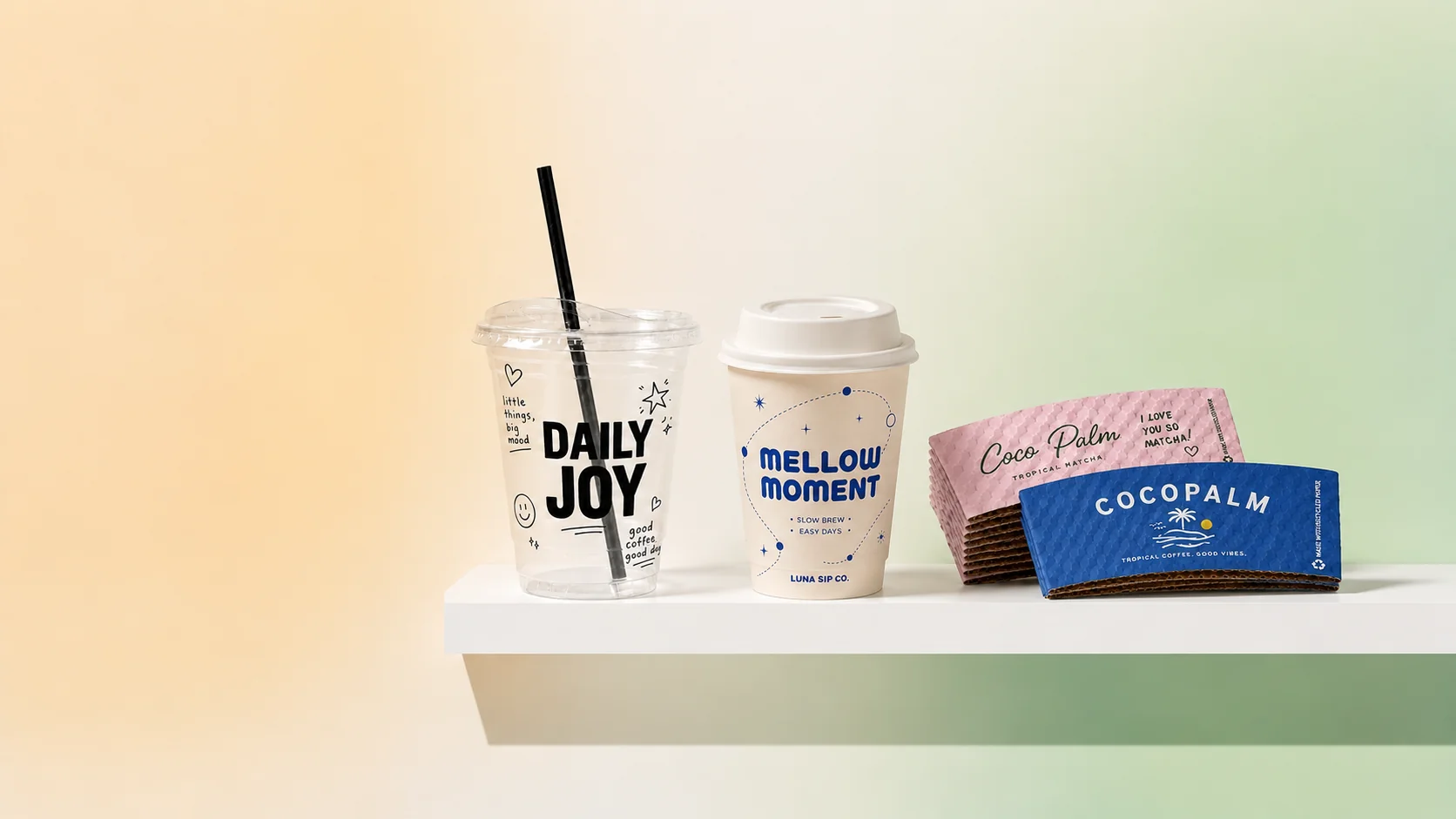
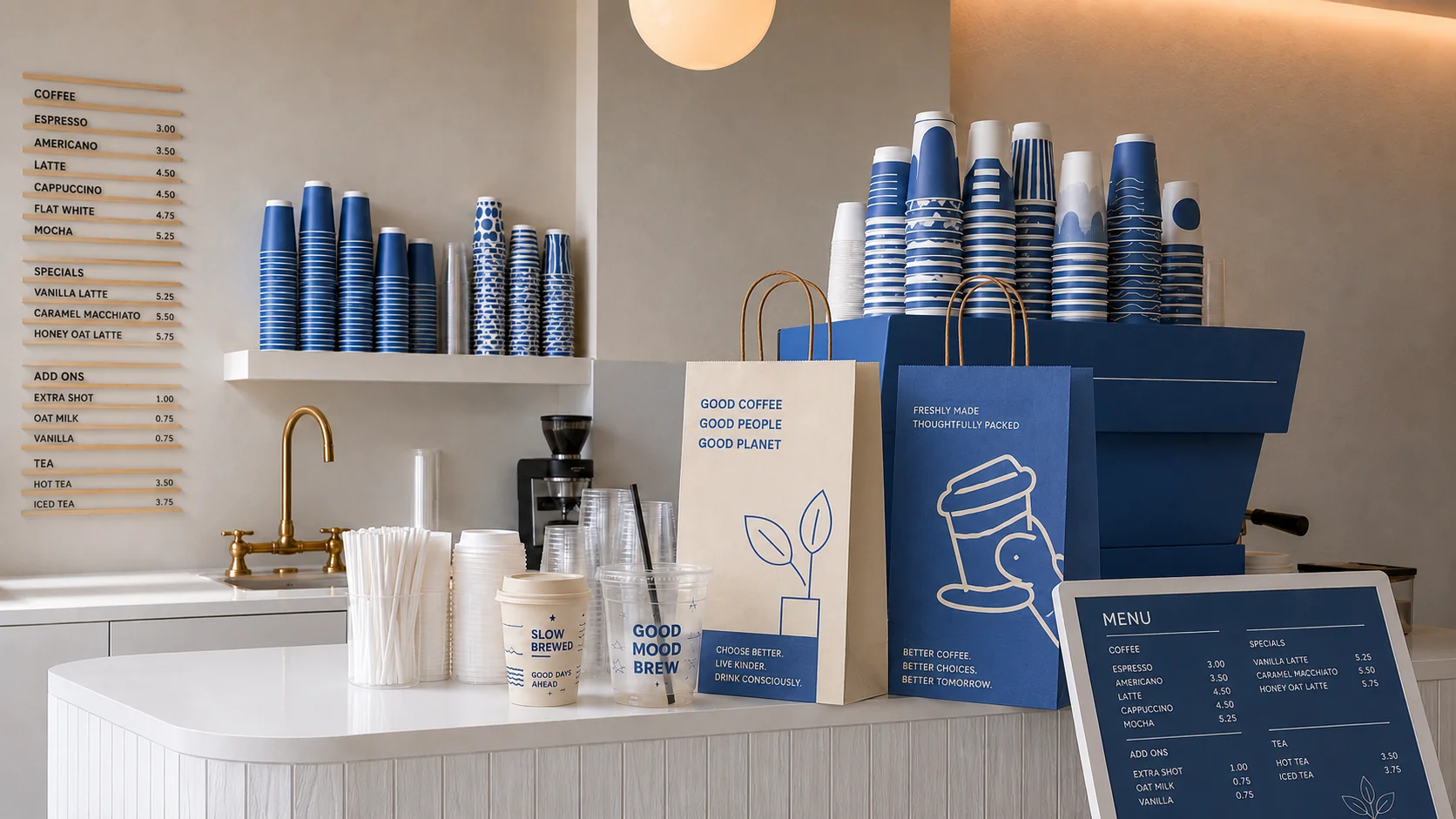
Cups dominate the footprint. Choose PLA-lined hot cups if your city has composting collection, or recyclable-lined paper cups with lids if it does not, and add kraft coffee cup sleeves — an easy recyclable branding surface that also solves the hot-hands problem. Pastries ride along in uncoated kraft bags. For a full walkthrough of formats and sizing, see the coffee shop packaging guide.
Bakeries
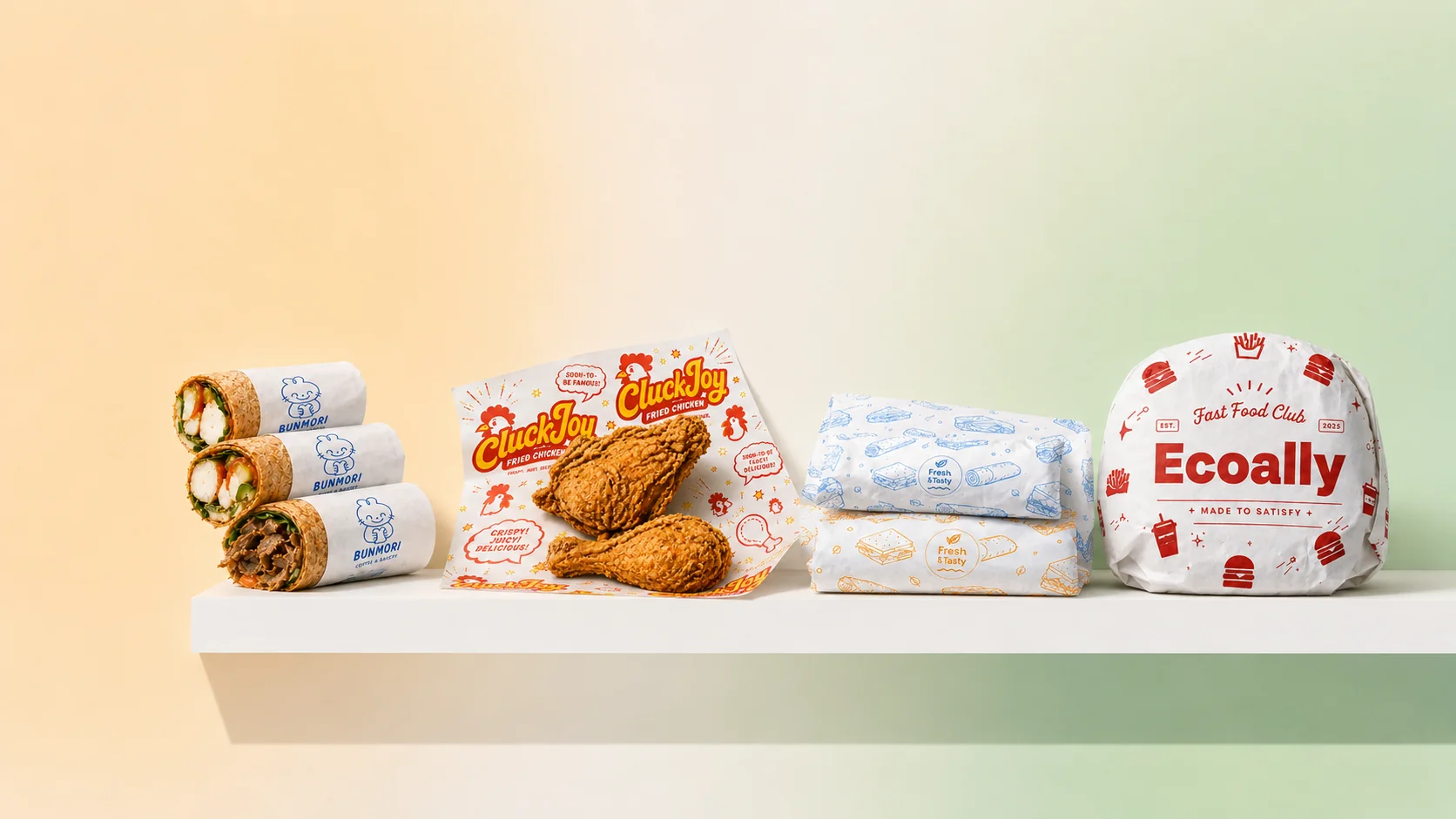
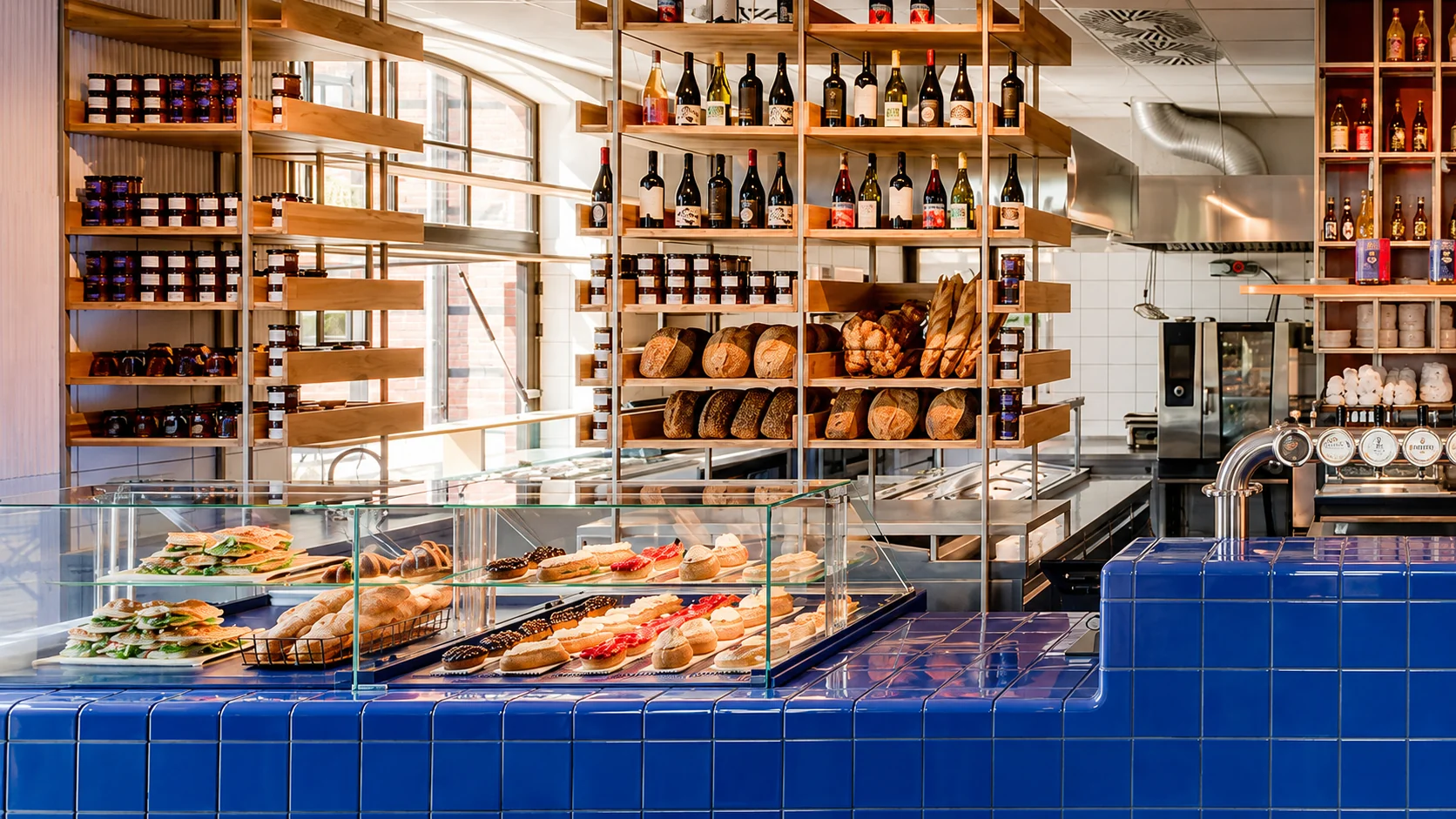
Grease is the design constraint. Line or wrap anything buttery in greaseproof paper, use greaseproof bakery bags for cookies and pastries and long gusseted bread bags for baguettes and loaves, and reserve paperboard boxes for cakes and pastry assortments. All-paper constructions keep the disposal message simple for customers: recycle it if clean, compost it if soiled.
Restaurants and Takeout
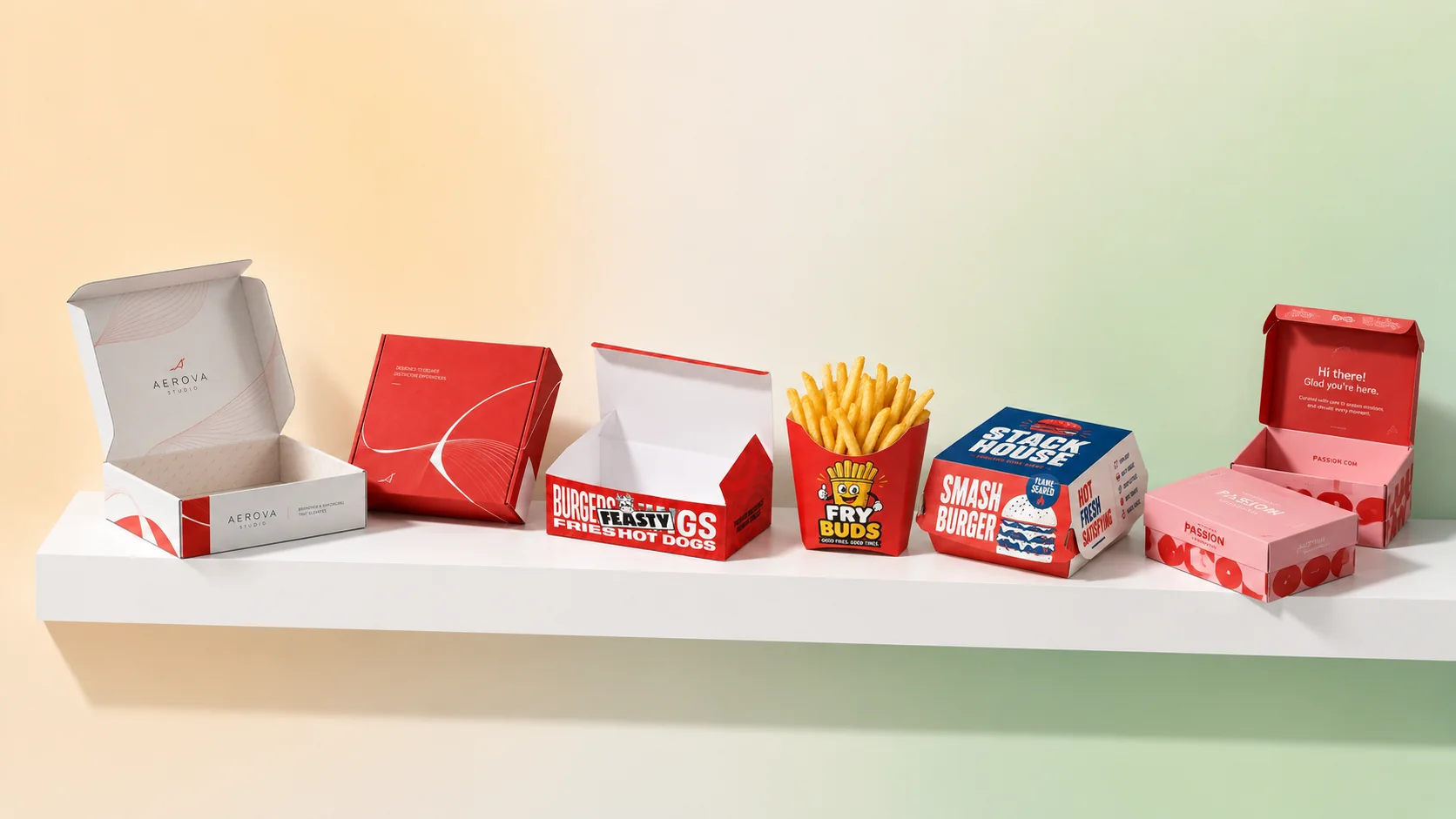
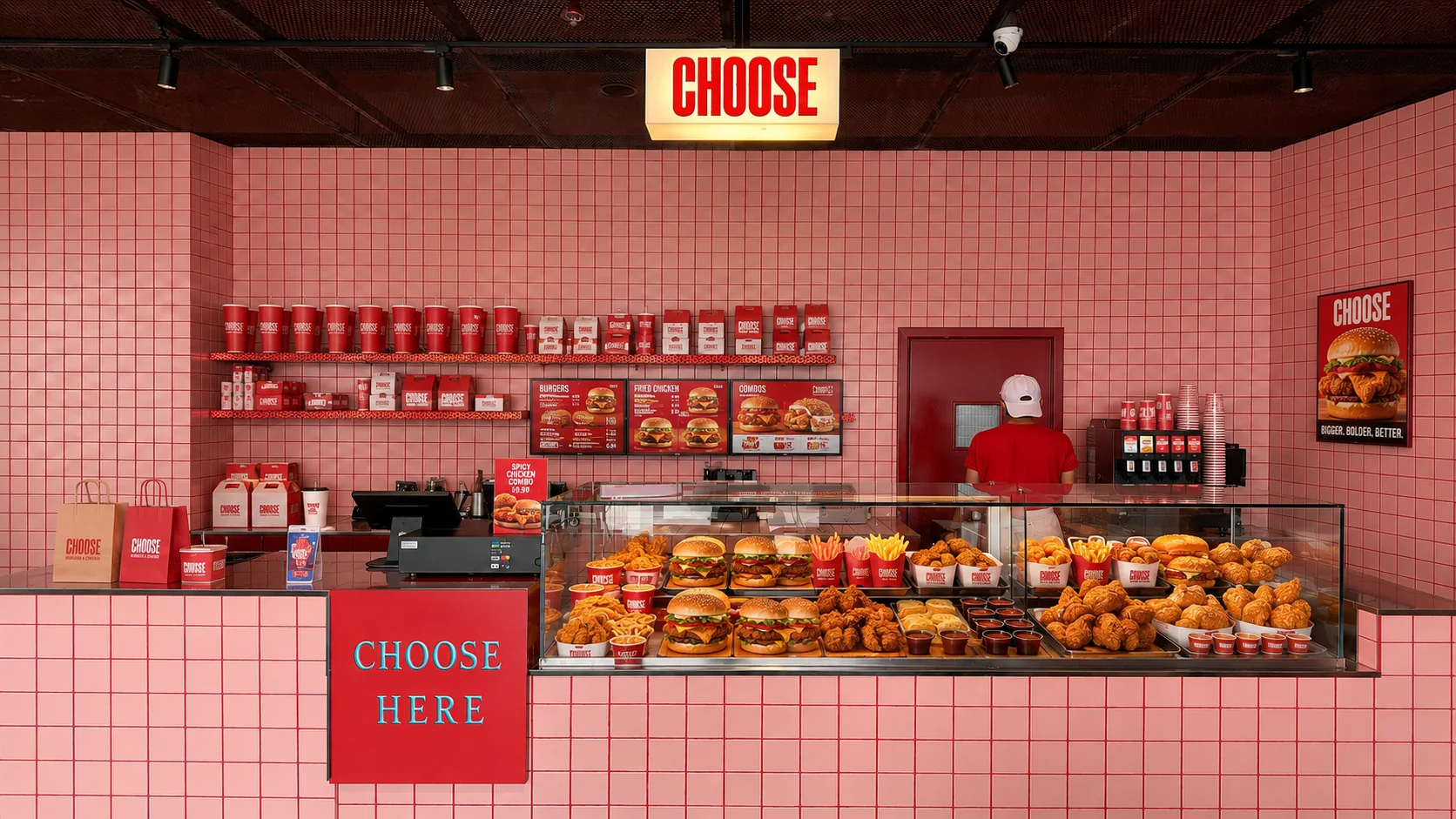
Hot, saucy entrees call for bagasse clamshells and bowls; dry and fried items do well in kraft boxes and sandwich bags with a greaseproof layer where needed. Because takeout travels, test any candidate material with your actual menu — steam and sauce reveal weaknesses a spec sheet will not. The restaurant takeout packaging guide covers container-by-container choices in depth.
Cost and MOQ: Going Biodegradable Without Big Volumes
The biggest historical barrier to switching materials was never conviction — it was volume. Traditional packaging suppliers price custom printing around long runs, with minimums that often start in the thousands of units per size and design. For an independent cafe testing its first branded cup, that is a cash-flow problem and a storage problem before it is ever a sustainability win.
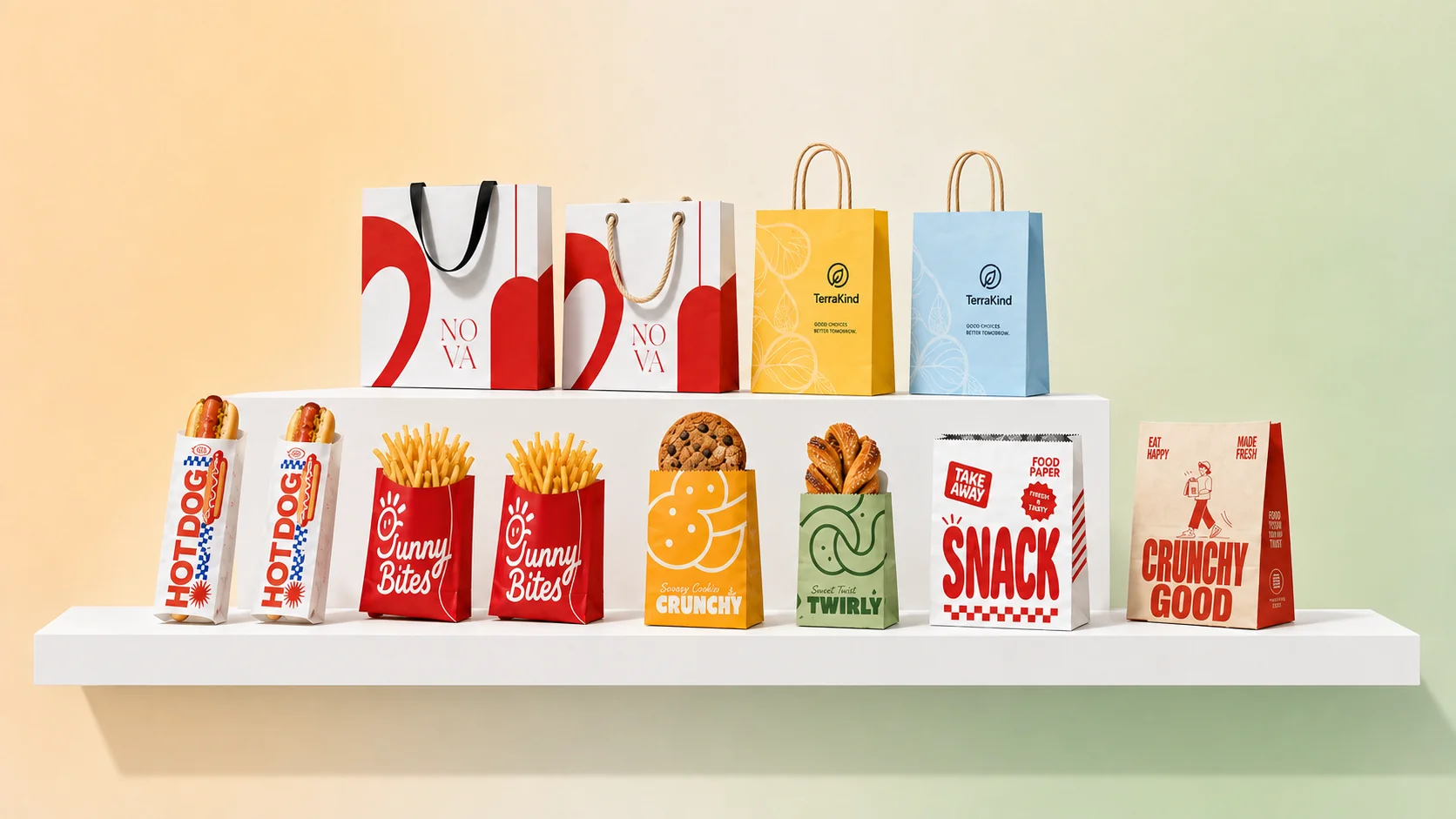
Digital printing has changed the math. Because digital presses skip the plates that make short runs uneconomical, small batches of custom-printed compostable food packaging are now realistic for independent businesses. Ecoally's lines mostly start between 50 units (luxury shopping bags) and 250 sheets (printed food papers and tissue), with tiered pricing shown on each product page — small enough to support staged testing rather than warehouse-scale commitments.
A sensible rollout looks like this: order samples of two or three candidate materials, run them through real service — hot fills, greasy items, delivery bags stacked in a car — then commit a small branded batch of your highest-visibility item, usually the bag or cup that customers carry out the door. Scale only what survives contact with your actual menu. For more on structuring small orders, see low MOQ packaging for small businesses.
When you are ready to put your brand on the material you have chosen, preview your artwork on the exact product in the online 3D design editor before committing to production, and browse the full product range to compare materials item by item.
Frequently Asked Questions
What is compostable food packaging?
Food packaging certified to break down into non-toxic compost within a defined timeframe under composting conditions — in the US, usually to ASTM D6400 or D6868 standards. Common examples are uncoated kraft and greaseproof papers, bagasse containers, and PLA-lined cups (industrial composting only). "Compostable" is a stricter, testable claim; "biodegradable" alone sets no deadline or conditions.
How long does compostable packaging take to break down?
In an industrial facility, certified packaging typically becomes finished compost in about 45–90 days (US standards require disintegration within roughly 12 weeks). Certified home-compostable items need about six months to a year in a backyard pile, and uncoated papers break down in weeks to a few months. In a landfill, all of these timelines stretch dramatically because the environment lacks oxygen.
Is compostable packaging actually composted by city programs?
Not always — this is the industry's honest gap. Many municipal organics programs accept food scraps but exclude packaging, and some composters take only BPI-certified items. Check your hauler's accepted-items list; if packaging is not accepted locally, prefer recyclable or home-compostable formats and say so on the label.
Is PLA-lined paper compostable at home?
No. PLA needs the sustained high temperatures of an industrial composting facility to break down; a backyard pile rarely gets hot enough. If your area has no composting collection, PLA-lined items will most likely end up in a landfill, so a recyclable-lined paper cup may be the more honest choice for your market.
Is kraft paper compostable?
Yes. Uncoated kraft paper is both recyclable and compostable, including in home compost setups. The practical rule: recycle it when it is clean, compost it when it is food-soiled, and check the spec for any plastic lamination or window film, which changes the disposal path.
Are biodegradable cups more expensive than conventional plastic-lined ones?
Usually somewhat, though the gap has narrowed as demand and production capacity have grown. Spread across a drink's retail price, the per-unit difference is typically small — and many operators treat it as a marketing cost, since visible sustainability influences where a growing share of customers choose to buy.
Can biodegradable packaging handle hot or greasy food?
Yes, if you match the material to the job. Bagasse handles hot, wet, and greasy foods and is often microwave-safe; greaseproof paper manages direct oil contact; plain kraft is best kept to dry and lightly greasy items unless paired with a liner.
Do "biodegradable" claims need certification to be legal?
There is no single federal license, but the FTC's Green Guides require that environmental claims be substantiated and not misleading, and some states restrict "biodegradable" labeling outright. The safest route is to market only what a certification backs up — "BPI-certified compostable," for example — rather than a bare "biodegradable."
What should I order first when switching materials?
Samples, before anything printed. Test how each material performs with your actual food over a normal service window, confirm your local disposal story, and only then invest in a branded run of the one or two items your customers see and handle most.