
Tamper-Evident Labels for Food Delivery: Types, Sizes & Costs (2026 Guide)
Tamper-evident labels are seals that cannot be removed and reapplied without leaving proof: the paper shreds, a VOID pattern appears, or the label tears along built-in slits. For food delivery they answer a question every customer silently asks when a bag arrives — was this opened on the way? The good news is that the labels are cheap: pre-printed rolls run about $0.03–$0.06 per label, and custom-branded versions roughly $0.12–$0.28 at a thousand pieces, falling under $0.10 at volume.
This guide covers how the three main label mechanisms work and why only some of them are genuinely tamper-evident, what delivery platforms expect from restaurants, which sizes fit bags, boxes, and drink lids, what custom versus stock labels cost in 2026, and how to apply a seal so it actually does its job.
What Makes a Label Tamper-Evident
A "sealed for your safety" sticker on ordinary paper is a message, not security: it peels off warm and goes back on clean. Genuine tamper-evident labels rely on one of three constructions:
| Type | How it works | Evidence left | Best for |
|---|---|---|---|
| Destructible (eggshell) paper | Fragile face stock that fragments when peeled | Label breaks into pieces; cannot be reapplied | Food bags, boxes, drink lids; branded seals |
| VOID / checkerboard film | Two-layer film that separates on removal | "VOID" or a pattern stays on the surface | Electronics, pharmacy, asset tags |
| Security-slit paper | Cuts across the label face | Label tears along the slits when lifted | Budget food-service seals, hand-writable labels |
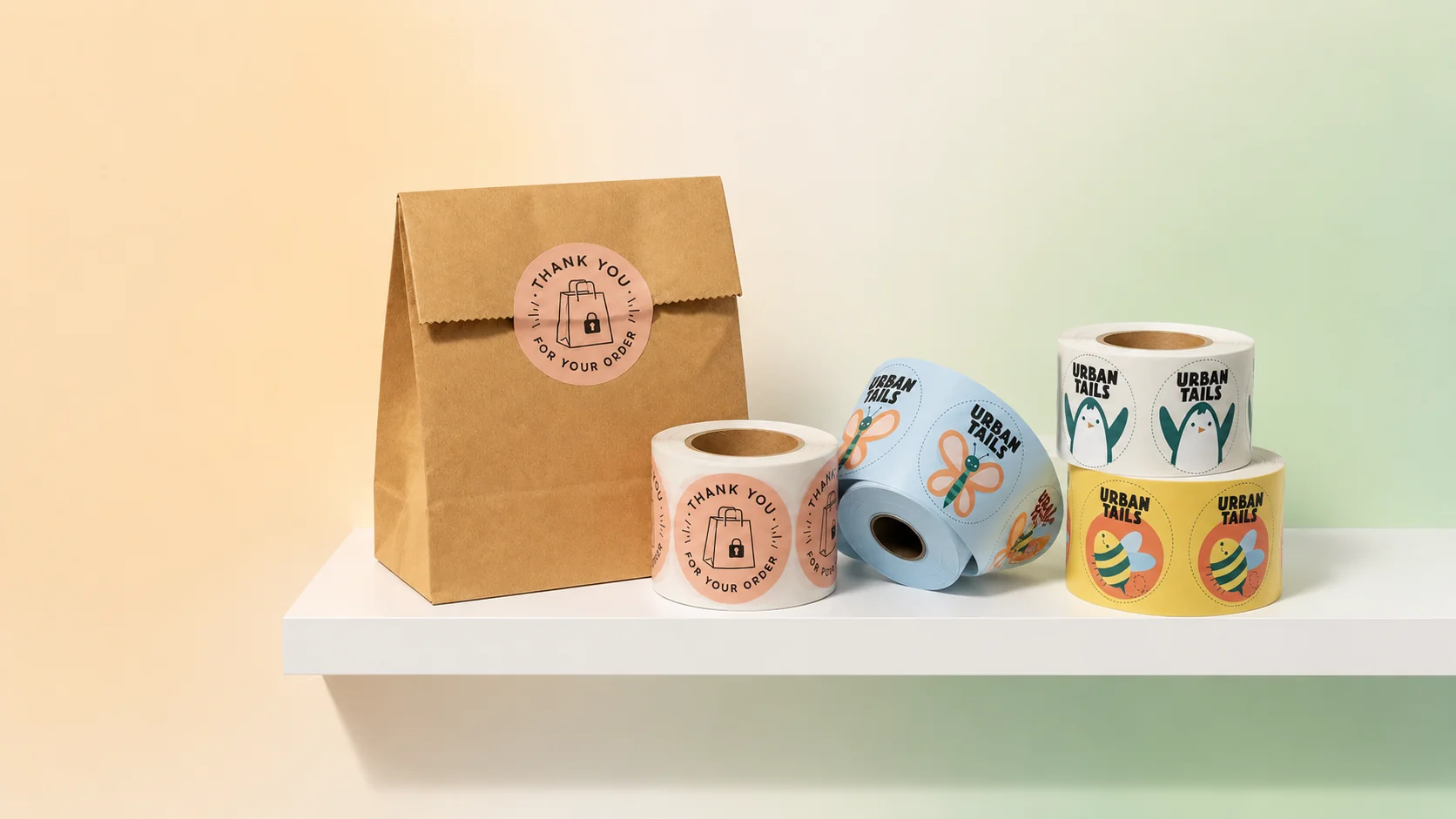
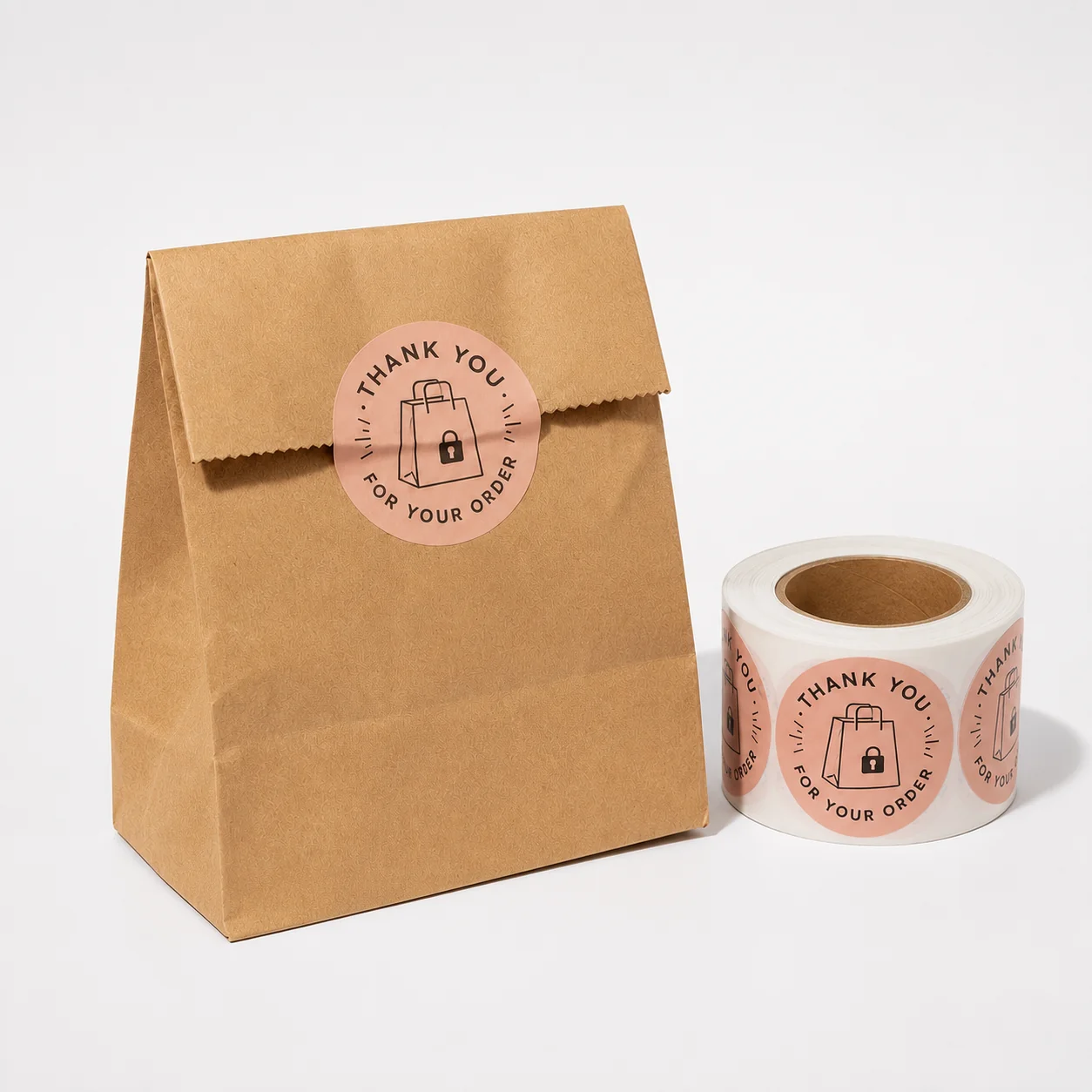
For takeout and delivery, destructible paper and security-slit paper do the job at food-service prices; VOID film is the industrial option and usually overkill for a bag of tacos. Ecoally's custom tamper-proof sticker rolls use white eggshell paper, the destructible type, printed full-color with UV inks in a matte finish.
Why Delivery Orders Need One
Three reasons, in order of how often they come up:
- Customer trust. Third-party delivery hands your food to someone the customer never sees. A visible seal is the only signal that the bag left the kitchen exactly as packed, and it is the first thing a nervous customer checks.
- Platform expectations. DoorDash and Uber Eats both instruct merchants to seal delivery orders and tell drivers not to open sealed packaging; unsealed orders are the ones that generate refund disputes with no evidence on either side. Check your platform's current merchant guidelines, since the wording changes, but the direction is the same everywhere: seal it.
- Dispute protection. When a "missing item" claim arrives, an intact seal in the driver's drop-off photo shifts the conversation. It does not stop every refund, but it stops the ones that come from opened bags.
The honest caveat, raised by drivers themselves: a cheap paper "sealed" sticker is trivially replaceable, so the value depends entirely on using a label that destroys itself and placing it across the opening. Both points are covered below.
Sizes: Matching the Label to the Bag, Box, or Cup
Sizing is about spanning the opening, not covering the package:
| Size | Format | Where it works |
|---|---|---|
| 2 × 2 in circle or square | Dot seal | Drink lids, small bags, box corners, cup carriers |
| 2.5 × 2.5 in | Branded dot | Same jobs with more logo room |
| 3 × 3 in | Large dot | Clamshell and takeout box lids |
| 2 × 4 in rectangle | Short strip | Folded bag tops, small box seams |
| 2 × 6 in rectangle | Long strip | Large delivery bags, pizza boxes, catering trays |
Ecoally's rolls come in exactly these five sizes, which is not a coincidence: a dot and a strip cover almost every food-service seal. A practical starter set is one strip size for bags and one dot size for cups and boxes.
What Tamper-Evident Labels Cost in 2026
Surveying published US prices in September 2026:
| Route | Typical price per label | Notes |
|---|---|---|
| Stock pre-printed rolls ("Sealed for your safety") | $0.03–$0.06 | Restaurant-supply stores, 250–1,000 per roll; no branding |
| Blank hand-writable tamper labels | $0.03–$0.05 | For time and order-number stamping |
| Custom-branded destructible rolls | $0.12–$0.28 at 1,000; under $0.10 at 5,000–10,000; $0.04–$0.07 at 40,000 | Your logo, colors, and message; printed on security stock |
As a live example of the custom curve, Ecoally's sticker rolls start at 1,000 labels for about $0.18–$0.28 each depending on size, and step down to roughly $0.04–$0.07 at 40,000, with tier tables on the product page.
Per-order math settles the stock-versus-custom decision: at one or two seals per order, a branded label adds $0.15–$0.50 to a delivery order at small volumes and about a dime at scale. For a restaurant doing 60 delivery orders a day, 1,000 labels is roughly a two-week supply, so the custom minimum is a reorder rhythm, not inventory risk. Stock rolls make sense while volume is tiny or while the logo is still changing; custom seals earn their keep once delivery is a steady channel, because the seal is also the most-photographed piece of packaging in the order.
How to Apply a Seal So It Actually Works
Most tamper-label failures are application failures:
- Span the opening. On bags, fold the top over twice and place the strip across the fold onto both faces. On boxes, seal where the lid meets the base. On drinks, run the dot across the lid seam.
- Clean and dry. Grease and condensation defeat any adhesive. Seal at the pass, after wiping, before the bag goes into the pickup rack.
- Press, do not slap. Firm pressure for a few seconds sets a permanent adhesive; a label dropped on and left will lift at the edges.
- Two seals on large orders. Catering trays and big bags get a strip on each side; a single seal on a wide opening leaves a gap.
- Print what matters. Beyond the logo, the most useful text is an order number or time box the line can write on, plus a short line telling the customer the seal should be intact.
Custom vs. Stock Labels, and What to Print
A stock "Sealed for your safety" roll is the right first step for any restaurant starting delivery. The switch to custom labels comes when three things are true: delivery is a steady share of sales, the brand is settled, and you want the seal to double as the logo the customer sees before anything else.
For branded seals, keep the design simple: logo, one line of reassurance, a blank for order number or time. Full-color printing on destructible stock reproduces logos well but avoid heavy dark floods that hide tearing evidence. If you also want plain branding stickers for boxes and bags that are not security seals, Ecoally's recycled sticker sheets start at 250 labels, a cheaper route for decoration than security stock.
Labels also pair with, rather than replace, the rest of the delivery kit: a seal across a SOS takeout bag, a dot on a burger box lid, and printed liners inside. The full takeout stack is in our restaurant takeout packaging guide, and the case for stickers on plain paper as a low-volume branding route is made in the deli paper guide.
Eco Notes
Paper-faced tamper labels on paper bags keep the whole package in one material family; small labels do not disqualify a paper bag from recycling in most programs, though acceptance varies locally. Film-based VOID labels and plastic-faced seals are the ones to avoid if you print a sustainability message on the bag. Ask suppliers what the face stock and adhesive are, and whether inks are UV-cured or water-based, so the seal matches the rest of the packaging story.
Frequently Asked Questions
What are tamper-evident labels?
Seals designed to show visible proof if a package has been opened. The three common types are destructible paper that fragments when peeled, VOID film that leaves a pattern behind, and security-slit paper that tears along cuts. Any label that can be peeled off cleanly and reapplied is not tamper-evident, whatever it says.
Are tamper-evident labels required for food delivery?
Delivery platforms instruct merchants to seal orders and drivers not to open sealed packaging, and unsealed orders are the ones that lose refund disputes. Requirements are stated in each platform's merchant guidelines and change over time, so check yours; in practice, sealing every delivery order is the standard.
What size tamper label do I need?
A 2 × 4 in strip covers most folded bag tops, a 2 × 6 in strip handles large bags and pizza boxes, and a 2 × 2 in dot seals drink lids and small boxes. One strip size plus one dot size covers nearly every food-service situation.
Can tamper-evident labels be faked or replaced?
Cheap paper "sealed" stickers can be peeled and reapplied, which is the complaint drivers raise. Destructible eggshell paper or VOID film cannot: the label breaks or leaves residue. Placement across the actual opening matters as much as the material.
How much do custom tamper-evident labels cost?
Roughly $0.12–$0.28 per label at 1,000 pieces, under $0.10 at 5,000–10,000, and around $0.04–$0.07 at 40,000, versus $0.03–$0.06 for stock pre-printed rolls. Ecoally's custom rolls start at 1,000 labels.
Do tamper labels work on drinks?
Yes. A 2 × 2 in dot placed across the lid seam seals cups; it is the most requested add-on after bag seals and the cheapest fix for the "was my drink opened?" complaint.
Seal the Order, Show the Logo
A tamper-evident seal is the rare piece of packaging that protects the order, defends the refund dispute, and carries the brand at the same time, for a few cents. Start with stock rolls if delivery is new, and move to branded destructible seals once it is a steady channel: upload your logo to Ecoally's custom tamper-proof sticker rolls page, pick a strip and a dot size, and preview the seal before printing.