Bakery Packaging Guide: Bags, Boxes & Eco-Friendly Supplies
Bakery packaging has one job with two halves: get a delicate, often greasy product home intact, and make the box or bag worth photographing on the way. The working kit for most bakeries is short — grease-resistant bags for pastries, gusseted bags for bread, paperboard boxes for cakes, liner sheets under everything sticky — plus a branding layer of printed paper, tissue, or stickers when the budget allows. Costs run from a few cents for a printed bag to a couple of dollars for a rigid gift box.
This guide walks through the packaging a bakery actually needs, product by product, with the material choices that keep butter off the customer's hands, the eco-friendly options customers increasingly expect, and an honest look at 2026 prices and minimum orders, including which custom items make sense at small volumes and which only pay off at scale.
The Bakery Packaging Checklist
Six categories cover nearly everything that leaves a bakery counter:
| Item | Built for | Material that works |
|---|---|---|
| Bakery bags (flat and gusseted) | Cookies, croissants, pastries, counter service | Greaseproof paper, 30–50 gsm |
| Bread bags | Baguettes, sourdough loaves, sandwich loaves | Kraft or greaseproof paper with a deep gusset |
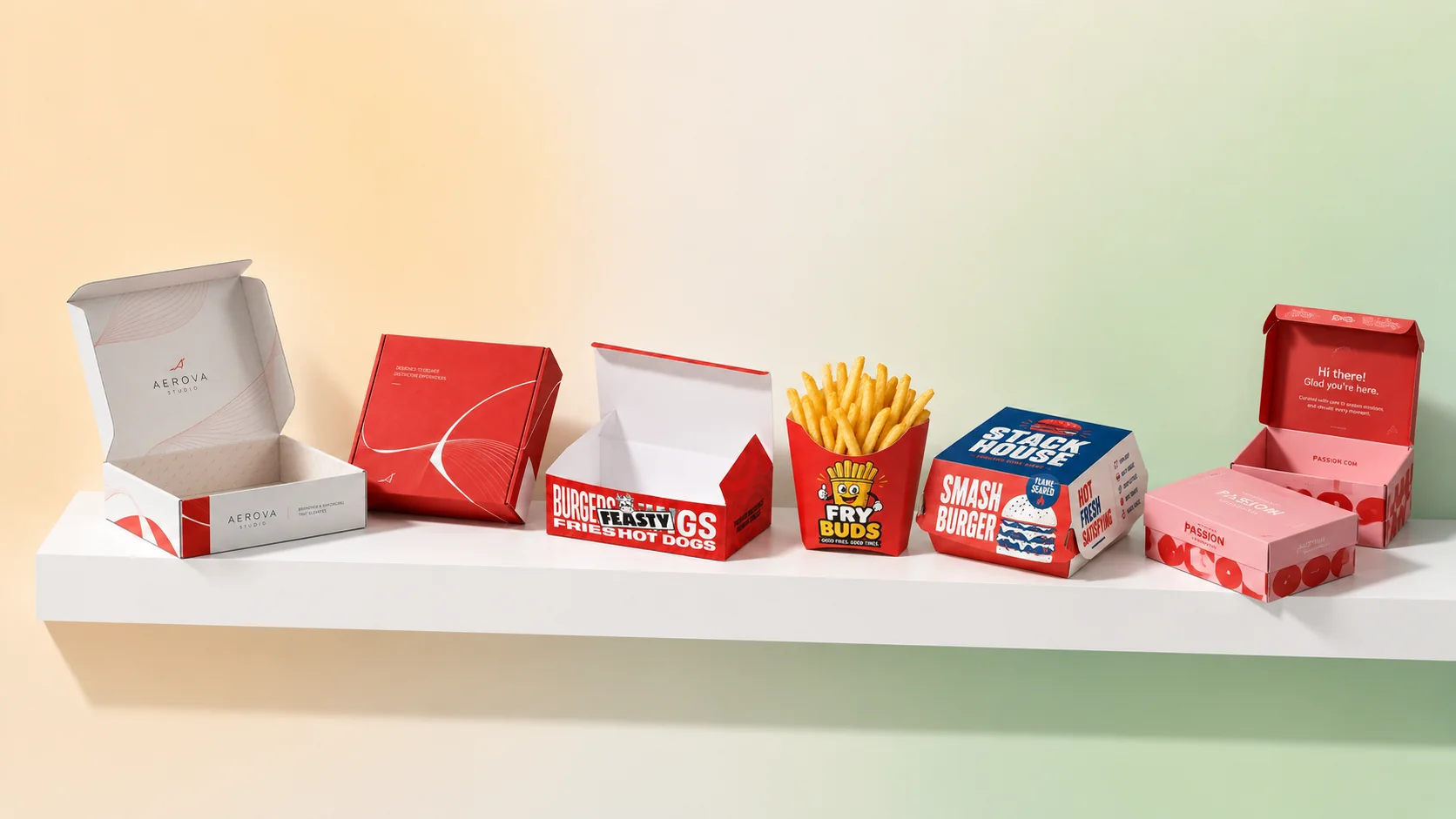
| Bakery boxes | Cakes, cupcakes, pastry assortments | Paperboard, often with a window |
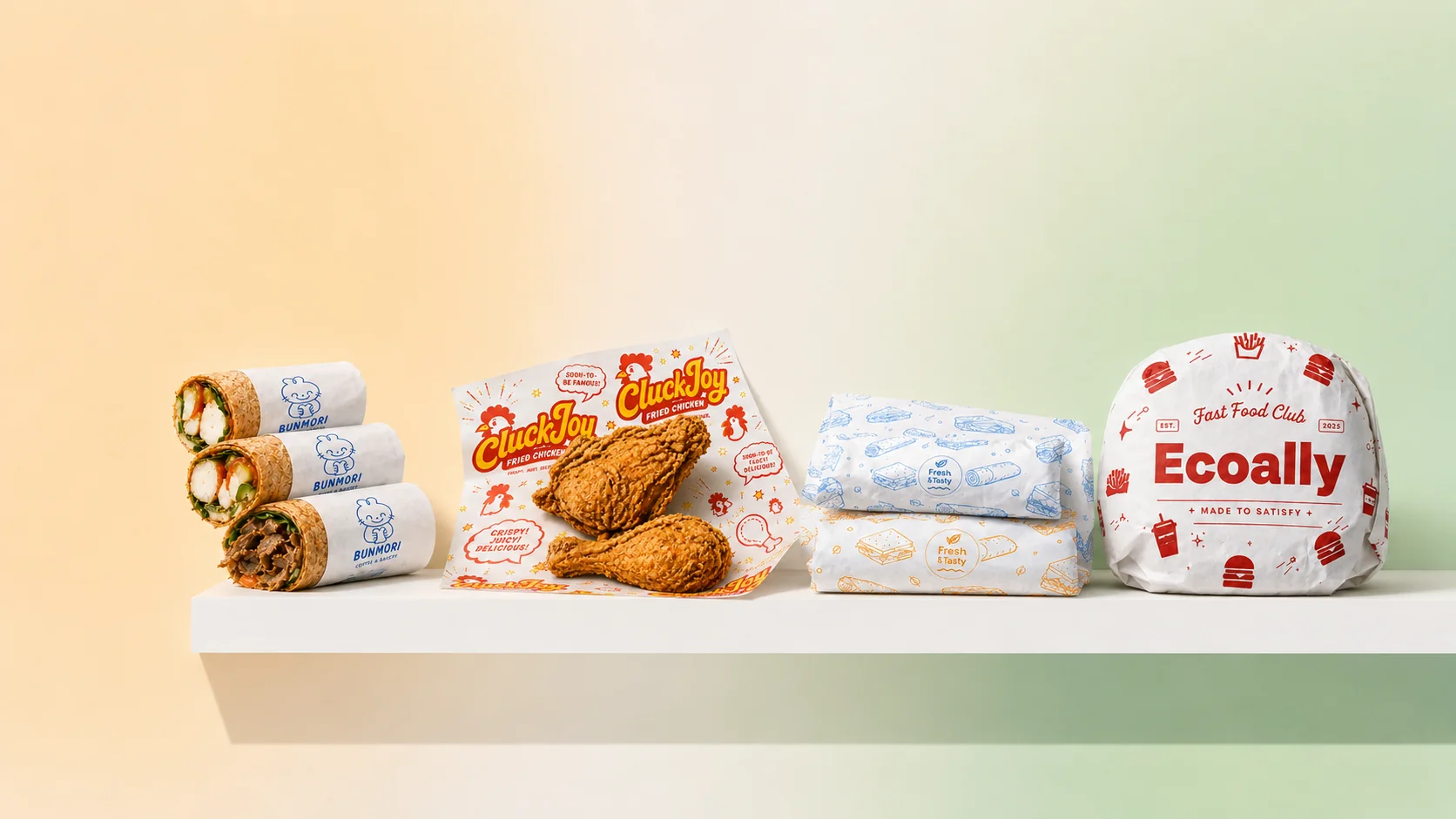
| Liner and wrap sheets | Under sticky items, between layers, basket service | Greaseproof or dry wax sheets |
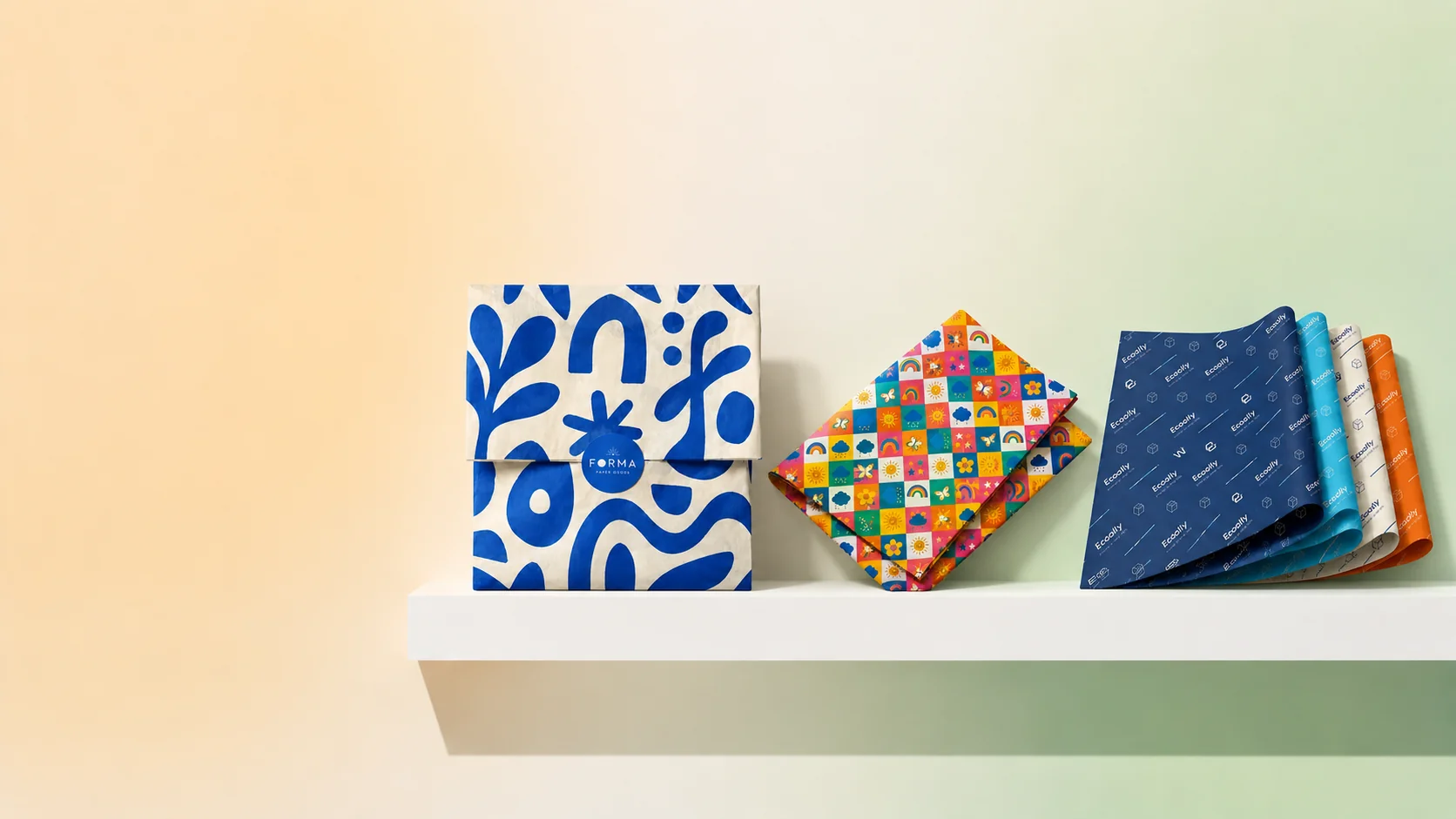
| Gift layer | Holiday boxes, tissue, ribbon-handle bags | Paperboard, tissue paper |
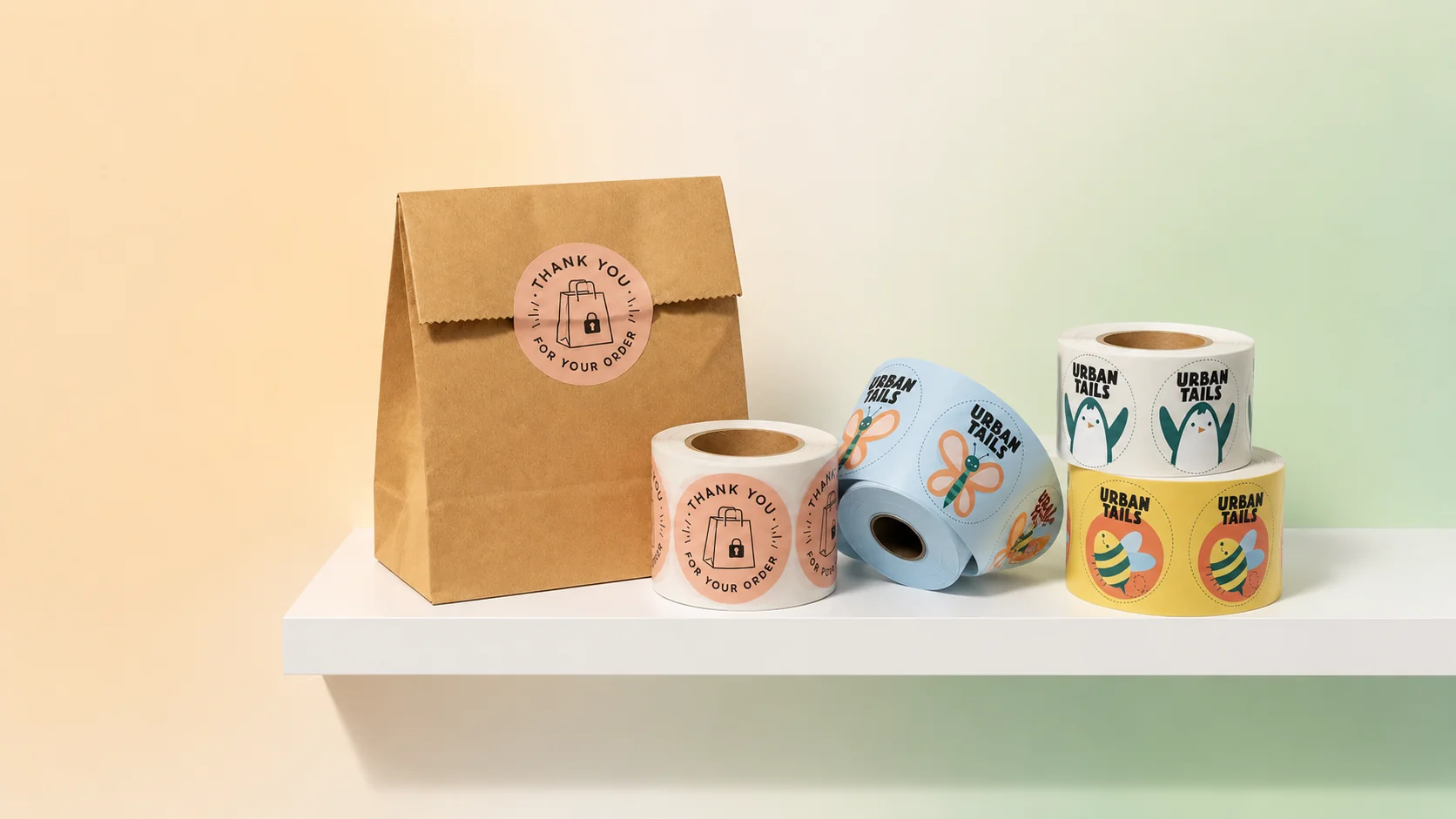
| Seals and labels | Closing bags and boxes, allergen and date info | Printed sticker rolls |
The material logic repeats across all six: butter and sugar migrate, so anything touching pastry needs grease resistance, and anything holding a warm product needs to breathe. That second point is why paper beats plastic for most bakery jobs.
Bakery Bags for Cookies, Pastries, and Counter Service
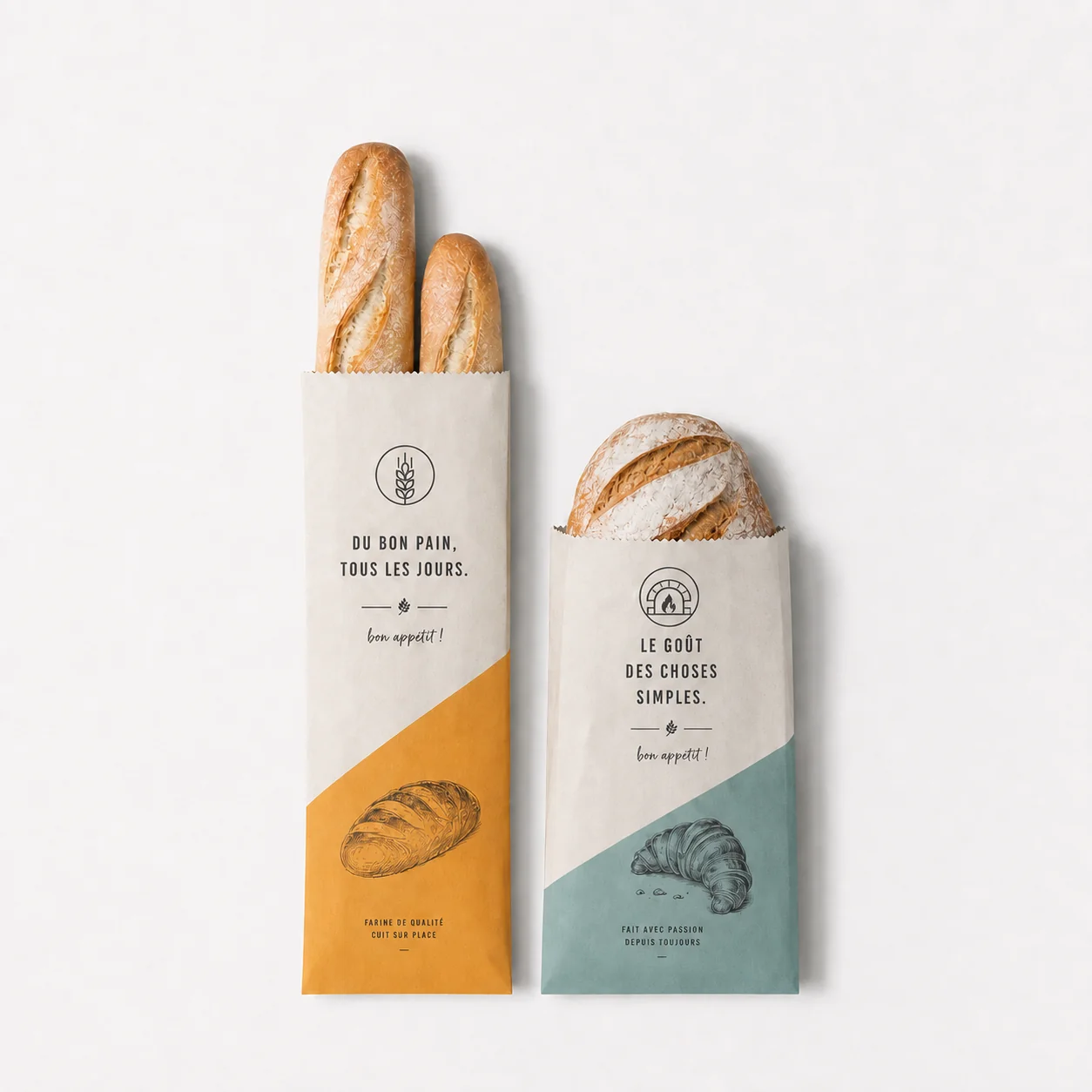
The everyday workhorse is a greaseproof paper bag in the 30–50 gsm range: light enough to grab by the hundred, dense enough that a croissant does not print a butter map on the outside. Flat bags suit cookies and single pastries; gusseted bags stand open for faster filling during a rush and hold bulkier items like muffins and scones.
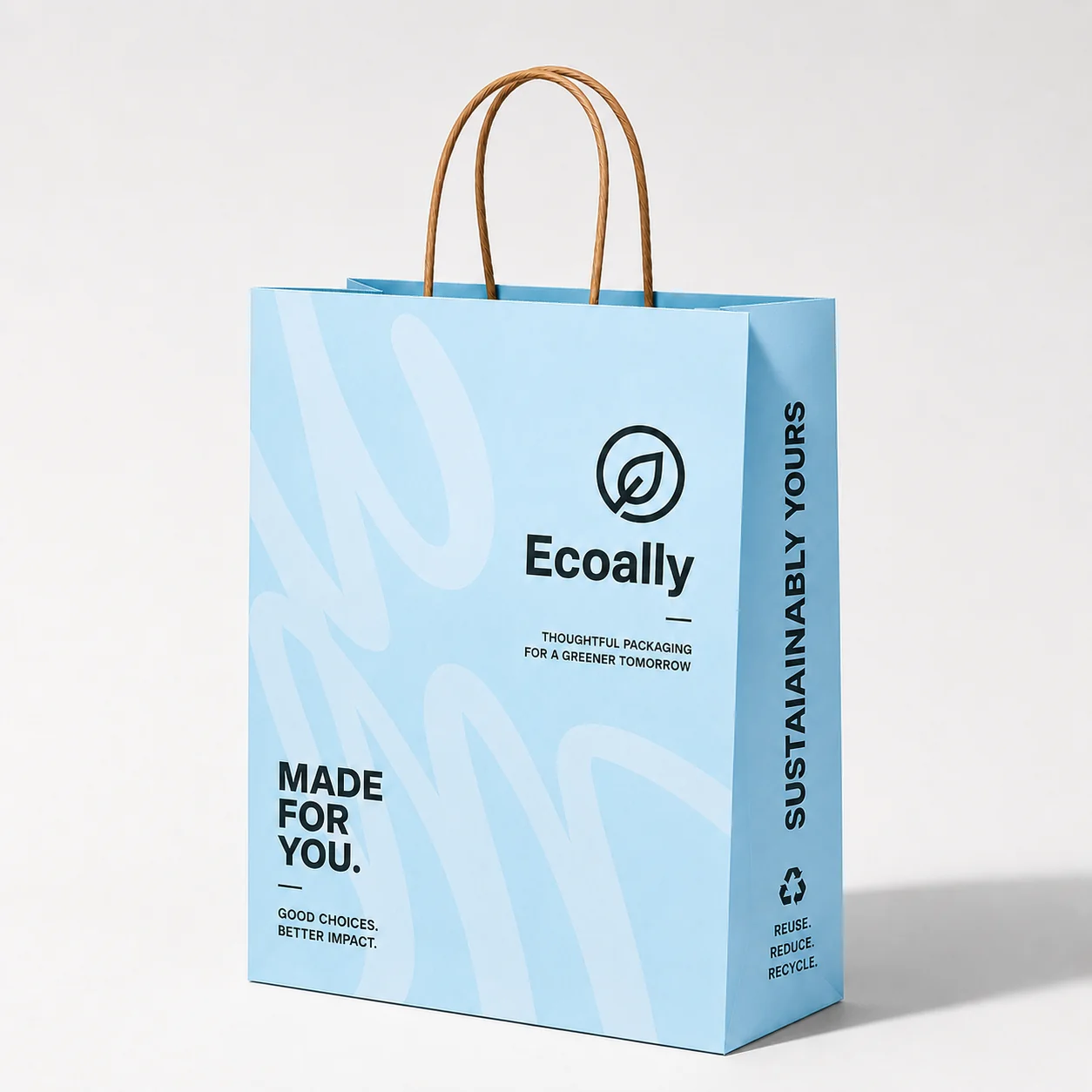
Plain white and brown stock bags are cheap and everywhere; the upgrade decision is printing. A one-color logo repeat is the classic bakery look, and full-color printing has become affordable enough for small chains. As a live example, Ecoally's custom bakery bags run on a 40 gsm brown or white greaseproof base across six flat and gusseted sizes, with full-color printing and delivered pricing from 2,500 bags, which for a counter selling a hundred items a day is roughly a month of stock.
Custom Bread Bags for Loaves and Baguettes
Bread has its own physics: a crust stays crisp only if steam can escape. That is why paper bread bags outperform plastic for anything crusty — sourdough, baguettes, batards — and why the growing wave of home and micro sourdough bakers searches specifically for paper. Look for a deep gusset that matches your loaf shape, and a length that lets the bag fold or twist closed.
Ecoally's custom bread bags use a 50 gsm brown or white greaseproof base in three gusseted baguette and loaf sizes, printed full-color from 2,500 units. For farmers-market scale, plain stock bags plus a printed sticker seal deliver most of the branding at a fraction of the commitment; the sticker route is covered below.
Bakery Boxes for Cakes and Assortments
Boxes carry the structure jobs: layer cakes, cupcake sets, mixed-dozen assortments. Stock white and kraft bakery boxes, with or without windows, are a commodity — restaurant-supply stores sell them by the case at wholesale prices, and for many bakeries that is the right answer for daily volume.
The branded upgrade matters at the premium end: holiday collections, wedding orders, corporate gifts. Rigid custom gift boxes start at 50 units, which fits seasonal runs without a warehouse commitment. A middle path many bakeries use: stock boxes for everyday cake orders, one branded gift box for the products customers buy as presents.
Liners, Wraps, and the Sheet That Does Everything
A greaseproof sheet is the most versatile item in the building: box liner under sticky pastries, interleaving between layers, wrap for sandwiches and slices, tray liner for counter display. Printed sheets double as branding that customers actually see up close.
Sheets are also the cheapest custom entry point in bakery packaging: Ecoally's custom greaseproof paper starts at 250 sheets, so a single-location bakery can test branded packaging for under a hundred dollars before committing to printed bags. Which sheet type fits which job — greaseproof, wax, parchment — is covered in our deli paper and food wrapping guide.
Eco-Friendly Bakery Packaging Customers Notice
Bakeries are better placed than almost any food business to run an all-paper setup: bags, bread bags, boxes, and liners can all be uncoated paper, which keeps the disposal message simple — recycle it clean, compost it soiled. Three upgrade questions separate genuinely eco-friendly bakery packaging from a green sticker:
- Is the grease resistance PFAS-free? A growing list of US states bans PFAS "forever chemicals" in food packaging; mechanically refined greaseproof paper avoids the issue entirely.
- Is the box uncoated or plastic-laminated? Windows and glossy laminates change a box's disposal path from recyclable to landfill.
- Can you say where it goes? A one-line disposal instruction printed on the bag beats any leaf icon. The full materials picture, including how long each option takes to break down, is in our compostable food packaging guide.
What Bakery Packaging Costs in 2026, and the MOQ Reality
Surveying published US prices in August 2026, the practical tiers look like this:
| Item | Typical market price | Custom-print entry point |
|---|---|---|
| Stock bakery bags | A few cents each by the case | Printed: commonly from 1,000–2,500 bags; Ecoally from 2,500 at about $0.03+ per bag |
| Stock bread bags | Cents each by the case | Printed from about $0.10 per bag at 2,500 |
| Stock bakery boxes | Roughly $0.10–$1 each wholesale | Branded rigid gift boxes from 50 units around $2 |
| Greaseproof sheets | Cents per sheet in bulk | Printed from 250 sheets, about $0.61 down to $0.04 per sheet at volume |
| Sticker rolls | — | Small rolls, lowest-commitment branding there is |
Two honest notes. First, the Reddit answer to "where do bakers buy packaging" is right: restaurant-supply wholesalers are the correct source for everyday stock items, and no custom printer will beat case prices on plain bags. Custom printing is the branding layer you add where customers look. Second, printed bags carry real minimums because bag-making and printing run on volume; the way to sample the branded look cheaply is sheets (250), boxes (50), or tamper-proof sticker rolls on stock packaging, then graduate to printed bags once daily volume justifies 2,500. The same staged logic applies across packaging types, covered in low-MOQ custom packaging.
Run the consumption math before dismissing a minimum: a bakery moving 100 bagged items a day uses roughly 2,500 bags in a month. For most going concerns the minimum is a re-order rhythm, not a warehouse.
Frequently Asked Questions
What is the best type of packaging for a bakery?
Grease-resistant paper, in different formats per product: greaseproof bags for pastries and cookies, gusseted paper bags for bread, paperboard boxes for cakes, and greaseproof sheets as liners and wraps. Paper breathes (protecting crusts), handles grease when properly refined, and keeps disposal simple.
What are the different types of bakery packaging?
Six working categories: flat and gusseted bakery bags, bread bags, bakery boxes, liner and wrap sheets, a gift layer (rigid boxes, tissue), and seals or labels. Most bakeries run four of the six daily and add the gift layer seasonally.
How do you package bakery items so they arrive fresh?
Match the barrier to the product: crusty bread in breathable paper, never sealed plastic; soft cookies and cakes in closed boxes to hold moisture; buttery pastries on or in greaseproof paper so oil does not migrate. For transport, boxes need product sitting snug, and warm items should cool before boxing to avoid steam softening everything.
Is eco-friendly bakery packaging more expensive?
Barely, at the paper end. Uncoated paper bags, boxes, and sheets are already the standard bakery materials; the eco decision is mostly about avoiding laminates, windows, and PFAS grease treatments rather than paying for exotic materials. Certified compostable specialty items can cost more, but an all-paper setup is close to cost-neutral.
Can a small bakery get custom printed packaging?
Yes, if it starts with the right items. Printed greaseproof sheets start around 250 units and rigid gift boxes around 50, both small-bakery friendly. Printed bags typically start at 1,000–2,500 units across the market, which suits bakeries with steady daily volume; below that, a printed sticker on stock bags delivers the branding at minimal commitment.
What should a new bakery order first?
Stock bags and boxes from a wholesaler for day one, one case of greaseproof sheets, and a roll of printed stickers for branding. Add printed sheets (250) once the logo settles, and graduate to printed bags at 2,500 when daily volume supports it.
Put Your Bakery's Name on the Counter
The packaging your customers carry out is the cheapest storefront you will ever run. Start where the commitment is small: upload your logo to the custom greaseproof paper or custom bakery bags page, preview it in 3D, and build the branded layer as your counter volume grows. For the neighboring trades, see the coffee shop packaging guide and restaurant takeout packaging guide.