Custom Tissue Paper: Costs, MOQs & Sizes — A 2026 Buyer's Guide
Custom tissue paper is one of the cheapest ways to make an order feel like a gift: a printed sheet usually costs less than the postage on the order, yet it changes the first thing a customer sees when the box opens. It is also one of the most confusing products to shop for. Published prices range from a few cents to more than a dollar per sheet, minimum orders range from 25 sheets to 25,000, and most listings never explain why.
This guide collects the numbers and trade-offs in one place: what custom tissue paper actually costs in 2026, how paper weight (gsm) and sheet size affect the result, why minimum order quantities vary so wildly, when printing your own is worth trying, and how to order branded or personalized tissue paper online without surprises.
The Short Answer: What Does Custom Tissue Paper Cost in 2026?
For most small businesses, custom printed tissue paper lands between $0.10 and $0.60 per sheet once you order a few hundred sheets, and under $0.10 per sheet at volume. Surveying published US prices in August 2026, they cluster into three routes:
| Buying route | Typical 2026 pricing | Minimum order | Best for |
|---|---|---|---|
| Online digital printing | $39–$105 for entry packs of 25–100 sheets (≈$1.00–$1.60/sheet), falling to ≈$0.08–$0.20/sheet at 1,000+ | 25–250 sheets | Small brands, first orders, multi-color artwork |
| Traditional ream printing (flexo) | ≈$60–$96 per ream of 480 sheets (≈$0.13–$0.20/sheet), plus a one-time printing plate fee of roughly $200+ per ink color | Typically several reams | Established shops reordering one simple design |
| Bulk / wholesale / factory-direct | ≈$0.03–$0.10 per sheet at 5,000–20,000 sheets | 5,000+ sheets | High-volume brands with stable artwork |
As a live example of digital-route pricing, Ecoally's custom printed tissue paper starts at 250 sheets for about $0.50 per sheet on a one-color print and steps down to roughly $0.05 per sheet at 10,000 sheets. The tier curve is shown on the current product page, so you can price an order without requesting a quote.
Two cost traps to check before comparing any two quotes:
- Plate and setup fees. Traditional printers often quote an attractive per-ream price, then add a one-time plate charge for every ink color. For a two-color logo, that can add $400+ to the first order. Digital printing has no plates.
- Shipping. Tissue is light but bulky. Some suppliers build freight into the sheet price; others add it at checkout. Always compare landed cost.
Why Prices Vary So Much: The 5 Cost Drivers
- Quantity. Tissue printing has high setup cost and low material cost, so unit prices fall steeply with volume. Per-sheet prices at 10,000 sheets often run 70–75% below the 250-sheet tier.
- Printing method. Digital printing costs more per sheet but nothing to set up; flexo and offset are the reverse. This single difference explains most of the price spread you will see.
- Ink colors and coverage. A one-color logo repeat is the budget option at traditional printers, where every extra color means another plate. Full-color (CMYK) artwork usually forces the digital route.
- Paper weight. Heavier stock uses more pulp. Most branded packaging tissue is 17–30 gsm; heavier sheets cost more and fold less softly.
- Sheet size. Bigger sheets cost more, but one correctly sized sheet is cheaper than two small ones per order. Size to your product, not to the price list.
Tissue Paper Weight (GSM) Explained
GSM, grams per square meter, is the number that tells you how a sheet will feel and behave in the hand:
| Weight | Feel and translucency | Typical uses |
|---|---|---|
| 17 gsm | Very soft, clearly translucent, rustles easily | Wrapping apparel, delicate gift wrap, layered presentation |
| 22–30 gsm | Soft but noticeably sturdier, semi-translucent | All-purpose branded packaging: clothing, candles, cosmetics, boxed goods |
| 40+ gsm | Closer to lightweight wrapping paper, mostly opaque | Structured wrapping, heavier products, interleaving |
If you are unsure, the 20–30 gsm band is the safe middle: sturdy enough to survive shipping and handling, soft enough to still read as tissue. Order a sample before committing a large run, because weight is easy to misjudge from photos.
One related distinction: tissue paper is not greaseproof. If you need branded paper that touches oily food, you want a custom food wrapping paper instead; the difference is explained in our greaseproof vs. parchment guide.
Standard Tissue Paper Sizes and How to Choose
US ream printers usually sell 15" × 20" and 20" × 30" sheets. Online printers each run their own size ladder; Ecoally's tissue paper, for example, comes in seven sheet sizes from 9" × 12" up to 24" × 35", including both US ream standards (15" × 20" and 20" × 30").
A quick way to choose: wrap one of your actual products in plain paper, unfold it, and measure the rectangle you used. Then pick the closest sheet size up, not down. A sheet that is slightly too large folds neatly; a sheet that is slightly too small forces taping two sheets together on every order, doubling your per-order cost.
Why Tissue Paper Minimum Orders Range from 25 Sheets to 25,000
Small-business forums are full of sellers who asked a local printer for branded tissue and were quoted tens of thousands of sheets as the entry point. That number is not the printer being difficult; it is the economics of plate-based printing, where setup dominates cost and short runs make no sense.
The market now splits into three MOQ tiers:
- 25–100 sheets: digital print-on-demand shops. The most expensive per sheet, but the only sensible way to test a design or serve a very small shop. True no-minimum custom tissue barely exists; these small packs are the practical floor.
- 250–1,000 sheets: the small-business sweet spot, with meaningfully lower unit prices. Ecoally's minimum is 250 sheets, which for a store shipping 10 orders a week at one sheet per order is roughly a six-month supply.
- 5,000+ sheets: traditional flexo and factory-direct pricing. The cheapest per sheet, but you carry inventory risk, and any rebrand strands the stock.
A practical rule: buy the tier that you will use up within 6–12 months. Tissue does not spoil, but logos, palettes, and packaging sizes change more often than most founders expect. If you are still iterating on your brand, stay small. The guide to low-MOQ custom packaging covers the same logic across other packaging types.
Can You Print Your Own Tissue Paper?
Yes, and for very small runs it can genuinely make sense. The methods sellers actually use:
- Inkjet with a carrier sheet. Cut tissue slightly smaller than letter size, fix it flat to a sheet of printer paper or freezer paper (tape the leading edge, or lightly iron freezer paper's waxy side so the tissue clings), and feed it through slowly. Expect jams and a learning curve.
- Stamps and screen printing. A custom rubber stamp gives a hand-finished repeat pattern with no printer risk at all. Slow, but reliable and cheap.
- Craft cutters and sublimation. Workable for small decorative pieces rather than full-sheet repeats.
The honest math: DIY wins below roughly 50–100 sheets, for prototypes, or when you want a deliberately handmade look. Beyond that, the cost of your time, misfeeds, and ink usually exceeds the $0.08–$0.20 per sheet a printed order costs at moderate volume, and water-sensitive inkjet prints can smear in transit. Many sellers prototype at home, then order once the design settles.
Is Branded Tissue Paper Worth It?
A fair question, since plain white tissue protects a product just as well and plenty of experienced sellers are skeptical of over-produced unboxing. The way to decide is to price it per order, not per ream:
- At $0.05–$0.15 per sheet and one to two sheets per order, branded tissue costs $0.05–$0.30 per package.
- That spend makes sense when the product is giftable, photographed, or bought repeatedly: apparel, candles, cosmetics, stationery, specialty food. Presentation is part of what the customer paid for, and customers share unboxing photos on their own.
- It is harder to justify for utilitarian or price-driven products, or while your order volume is still a handful a month. Spend the same money on samples and product photography first.
If you sell in shopping bags rather than shipped boxes, the same logic applies at the counter: a printed sheet wrapped around a purchase inside a ribbon-handle paper bag is the classic boutique combination. One sheet plus one bag, and the whole handoff is branded.
White vs. Kraft Tissue, Inks, and Disposal
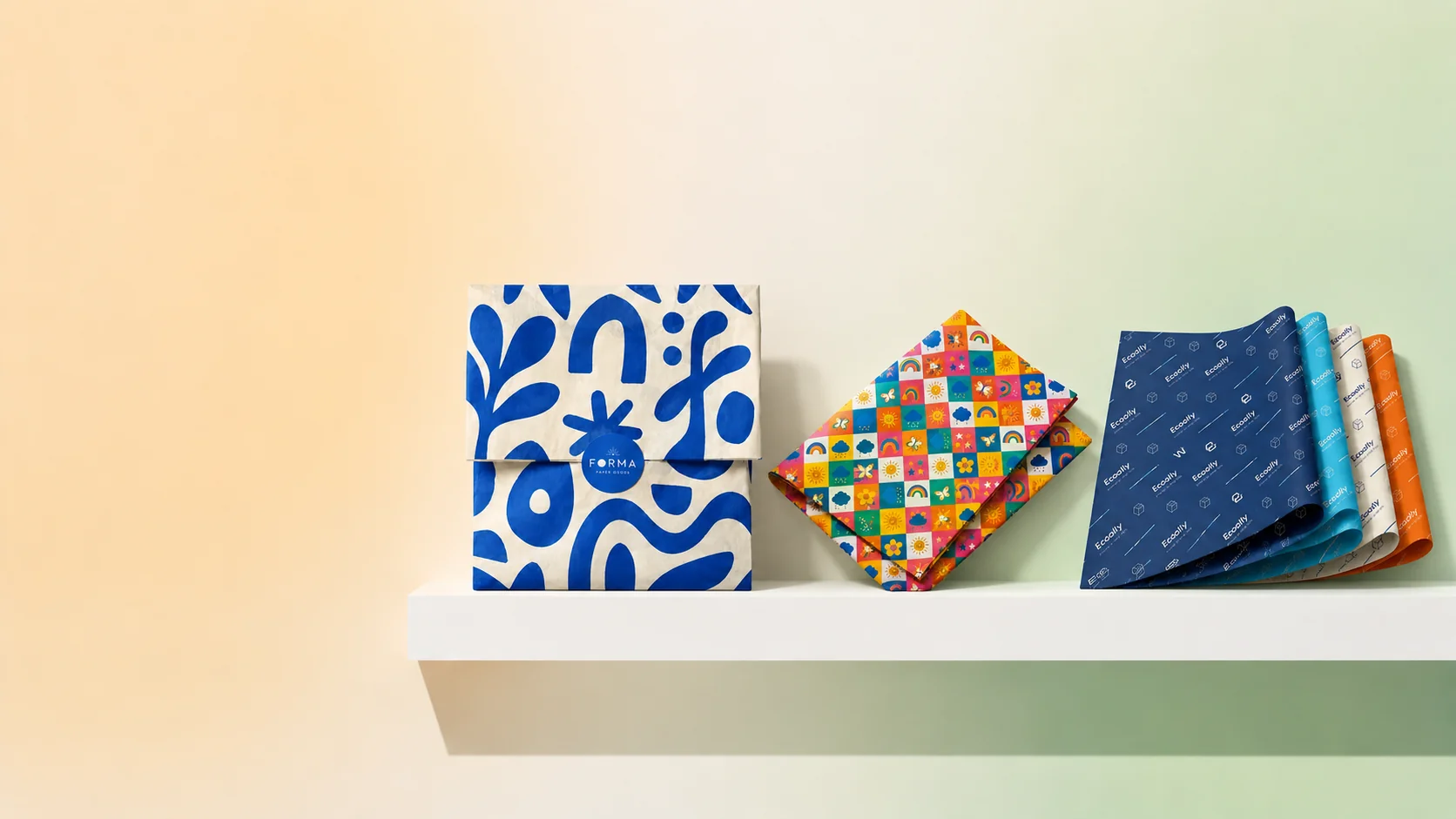
- White tissue shows ink colors accurately and reads as clean and premium; Ecoally prints on white tissue stock. Kraft (brown) tissue, offered by some suppliers, hides scuffs and suits earthy, handmade brands, but expect printed colors to shift darker on the brown base. Tissue paper with your logo in a single color repeat works well on either.
- Ask what the sheets are printed with. Soy- or water-based inks are the common answer from reputable suppliers and matter if you want the paper to be recyclable or compostable in practice.
- Disposal. Plain printed tissue is often accepted in home composting. Curbside recycling acceptance varies: many US programs exclude tissue because its fibers are too short to re-pulp, so check local guidance rather than printing a blanket claim. Metallic foils and glitter finishes are the exception on the compost side too; they look festive and make the sheet landfill-bound. If sustainability is part of your brand story, skip the foil and say so on the packaging insert.
How to Order Custom Tissue Paper Online (3 Steps)
- Upload your artwork. A high-resolution logo (PNG with transparency works best) is enough for a repeat pattern; full-sheet designs need print-ready files at the sheet's dimensions.
- Preview before you pay. This is where online ordering has quietly gotten better than emailing a printer: Ecoally's 3D designer shows your artwork on the product before production, so scale and repeat-spacing mistakes surface before printing, not after. There is also a broader guide to designing custom packaging if you are starting from scratch.
- Start at the smallest tier that fits your volume. Check the sheet against your product and lighting, then reorder deeper into the price curve once the design is settled.
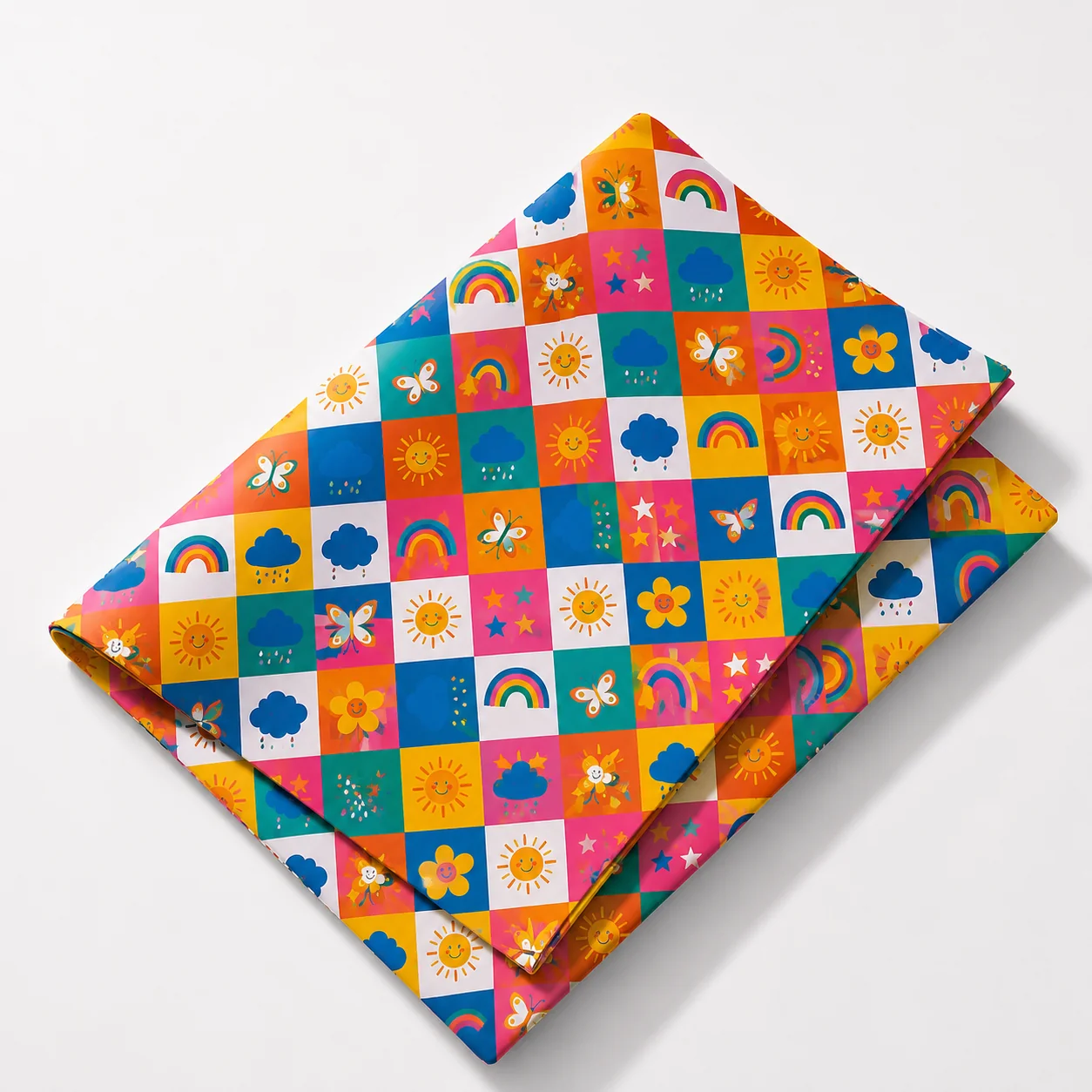
Ecoally's tissue line covers the three common use cases, each starting at 250 sheets on the current listings: custom printed tissue paper for branded repeat patterns, custom tissue paper for solid and simple treatments, and custom gift tissue paper for retail and gift wrapping.
Frequently Asked Questions
Can you get custom tissue paper in small quantities?
Yes. Digital printing has removed the old barriers: several suppliers start at 25–100 sheets, and mid-tier suppliers like Ecoally start at 250 sheets with per-sheet prices around $0.50, dropping below $0.10 from 2,500 sheets. You no longer need a 25,000-sheet commitment to get branded tissue.
How much does custom tissue paper cost?
Roughly $1.00–$1.60 per sheet in sample-size packs, $0.08–$0.20 per sheet at around 1,000 sheets, and as low as $0.03–$0.05 per sheet at 10,000+ from factory-direct suppliers, within a broader $0.03–$0.10 bulk range. Watch for one-time plate fees (about $200+ per ink color) at traditional printers.
Where can I buy bulk or wholesale printed tissue paper?
For 5,000+ sheets, compare online printers' top tiers with traditional ream printers and factory-direct wholesale suppliers. Bulk pricing runs $0.03–$0.10 per sheet; confirm plate fees, lead time, and shipping before comparing.
How can I make my own custom tissue paper?
Small runs can be done at home with an inkjet printer and a carrier sheet, rubber stamps, or screen printing. It is worthwhile under roughly 100 sheets or for prototyping; past that, ordering printed sheets is usually cheaper per finished, transit-safe sheet.
What weight of tissue paper should I choose?
17 gsm for the softest, most translucent wrap; 20–30 gsm for all-purpose branded packaging; 40+ gsm when you need structure. When in doubt, sample the middle band first.
Does custom tissue paper have a minimum order?
Almost always. True no-minimum options barely exist; the practical floor is a 25-sheet digital pack, and Ecoally's minimum is 250 sheets. Order what you will use in 6–12 months and go deeper on the price curve only once your logo and palette are stable.
See Your Logo on the Sheet First
Custom tissue paper is a rare packaging upgrade where the math is easy: a few cents per order for the one moment every customer actually looks at. Price it per package, sample before you commit, and start at the smallest tier that fits your real volume. Upload your logo to the 3D designer to see your own artwork on the sheet before spending anything.