Paper Bag Food Packaging: Kraft, Carrier & Tote Guide
Every order that leaves your counter walks out the door in a bag — and for most cafes, bakeries, and restaurants, that bag is the most visible piece of branding you own. Custom paper bags with a logo turn a routine handoff into repeat advertising on every sidewalk your customers walk down. The wrong bag does the opposite: grease bleeds through, a handle snaps at the door, and the goodwill your food just earned evaporates. This guide to paper bag food packaging compares the main bag formats used in US food service, explains kraft materials and food safety, gives size guidance by use case, and shows how low-minimum printing lets small shops order branded bags without warehouse quantities.
Types of Paper Bag Food Packaging
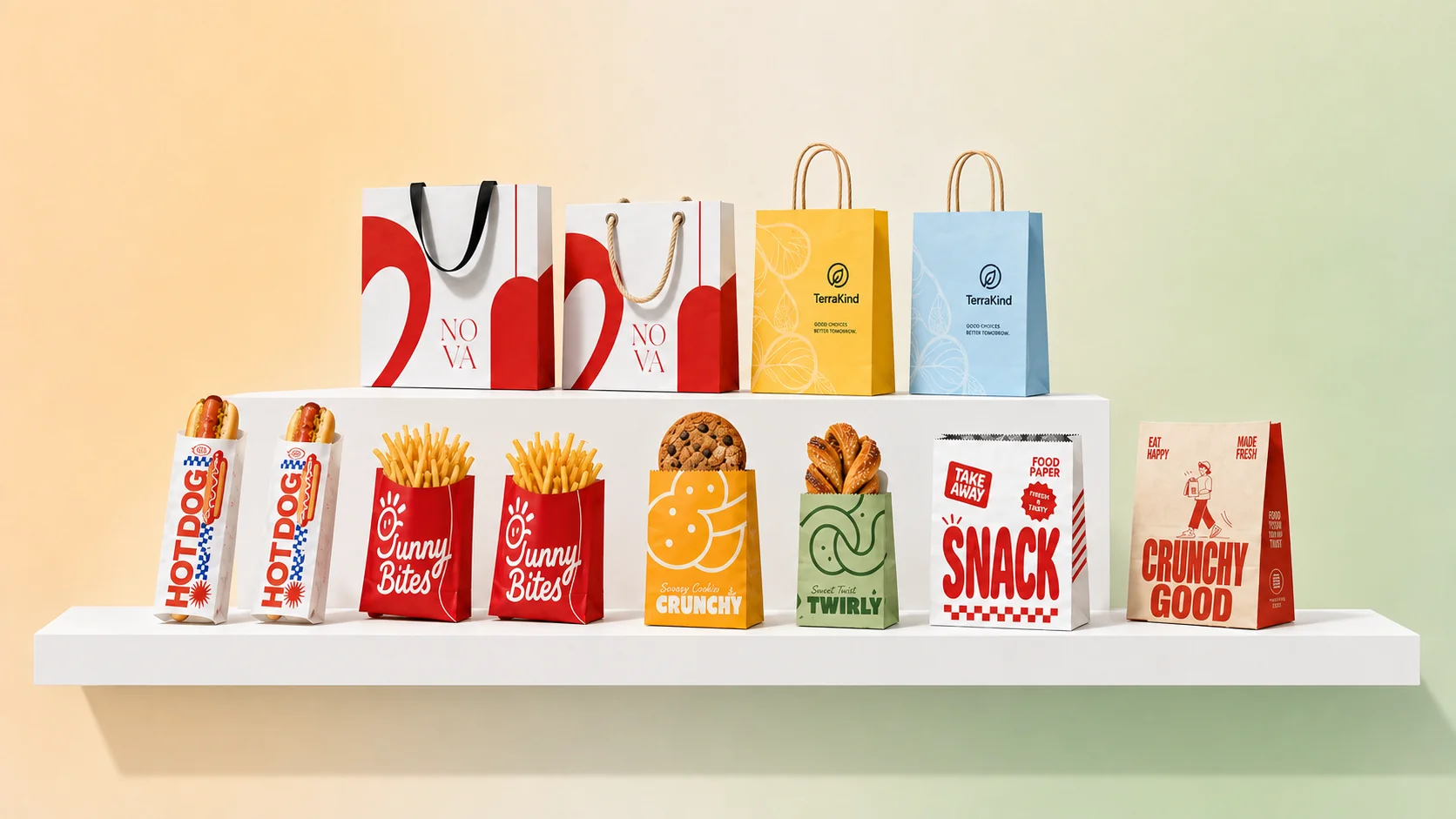
Four formats cover nearly every food-service scenario; the differences come down to structure, handle type, and paper weight.
SOS Brown Bags (Self-Opening Satchels)
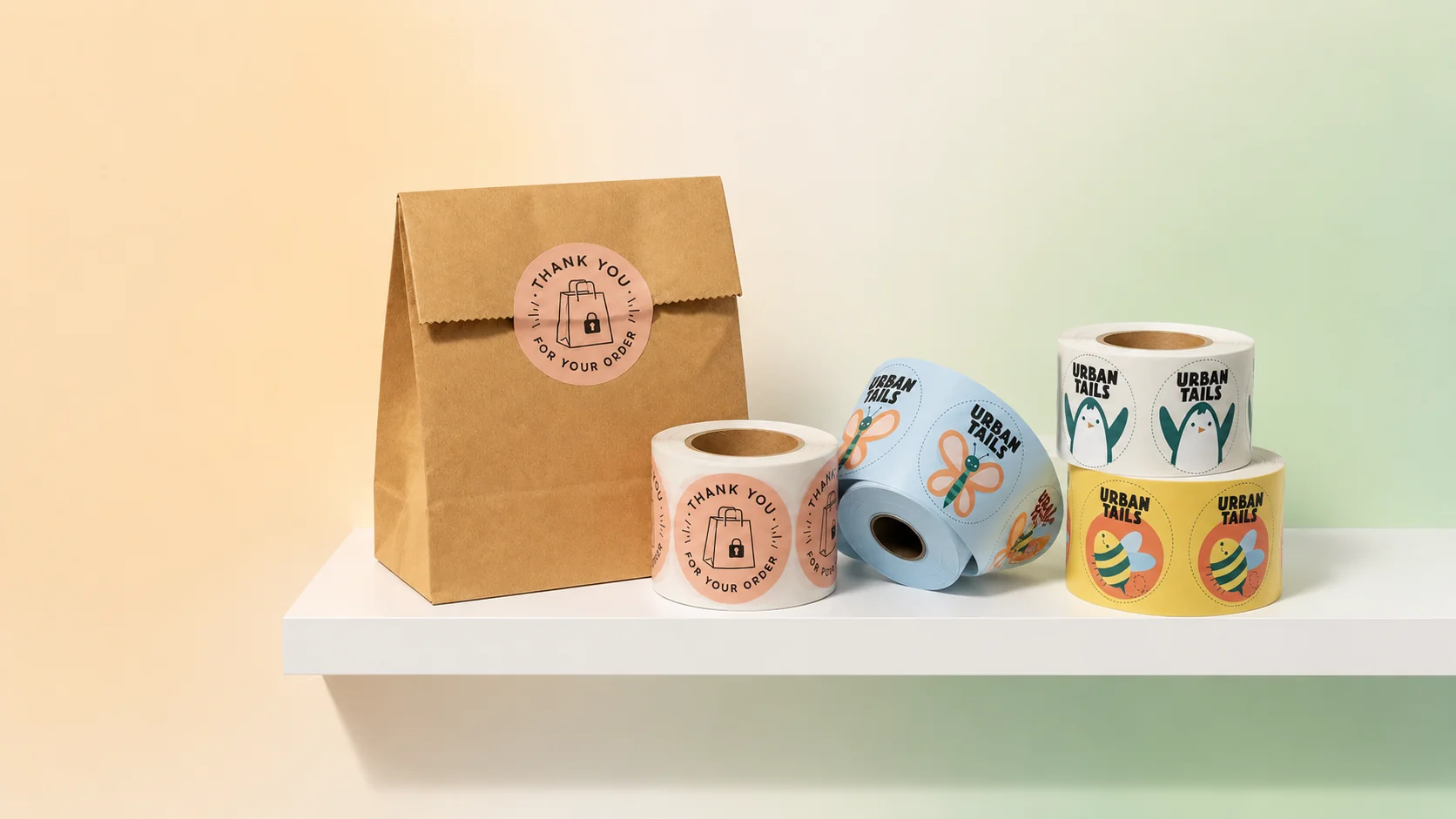
The flat-bottom brown SOS bag pops open with one hand and stands upright on its own, which is why delis and bakeries have relied on it for over a century. No handles, open top, inexpensive to produce, and it stores flat behind the counter. It suits pastries, sandwiches, bread, and lighter takeout orders that customers carry from the top fold. Grease-resistant versions handle croissants and fried items without staining through. Carried hugged at chest height, a custom-printed SOS paper bag puts your logo at eye level for everyone your customer passes.
Kraft Paper Bags with Handles: Twisted-Handle Carriers
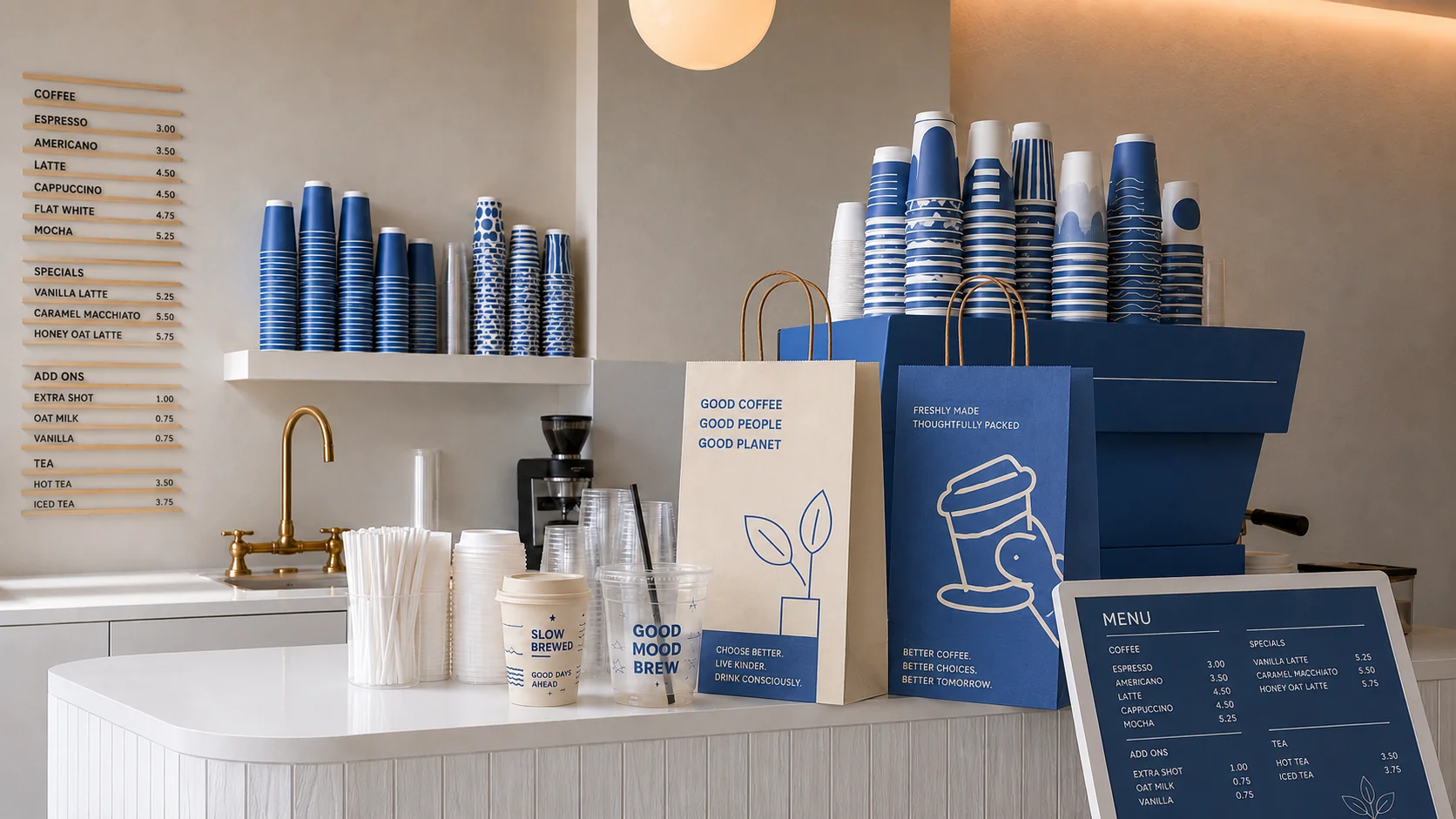
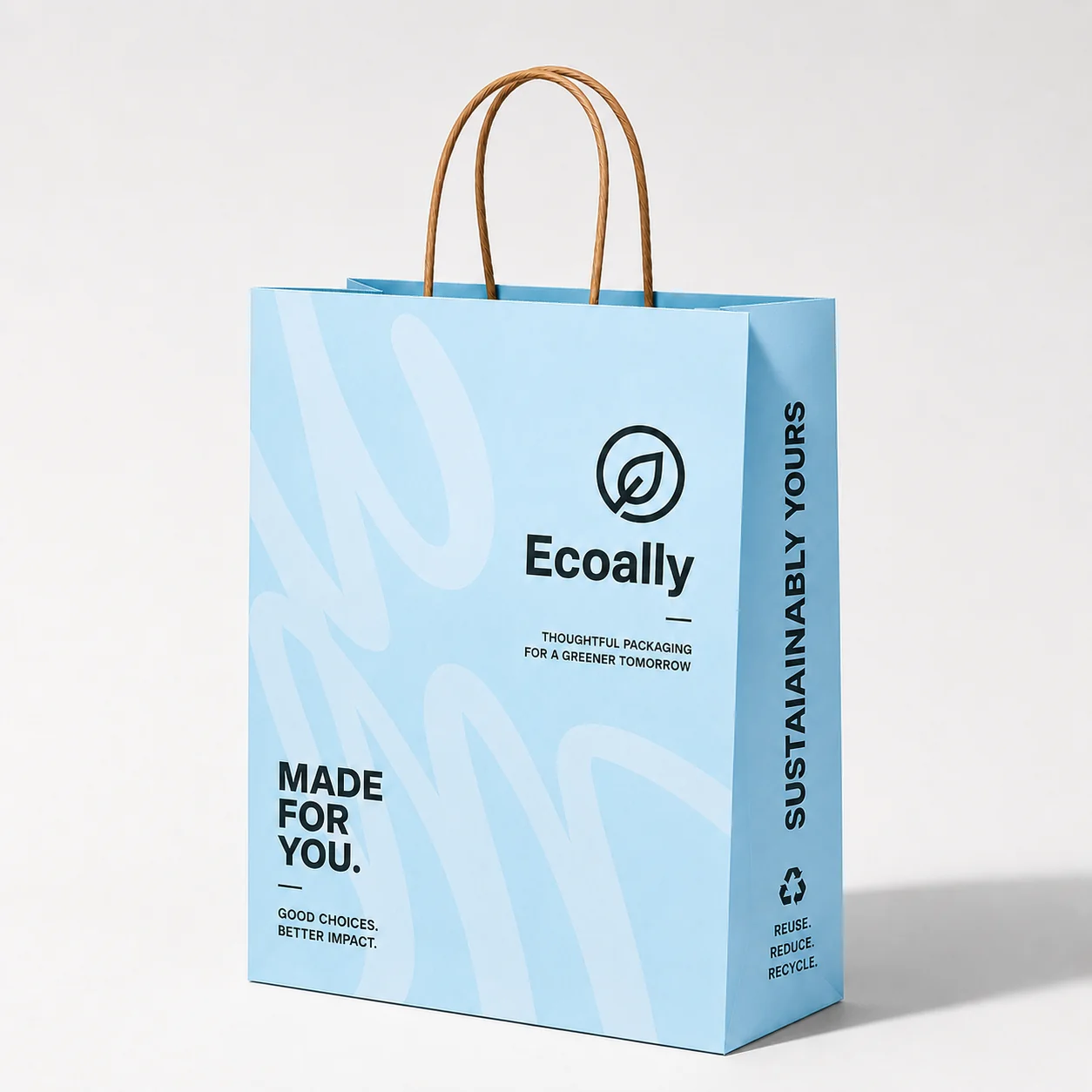
The twisted-handle carrier is the workhorse of takeout. Paper handles are twisted into a cord and glued under a folded top hem, giving the bag real carrying strength while keeping it fully paper and curbside recyclable. Twisted-handle kraft bags hold heavier, bulkier orders than an SOS bag — boxed entrees, drink carriers, multi-item tickets — and they hang from a hand or hook instead of needing an arm cradle. Two or three sizes will cover most restaurants' order volume.
Ribbon-Handle Bags and Euro Totes
When the bag itself is part of the product — patisserie boxes, chocolate gifts, holiday pre-orders — step up to the premium tier. Ribbon-handle paper bags use soft ribbon threaded through reinforced eyelets, while euro tote bags add a fold-over reinforced top cuff, thicker stock, and rope or ribbon handles. Both formats print beautifully edge to edge and read as gift packaging rather than takeout. They cost more per unit, so most food brands reserve them for gift sets, retail shelves, and high-value orders where presentation drives repeat purchases.
Foldable Paper Shopping Bags
The flat-handle shopping bag is the grocery-style format: wide gusset, reinforced flat paper handles, and often a bottom board insert for load-bearing strength. Custom paper shopping bags swallow family meals, catering trays, and multi-item retail purchases that would strain a twisted handle. If your average ticket includes three or more containers, this format belongs in your lineup.
Kraft Paper Materials and Food Safety
The label "kraft paper" covers a wide range of weights, fiber sources, and coatings. Getting the spec right is the difference between a bag that survives a delivery run and one that fails in the parking lot.
Paper Weight: Reading GSM Ranges
Paper weight is measured in gsm (grams per square meter), and the ranges are consistent across the industry:
- 40–60 gsm — greaseproof bakery, pastry, and bread bags
- 60–90 gsm — single-item SOS bags and light snack bags
- 100–120 gsm — the standard band for takeout carriers and everyday twisted-handle bags
- 120 gsm and up — heavy or multi-item loads, reinforced shopping bags, and euro totes, which often use rigid coated stock well above this line
When in doubt, spec up. A handle that fails on a hot, dense order costs far more in reputation than the extra material does per bag.
Virgin vs Recycled Kraft
Virgin kraft is made from new wood fiber; its longer fibers deliver more tear and tensile strength at the same weight, and it is the conservative choice for surfaces that touch food directly. Recycled kraft carries a stronger sustainability story and performs well for outer carry bags where the food sits inside its own container or wrap. Many operators combine the two: recycled-content stock for the carrier, and virgin or certified food-grade paper for anything in direct contact with food. If responsibly sourced fiber matters to your brand, look for paper certified through programs like FSC, which tracks fiber from managed forests through the supply chain.
Grease-Resistant Linings
Plain kraft absorbs oil, so greasy items need a barrier. The main options are grease-resistant kraft (treated during manufacture), glassine or greaseproof paper used as an inner wrap or liner, and coated stocks for the heaviest applications. A practical rule of thumb: dry goods like bread and cookies go straight into plain kraft; sandwiches and pastries get grease-resistant stock or an inner sheet; hot and oily foods ride inside a rigid container, with the bag doing carry duty only. Keeping the grease off the bag also keeps the bag recyclable — heavily soiled paper is rejected by most US recycling streams. For a deeper comparison of kraft, PLA, and other fiber-based options, see our biodegradable materials guide.
Food-Contact Basics
In the US, paper intended for direct food contact must be produced from food-grade materials under FDA food-contact regulations — reputable suppliers will confirm this for the specific stock, not just the bag style. Two details worth checking on any custom-printed bag: inks should sit on the outside surface, away from food, and any coating or lamination should be rated for the temperature of what you serve. If a supplier can't answer those two questions clearly, keep shopping.
Paper Bag Food Packaging Sizes and Handle Types
Wrong sizes waste money in both directions: oversized bags look empty and cost more per order, undersized bags stress handles and force double-bagging. Start from your three most common ticket types and match the bag to the load.
| Use case | Typical size (W × Gusset × H) | Bag and handle type |
|---|---|---|
| Bakery counter: pastries, cookies | ~5 × 3 × 9 in | Small SOS, no handles |
| Bread loaf or bagel half-dozen | ~7 × 4 × 14 in | Tall SOS or small twisted-handle |
| Coffee takeout: drink + pastry | ~8 × 4.5 × 10 in | Small twisted-handle carrier |
| Restaurant to-go: 1–2 entrees | ~10 × 5 × 13 in | Medium twisted-handle, 100–120 gsm |
| Delivery or family meal | ~13 × 7 × 13 in | Flat-handle shopping bag, reinforced bottom |
| Gift or retail purchase | ~9 × 4 × 11 in | Euro tote or ribbon-handle bag |
These are generic starting dimensions — measure your actual containers before ordering. Two checks catch most sizing mistakes: the gusset should be at least as deep as your widest container, and the bag height should leave clearance above the tallest item so handles meet without crushing anything. Then load a sample with your heaviest realistic order and carry it around the block. For a full walkthrough of matching containers, cups, and bags into one takeout system, see our restaurant takeout packaging guide.
On handles: twisted handles balance strength and cost for everyday takeout; flat handles distribute weight better on heavy loads; ribbon and rope read premium but are gift-tier, not delivery-tier. If an order regularly exceeds what one twisted-handle bag carries comfortably, move up a format instead of double-bagging — it's cheaper and looks better.
Custom Paper Bags with a Logo: Design and Low MOQ
Printing is where a commodity bag becomes brand equity, and kraft rewards restraint. Dark, high-contrast artwork on natural brown kraft reads artisan and prints reliably; white or single-color reverse on dark stock looks premium without premium cost. Keep one focal point — usually your logo — centered on the front panel, and keep critical artwork away from fold lines, gusset seams, and handle attachment points, where registration shifts are most visible.
Flat mockups routinely mislead on bags because the artwork wraps around gussets and disappears behind handles. Ecoally's online 3D design editor renders your artwork on the actual bag geometry, so you can rotate the bag, check gusset panels, and see where handles overlap before anything goes to press. Upload a logo, position it, and preview the finished bag in minutes — no design software required. Our step-by-step design guide covers artwork setup, safe zones, and file prep.
Minimums are the historical pain point. Traditional bag converters often require thousands of units per size and design, which forces small shops to either skip branding or tie up cash in a year of inventory. Digital printing has changed that: low-MOQ suppliers now produce short runs of custom takeout bags for restaurants and cafes, so you can test one branded size against real orders before scaling. Ecoally's minimums are set specifically for small food businesses.
Our low MOQ packaging guide covers how to structure a first order — one hero size, sampled and validated before you commit to volume.
Paper vs Plastic Bags: Cost, Regulations, and Sustainability
The regulatory direction in the US is one-way. States including California, New York, New Jersey, Oregon, Washington, and Colorado restrict single-use plastic carryout bags, and hundreds of cities and counties layer their own ordinances on top. Several jurisdictions also set recycled-content requirements or per-bag fees for paper. Paper is the format least likely to trigger a compliance problem — but check your local ordinance, since rules differ on fees, thickness, and labeling.
On cost, thin plastic is cheaper per unit — that has always been true. The math changes once you factor in ban exposure, customer perception, and volume: buying brown paper bags wholesale in consolidated sizes rather than a scattered assortment closes much of the gap, and the printing premium is usually the cheapest advertising a food business can buy.
On sustainability, paper's case is practical rather than perfect. Kraft bags are made from a renewable resource, are widely accepted in US curbside recycling when clean and dry, and break down far faster than plastic film if they escape collection. Plastic bags are lighter to produce and transport but are recyclable almost nowhere at curbside and persist as litter. For food service specifically — where bags meet grease, weather, and one-way trips — recyclable kraft paired with sensible liners is the defensible default.
Frequently Asked Questions
Are kraft paper bags food safe?
Kraft bags produced from food-grade paper under FDA food-contact standards are safe for direct contact with dry and low-fat foods. For greasy or hot items, use grease-resistant stock or a food-grade inner wrap rather than plain kraft. Confirm food-contact compliance with your supplier for the specific paper, not just the bag style.
Are brown paper bags compostable?
Plain, uncoated kraft bags generally break down in composting conditions, and light food soiling is acceptable in most compost streams — unlike recycling. However, "compostable" as a certified claim requires testing of the specific bag, including its inks and adhesives. Don't print a compostable claim on your bags unless the exact construction has been certified for it.
What's the minimum order for custom paper bags with a logo?
Traditional converters often require thousands of units per design, but digital printing has pushed minimums down dramatically, and low-MOQ suppliers now serve single-location shops. Ecoally's minimums are designed so a small cafe or bakery can order a test run of one size before scaling.
Start with your highest-volume size, validate it against real orders, then add sizes.
Can I put hot or greasy food in a paper bag?
Yes, with the right spec. Hot items should sit in their own rigid container, with the bag providing carry and branding; greasy items need grease-resistant kraft or a greaseproof inner sheet to prevent strike-through. Plain lightweight kraft alone will stain and weaken under hot, oily food.
What's the difference between an SOS bag and a carrier bag?
An SOS (self-opening satchel) bag has a flat bottom, an open top, and no handles — customers carry it from the top fold or cradled in an arm. A carrier bag adds handles (twisted paper, flat paper, ribbon, or rope) and a stronger construction for heavier, multi-item orders. Bakeries typically use both: SOS at the pastry counter, carriers for larger orders.
Should I buy plain bags wholesale or go custom printed?
Plain brown bags bought wholesale are the right call for back-of-house uses nobody sees. For anything handed to a customer, custom printing earns its premium: the bag travels through streets, offices, and social feeds carrying your logo. A common approach is to brand your one or two highest-visibility sizes first and keep plain stock for overflow.
Match the format to the load, the material to the food, and the print to the moment your customer walks out the door. Then start small: one branded size, sampled and tested, beats a container-load guess. Browse the full paper bag range to compare formats, or open any bag in the 3D editor and see your logo on it today.