Low MOQ Custom Packaging for Small Businesses
Branded packaging used to sit behind order minimums that only chains could clear. Low MOQ custom packaging changes that math: digital printing lets a coffee shop, bakery, or ghost kitchen order branded bags, cups, and wraps in runs sized to real demand — then reorder once a design proves itself. This guide covers what MOQ actually means, why the traditional model locks small businesses out of custom packaging, and how to launch a professional branded look without warehousing a year of inventory.
What Does MOQ Mean in Custom Packaging?
MOQ stands for minimum order quantity: the smallest number of units a supplier will produce in a single order. In custom packaging, the MOQ is the fewest printed bags, cups, boxes, or labels you can buy with your own branding on them. A low MOQ means you can order in the hundreds instead of the thousands, which cuts upfront cost, storage needs, and design risk.
MOQs exist because of how packaging gets printed. Traditional presses rely on flexographic or offset plates custom-made for each design. Mounting plates, calibrating color, and bringing the press up to speed costs roughly the same whether you print 500 units or 50,000 — so printers set high minimums to spread that setup cost across enough units to make the run profitable.
Digital printing removes the plates entirely. Artwork goes from file to press with minimal setup, which is what makes small batch custom packaging economically viable. The MOQ stops being a technical necessity and becomes a business choice — and platforms built on digital workflows can set it low.
Why Traditional Packaging MOQs Lock Out Small Businesses
Traditional packaging printers commonly require thousands of units per design — minimums of 5,000 or even 10,000 are normal for custom-printed bags, folding cartons, and labels. For a national chain with stable SKUs, that works. For an independent cafe or food brand, it creates four distinct problems.
Cash gets tied up in inventory. A five-figure packaging order competes directly with rent, payroll, and ingredients. Most small food businesses cannot justify parking that much cash in bags, no matter how good the branding looks.
Storage becomes your problem. Ten thousand cups do not fit behind the counter. Off-site storage adds cost, and paper stock stored badly in a damp back room can pick up moisture and odors before it ever reaches a customer.
One design, locked in for years. Menus change. Logos get refreshed. Addresses move. Every change turns remaining stock into a write-off, which is why so many shops keep using outdated packaging long after it stops representing the brand.
Testing is impossible. Packaging is marketing you can hold, and like any marketing it deserves testing. At traditional MOQs, running two designs to see which one customers respond to means doubling an already heavy commitment.
Custom packaging with a low minimum order removes all four barriers at once. Ecoally's minimums are set so a first order can match a few weeks of counter traffic instead of a year of forecasted sales.
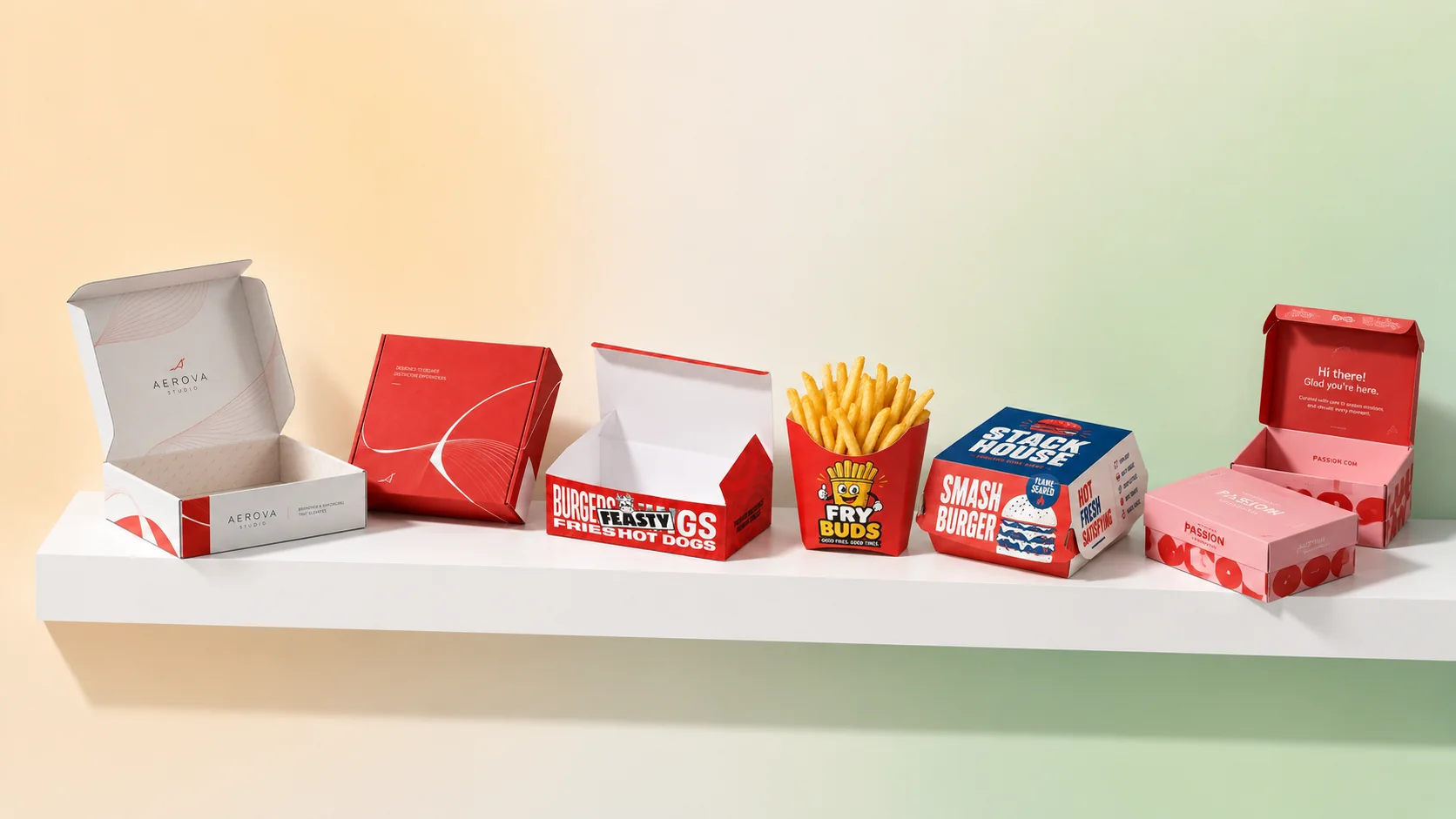
The difference shows up in real decisions. A cafe soft-opening can order branded bags sized to opening week instead of guessing demand a year out. A ghost kitchen pivoting to a new concept can rebrand its boxes and stickers without writing off cartons of obsolete print. A sauce maker testing shelf space in ten local delis can label a small wholesale trial before committing to retail-scale packaging. In every case, the packaging spend follows business proof instead of preceding it.
Low MOQ Custom Packaging Options for Coffee Shops, Bakeries, and Restaurants
Nearly every front-of-house paper product can now be branded in small runs. The smart play is to start with the single item customers handle most — cups for cafes, bags and boxes for bakeries, wraps and seals for takeout — and expand once the first piece proves itself. Here is what that looks like by business type.
Coffee shops and cafes
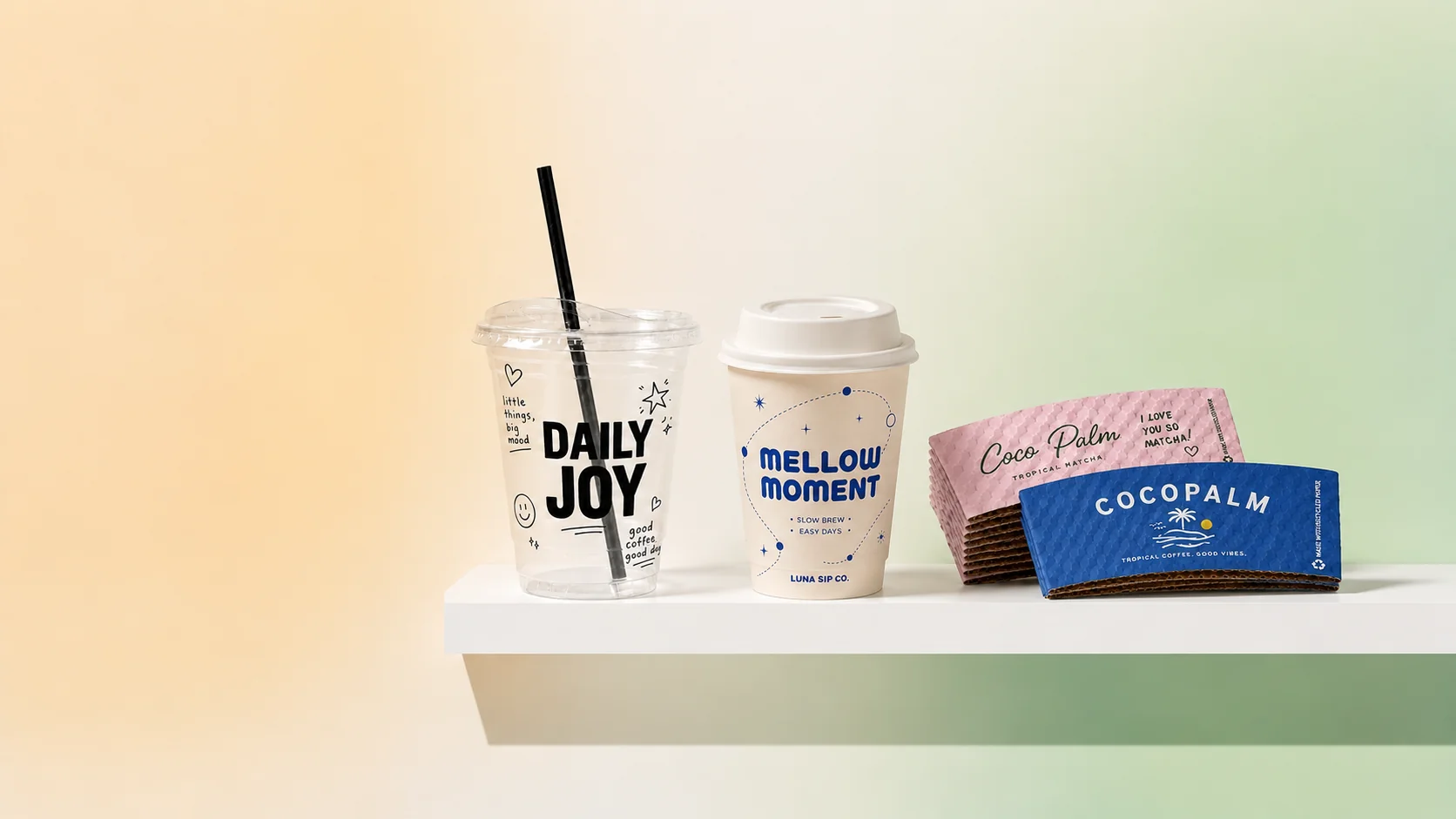
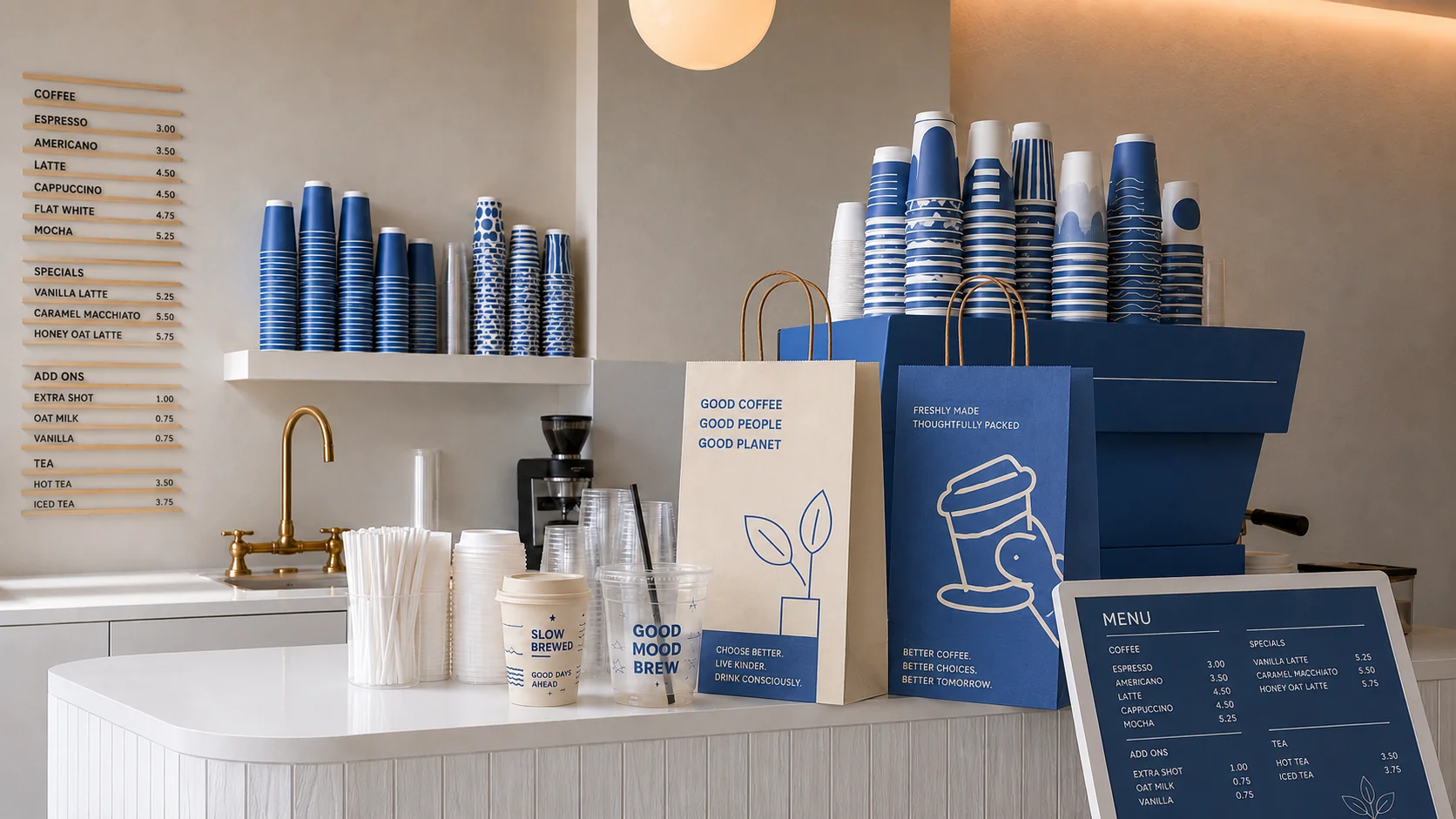
Cups are the obvious starting point — they leave the shop in customers' hands and show up in photos all day. Custom recyclable paper cups with lids carry your logo and colors in short runs, and matching sleeves and pastry bags complete the counter experience. For a full walkthrough of what to brand first and why, see the coffee shop packaging guide.
Bakeries and pastry shops
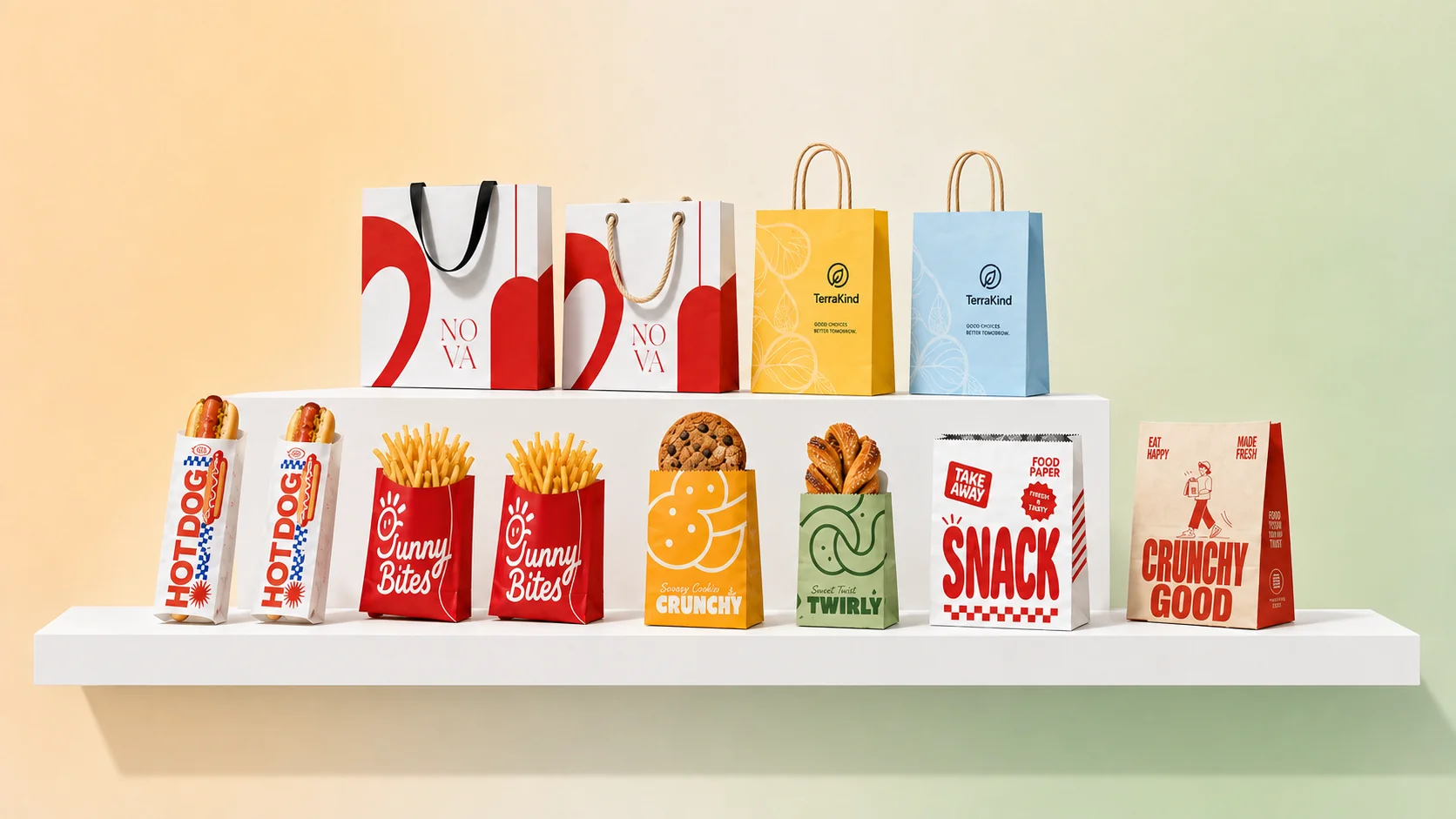
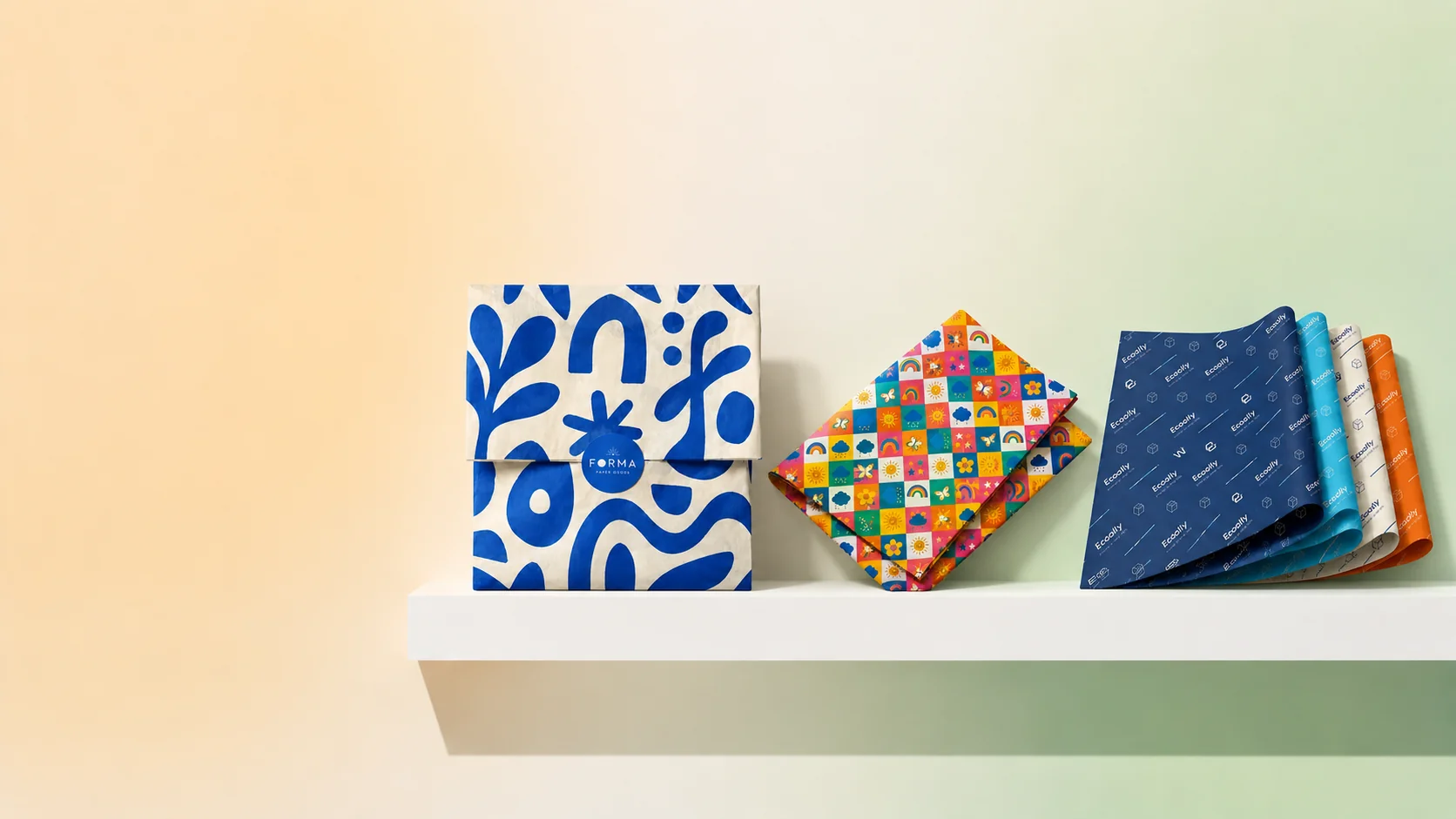
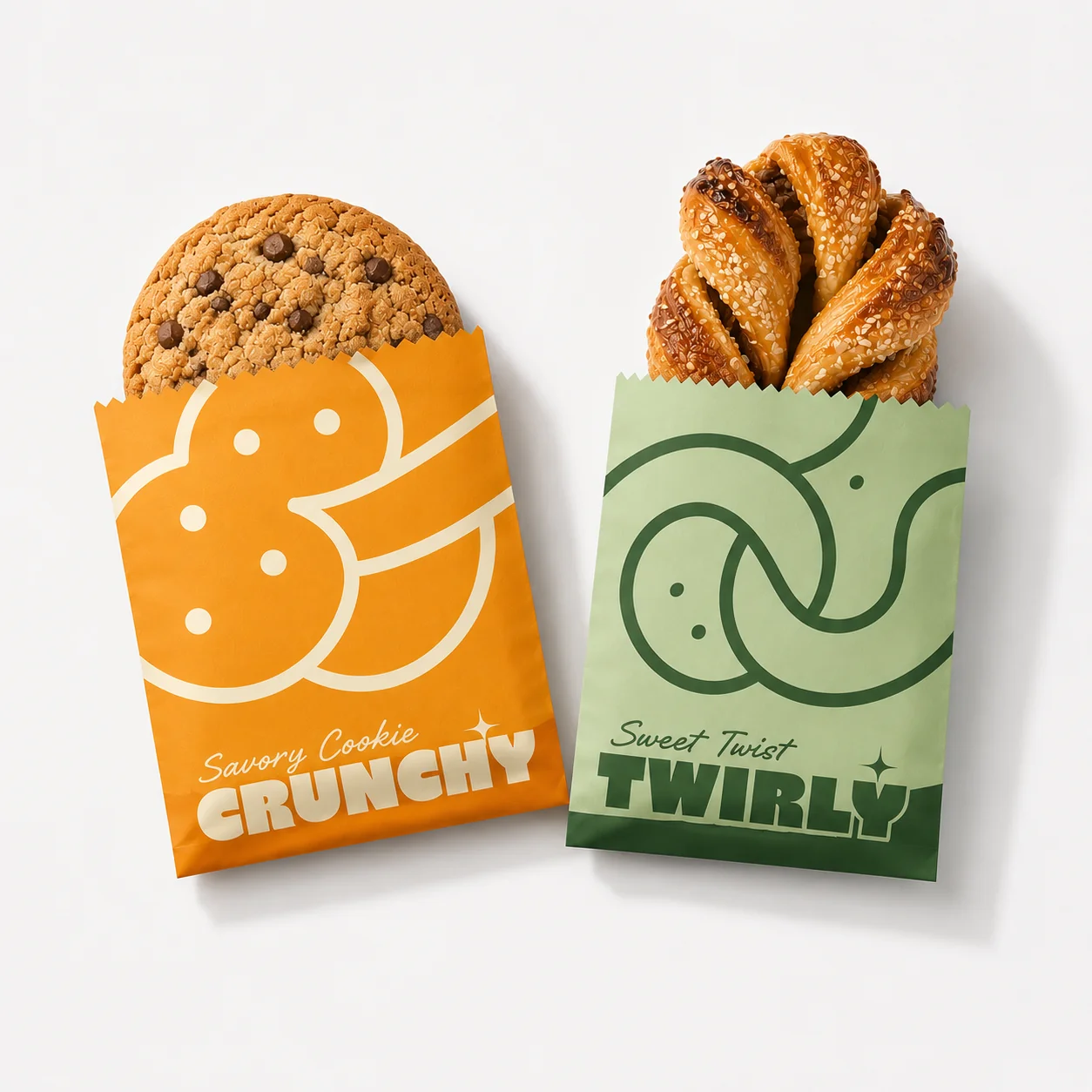
Bakeries live on presentation. Flat-bottom custom SOS paper bags handle croissants and cookies with a logo print from just 500 units, custom paper bags carry larger orders out the door, and greaseproof paper keeps butter-heavy pastries from soaking through the branding they sit in. Small runs also make seasonal printing realistic — a holiday box or a Valentine's bag without leftover stock haunting your storage until next year.
Restaurants, takeout, and ghost kitchens
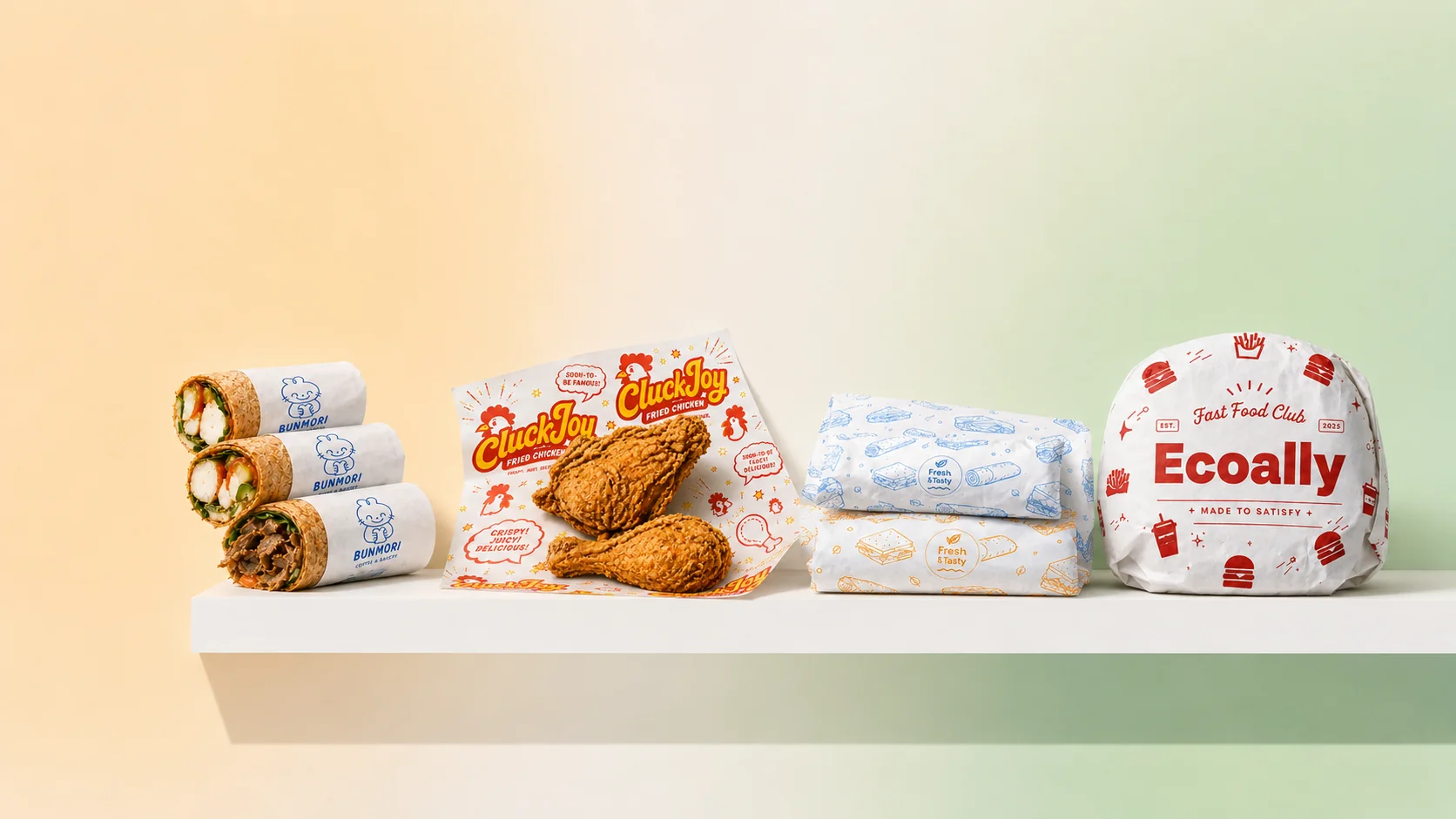
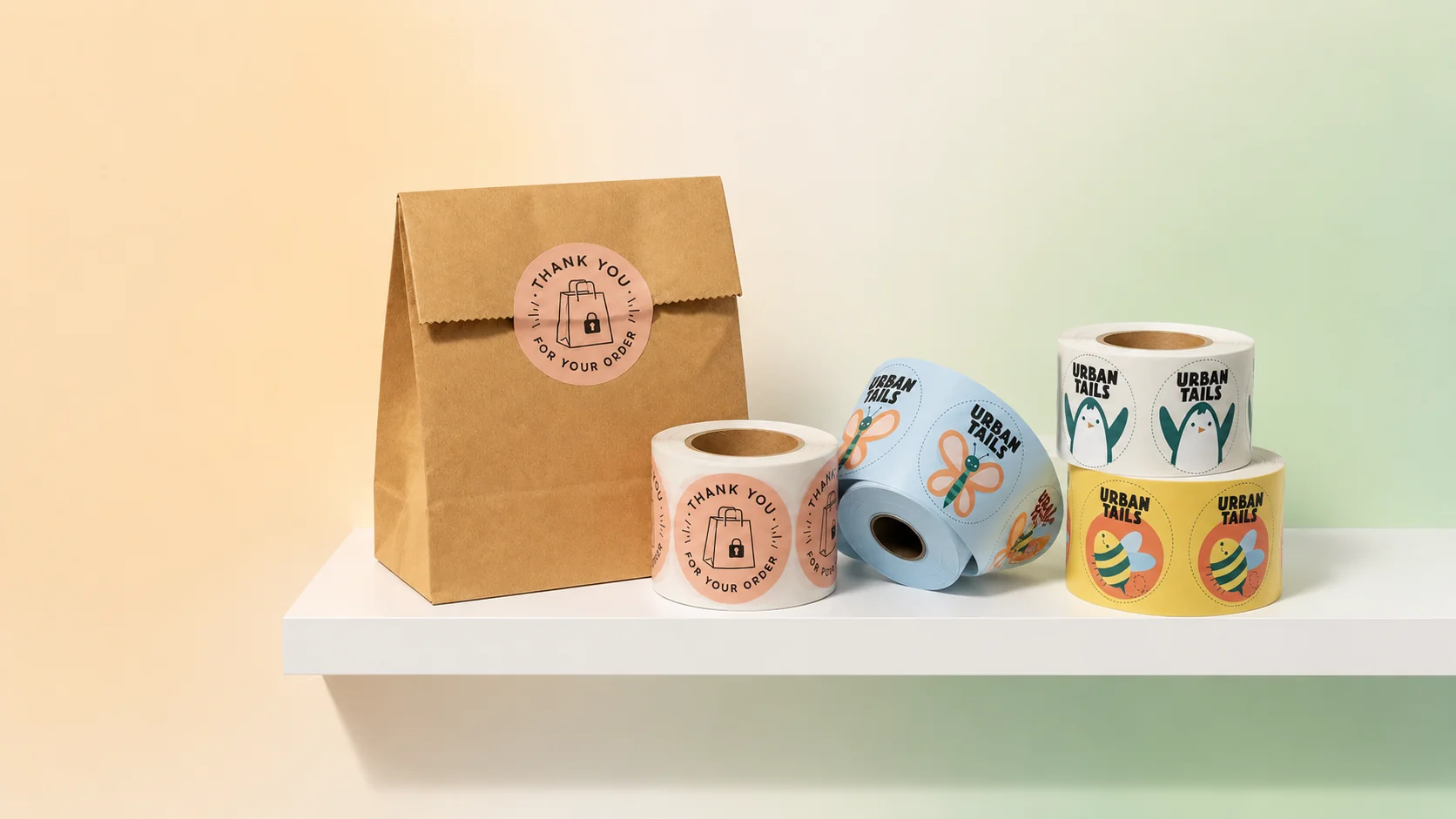
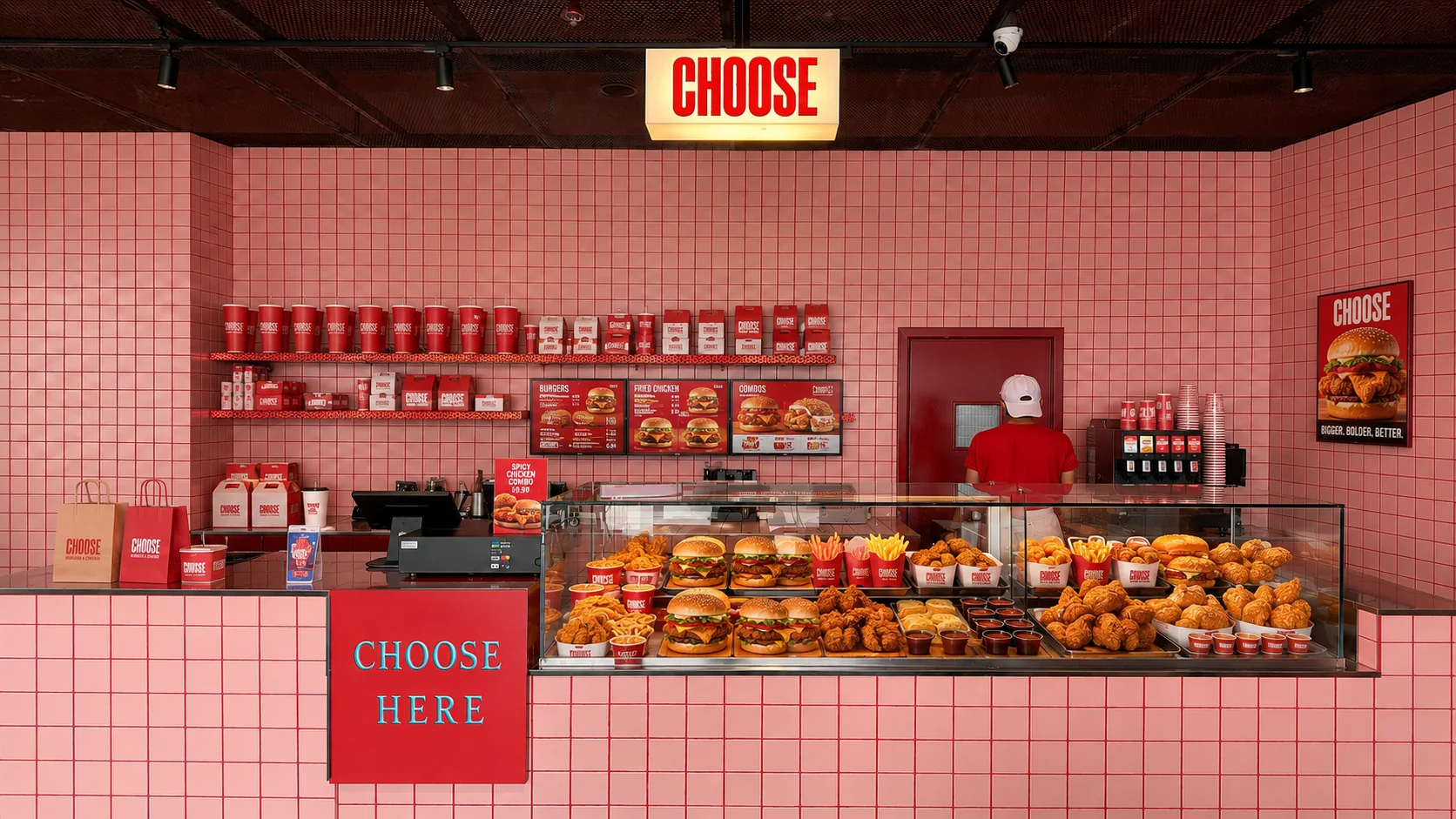
Every delivery order is an unboxing moment. Custom food wrapping paper turns a burger or sandwich into a branded reveal, vented custom fry bags keep fried sides crisp and start at just 350 units, stickers and labels seal bags and brand jars, and tamper-proof sticker rolls reassure delivery customers that the order arrived untouched. The restaurant takeout packaging guide covers how to build a complete takeout kit.
Small runs do not restrict material choice, either. Recyclable kraft, greaseproof papers, and compostable options all print in short batches, and paper stocks certified under FSC standards verify the fiber comes from responsibly managed forests. The biodegradable materials guide compares these options in depth.
Design Before You Commit: 3D Preview and Samples
Low minimums shrink the cost of a mistake; previewing and sampling shrink the odds of making one.
You do not need a packaging agency to begin — a logo file, your brand colors, and a font choice are enough for a first run. Ecoally's online 3D editor lets you upload a logo, set colors, and see your artwork on the actual product shape — rotate the bag or cup and check how the design wraps around folds, gussets, and seams. That catches the problems flat proofs hide: a logo drifting into a crease, text too small to read at arm's length, brand colors losing contrast on kraft brown. The step-by-step guide to designing custom packaging walks through the process from artwork prep to final preview.
Then order samples before committing to a full run. A sample tells you what a screen cannot: how the paper feels in hand, whether the material stands up to grease and condensation, and how printed colors look under your shop's actual lighting. Sample, adjust, then place the minimum run — the cheapest possible sequence for getting packaging right the first time.
Does Low MOQ Custom Packaging Cost More Per Unit?
Honest answer: usually, yes. Economies of scale are real. A 10,000-unit flexographic run spreads setup across a mountain of units and hits better material pricing, so its per-unit cost beats a small digital run. If per-unit price were the only number that mattered, big MOQs would win.
But per-unit price is the wrong lens for a small business. Compare total risk-adjusted cost instead:
- No plate or die fees. Digital printing skips the tooling charges traditional printers bill before a single unit prints.
- A fraction of the cash outlay. A small run costs little in absolute terms, keeping cash free for ingredients, staff, and marketing.
- Zero write-off risk. If a design misses, you are out a small batch — not a warehouse. Obsolete stock is a total loss no matter how attractive its per-unit price was.
- No storage overhead. Weeks of stock fits on a shelf, not in a rented unit.
The economics also improve over time: once a design proves itself, reorder at a higher quantity tier and the per-unit price steps down. Treat the first small run as market research that also happens to serve customers — the premium you pay per unit is the price of learning what works before you scale it. Compared with the cost of a rebrand stranded under thousands of obsolete bags, it is a bargain.
Frequently Asked Questions
What is a typical MOQ for custom food packaging?
Traditional flexographic and offset printers commonly set minimums in the thousands — 5,000 to 10,000 units per design is a normal floor for custom-printed bags, cartons, and labels. Digital and short-run suppliers accept orders in the hundreds, sometimes fewer. Minimums vary by product, material, and print method, so always check the specific product page.
Why do packaging suppliers have minimum order quantities at all?
Setup dominates the cost of a traditional print run: custom plates, press changeover, and color calibration cost roughly the same at any quantity. A high MOQ guarantees enough units to absorb that setup cost. Digital printing has almost no setup, which is exactly what makes low minimums possible.
Does the MOQ apply per design or per order?
In general, each printed design is its own production run, so the minimum applies per design rather than per cart. The practical upside of low minimums is that running two designs side by side — to test which one customers respond to — remains an affordable experiment.
Can I reorder in a larger quantity once a design proves out?
Yes, and that is the intended workflow. Your artwork is stored digitally, so reordering requires no new plates or setup fees, and larger quantity tiers bring the per-unit price down. Many businesses treat the first small run as a paid test, then scale the winner.
Are eco-friendly materials available in small runs?
Yes. Recyclable kraft paper, greaseproof papers, and compostable options all print in short digital runs, so low minimums and sustainable materials are not in tension. Certifications for compostability or responsible forestry apply to the material itself, not the run size.
How do samples fit into the MOQ picture?
Samples let you evaluate material, size, and print quality without committing to even the minimum run. Order samples first, confirm the product performs at your counter, then place your first custom run with confidence. It is the cheapest insurance in the entire process.
Custom packaging for small businesses no longer requires a big-brand budget. Browse all customizable products to compare materials and minimums, design in 3D, and start with samples before you commit to a run.