



Foil Sandwich Wrap and Insulated Foil Bags: Hot Food Packaging Sizes, Uses, and 2026 Costs
Foil sandwich wrap is the sheet a delivery burger, a cheesesteak, or a foil-bagged hot dog arrives in: thin aluminum foil laminated to a paper backing, folded around hot food so it stays hot, stays together, and does not soak the bag. Foil-lined bags do the same job for fried chicken, kebabs, and whole hot meals. Both cost a few cents more than plain paper, and both solve the two complaints that drive bad delivery reviews: cold food and soggy bags.
This guide explains what foil sandwich wrap actually is and how it differs from plain foil or greaseproof paper, which of the three foil formats fits which menu item, what sheet and bag sizes to order, how to wrap a sandwich in foil, whether any of it can be recycled, and what custom-printed foil wrap and foil bags cost in 2026, from about $0.07 per bag at volume to about $1.30 per printed 12 × 12 in sheet on a first run of 250.
What Is Foil Sandwich Wrap?
Foil sandwich wrap is a laminate: a layer of aluminum foil bonded to a sheet of paper. The foil faces the food and reflects heat back into it; the paper faces out, takes the print, and gives the sheet enough body to fold without tearing. Because the foil holds a crease, the wrap "dead-folds" around a sandwich and stays closed without tape, which plain paper will not do.
Two constructions are sold under the name:
| Type | Construction | What it does best | Common names |
|---|---|---|---|
| Foil-lined paper | Flat foil laminated to paper, usually 40–60 gsm total | Heat retention, grease barrier, clean print surface, lowest cost of the two | Foil-lined paper, foil wrap sheets, foil food wrapping paper |
| Insulated (cushion) foil wrap | Foil laminated to an embossed honeycomb paper that traps air | Extra insulation for long holds in heated cabinets and long delivery runs | Insulated foil sandwich wrap sheets, honeycomb wrap, cushion foil |
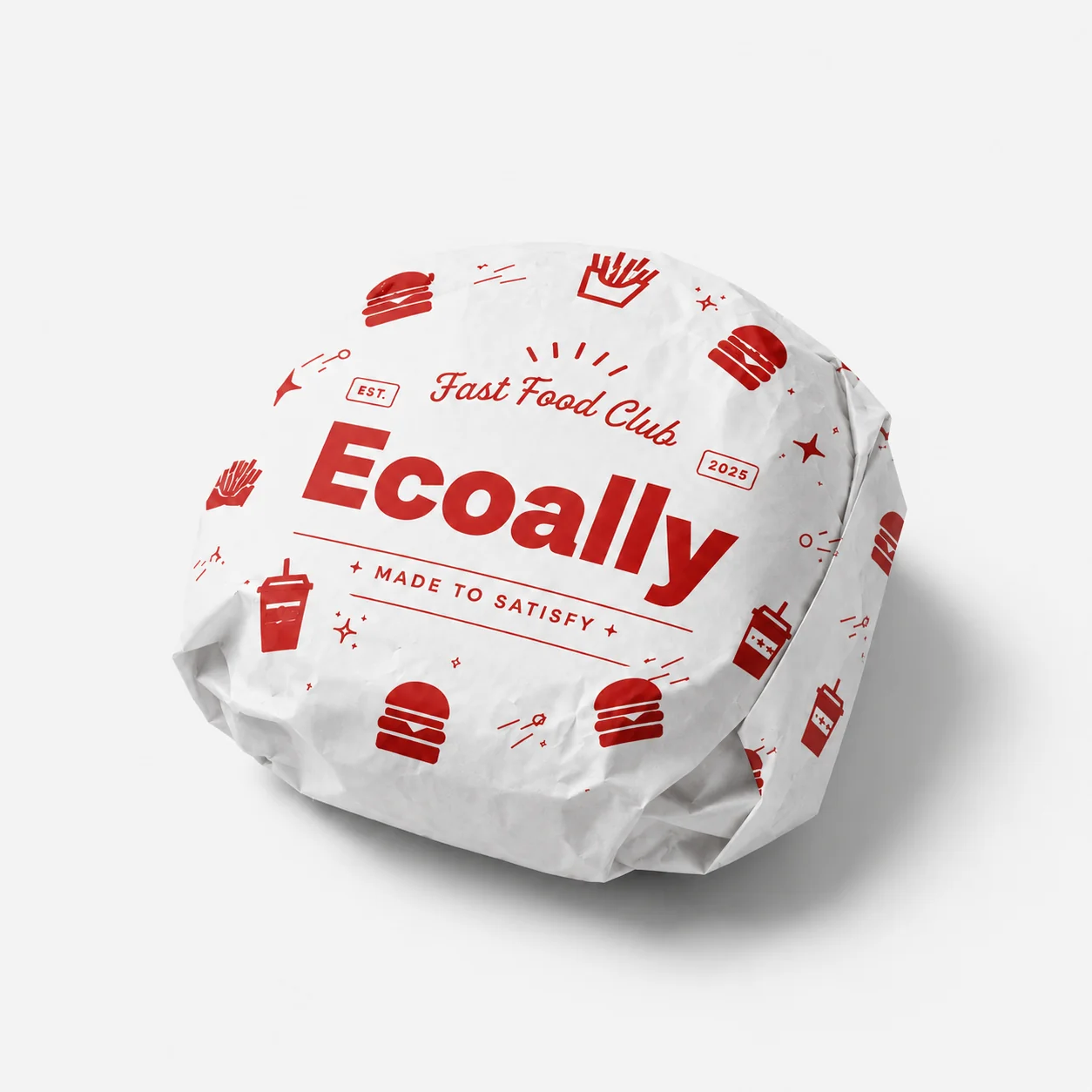
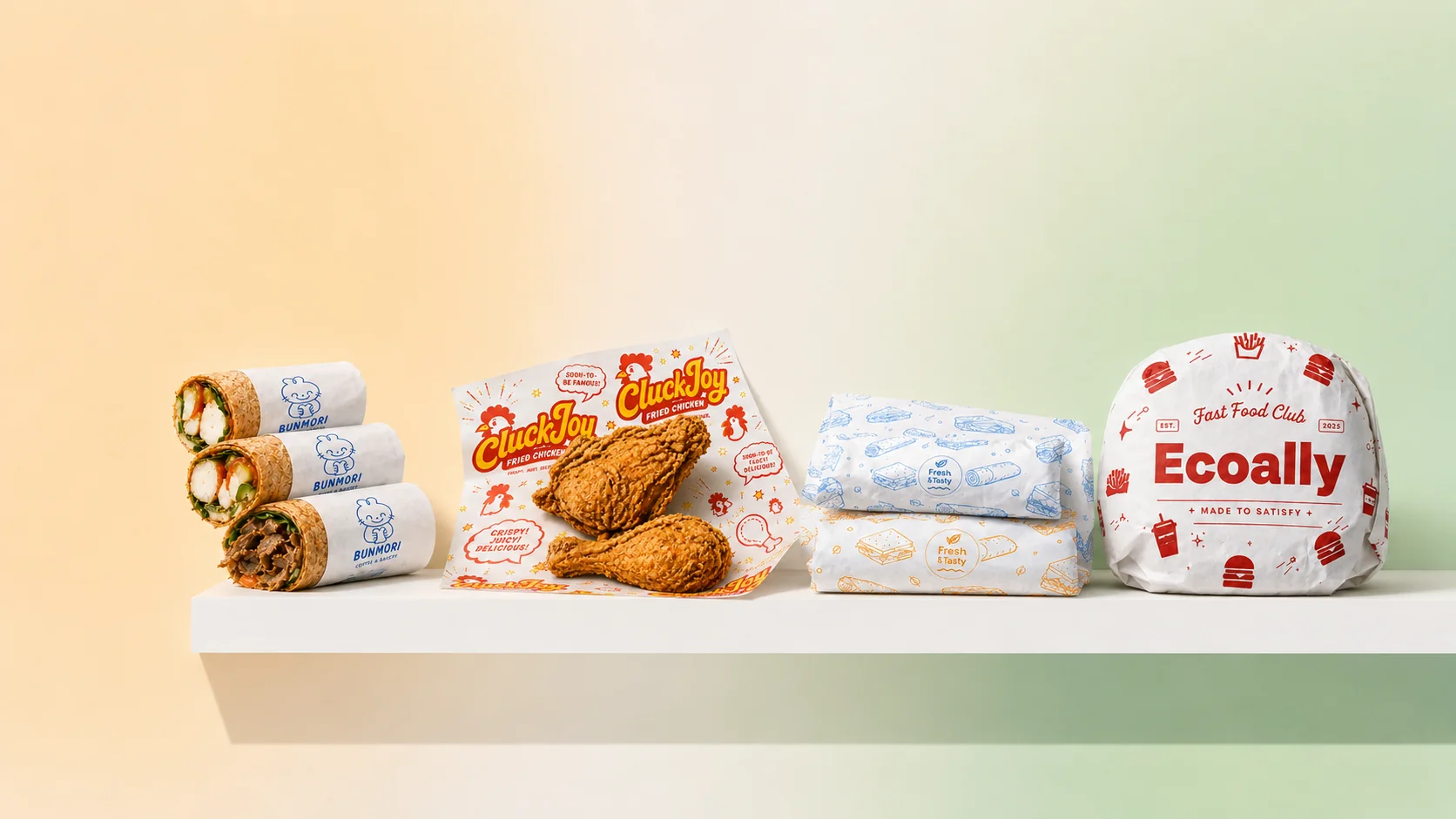
Both are sold as pre-cut sheets, which is what kitchens want: no roll to tear, one motion per wrap. Ecoally's custom foil-lined paper is the first type: a silver foil interior laminated to a white paper exterior at 50 gsm, printed on the paper side with water-based food-safe ink, in eleven sheet sizes from 6 × 6 in to 20 × 20 in and from 250 sheets.
The Three Foil Formats for Hot Food
"Insulated foil bags" means three different products to three different buyers, and the search results mix them up. For a food business the useful split is:
| Format | What it is | Menu items | Ecoally version |
|---|---|---|---|
| Foil sandwich wrap sheets | Pre-cut foil-laminated paper sheets folded around the item | Burgers, cheesesteaks, subs, burritos, hot dogs, breakfast sandwiches | Custom foil-lined paper, 11 sizes, from 250 sheets |
| Insulated foil bags (gusseted) | Open-mouth paper bags with a foil-faced interior and a pointed bottom, like a sandwich bag | Hot dogs, wrapped sandwiches, kebabs, fried chicken pieces, hot entrees | Custom insulated foil bags, 75 gsm greaseproof paper with foil-faced interior, three sizes, from 2,500 |
| Foil-lined SOS bags | Flat-bottom, self-standing takeout bags with a foil lining | Whole hot orders: chicken boxes, fries, combo meals, catering trays | Custom foil-lined SOS bags, nine sizes, from 500 |
The fourth thing that shows up under the same keyword, the reusable metalized thermal tote with a zipper, is a different category: a carrier that a driver reuses, not a package the customer keeps. If you run delivery, you may use both, but only the three formats above carry your brand to the customer.
How Much Longer Does Foil Keep Food Hot?
Foil wrap works two ways. Aluminum reflects radiant heat back into the food instead of letting it escape, and the sealed fold slows the evaporation that cools hot food fastest. Cushion foil adds a third mechanism: the air pockets in the honeycomb paper slow conduction, which is why heated-cabinet operators specify it.
What you will not find is a manufacturer-published holding time, because the result depends on the food, the starting temperature, the ambient temperature, and whether the wrap is vented. Ecoally's own guidance on the insulated foil bag page is deliberately modest: a hot entree holds temperature noticeably longer than in plain paper on a short delivery or a counter-to-car handoff, and the bags are not a substitute for a heated bag or an insulated carrier on long routes.
The practical test is simple. The US Food Code's hot-holding line is 135°F, so wrap one sandwich in foil and one in plain greaseproof paper, put both in your usual delivery bag, and probe the centers at 10, 20, and 30 minutes. Most kitchens find that foil buys them the extra 10–20 minutes that covers a cross-town delivery, and that is the decision: if your average delivery runs under 15 minutes, plain greaseproof paper is enough; past that, foil-lined wrap or a foil-lined bag earns its price.
One caution from every kitchen that has switched: foil holds steam as well as heat. A crisp bun or fried coating wrapped airtight arrives soft. Leave the seam loosely folded, or wrap and then slip the item into a vented box, and the texture survives.
Sizes: Which Sheet and Bag Fits What
Foil sheets wrap on the diagonal like any sandwich wrap, so the sheet's diagonal is the length that matters. The industry's standard pre-cut sizes are 10.5 × 14 in, 12 × 12 in, and 14 × 16 in; Ecoally's eleven sizes bracket all three.
| Sheet size | Diagonal | Fits |
|---|---|---|
| 10 × 10 in | 14 in | Breakfast sandwiches, sliders, single-patty burgers |
| 10 × 12 in | 16 in | Hot dogs, sausages, 6-inch subs, classic burgers |
| 12 × 12 in | 17 in | The standard: cheeseburgers, chicken sandwiches, wraps |
| 12 × 16.5 in | 20 in | Burritos, footlong hot dogs, 8–10 inch subs, cheesesteaks |
| 15 × 15 in | 21 in | Doubles, loaded burgers, gyro and shawarma wraps |
| 16 × 18 in, 20 × 20 in | 24–28 in | Whole rotisserie items, tray liners, family portions |
For bags, size by the item plus the wrap already around it:
| Bag | Size (W × H × D) | Fits |
|---|---|---|
| Insulated foil bag, small | 5 × 8 × 2 in | A hot dog, a wrapped breakfast sandwich, a single burger |
| Insulated foil bag, medium | 5 × 12.5 × 3.25 in | Subs, burritos, kebab wraps, a wrapped cheesesteak |
| Insulated foil bag, large | 7 × 14 × 4 in | Fried chicken pieces, a boxed entree, two wrapped sandwiches |
| Foil-lined SOS bag | 3.5 × 5.9 × 2.4 in up to 11 × 11 × 5.9 in | Whole orders that need to stand on a seat or a counter |
The gusseted insulated bag opens wide and stands on the counter during assembly, which is why hot dog and chicken counters favor it; the flat-bottom SOS bag stands on its own when loaded, which is why delivery operations favor it. Pick the bag by how it sits during the ride, not by capacity alone.
How to Wrap a Sandwich in Foil
The wrap that holds through delivery is the same diamond fold used for paper, with the foil face against the food:
- Lay the sheet as a diamond with the foil side up and the printed paper side down.
- Set the sandwich in the center. Fold the bottom corner up over the top of the sandwich and press it so the foil creases.
- Fold the left corner across, then the right corner across, so they overlap on top.
- Fold the top corner down. For a tight delivery wrap, tuck it underneath; for anything crisp, leave the last fold loose so steam can escape.
- To cut a sub in half for presentation, slice straight through the wrapped sandwich with a serrated knife; the foil holds each half closed.
For hot dogs and burritos, roll instead of folding: place the item along one edge, roll once, fold the ends in, and finish the roll. Insulated foil bags skip the fold entirely: slide the item in, fold the top over once, and the foil face holds the fold.
Is Foil Sandwich Wrap Safe for Food? Oven, Microwave, and Freezer
For wrapping and holding hot food, yes. Foil has been the standard hot sandwich wrap in American quick service for decades, and the paper backing on a laminated sheet keeps the foil from tearing against the food. Two sensible limits apply: do not use foil wrap in a microwave, and do not leave very acidic or heavily salted foods in direct foil contact for days, which can pit the foil. Neither limit affects a sandwich that is eaten within hours.
Ovens are a product-by-product question. Some retailers rate their cushion foil sheets for a short reheat at low temperature, typically no more than 30 minutes at or below 250°F with the foil face out so the paper does not scorch. Treat that as the ceiling for any paper-backed foil, and ask your supplier for a written rating before putting a printed sheet in an oven; Ecoally's foil-lined paper is sold as a wrap, not an oven paper. Freezing is fine for any of these laminates, which makes foil wrap a reasonable choice for prepared sandwiches that go from freezer to warming cabinet.
Foil vs Greaseproof Paper vs Cling Film
The three materials line up by temperature and time:
| Wrap | Keeps food hot | Grease barrier | Breathes | Best for |
|---|---|---|---|---|
| Foil-lined paper | Yes | Complete | No (vent the fold) | Delivery, cheese-heavy and saucy items, hot dogs, chicken |
| Greaseproof paper | No | Good, through refined fiber rather than a film | Yes | Counter service, crisp buns, short takeout, lowest cost |
| Cling film | No | Complete, but traps steam | No | Cold sandwiches held in a fridge, never hot food |
The counter-versus-delivery rule covers most menus: greaseproof paper when the customer eats within 15 minutes and crispness matters, foil-lined when the item travels or carries a lot of cheese and sauce, and cling film only for cold items. The paper side of that choice, including sizes and costs for plain custom burger wrapping paper, is covered in our burger wrapping paper guide, and the broader paper lineup in the deli paper and food wrapping guide.
Are Foil-Lined Bags and Wraps Recyclable?
Usually not through curbside programs. Foil and paper are each recyclable on their own, but once laminated together, sorting equipment cannot separate the layers, so most municipal programs reject foil-lined paper, foil-lined bags, and insulated foil wrap outright. Recycling educators such as Recycle Coach explain the problem as assembly rather than material: the bond is what makes the package unrecyclable. A quick check is the tear test: a bag that rips cleanly like paper is probably unlined; one that stretches or shows a silver layer at the tear is a laminate and belongs in the trash unless your local program says otherwise.
Plain aluminum foil is a separate case; clean foil balled up is accepted by some programs. For a brand that markets sustainability, the honest configuration is plain uncoated greaseproof paper for everything eaten at the counter and foil only where the delivery route demands it, with a disposal line printed on the bag. The material trade-offs across paper, foil, and bioplastic linings are compared in our biodegradable materials guide.
What Foil Sandwich Wrap and Foil Bags Cost in 2026
Surveying published US prices in October 2026:
| Item | Typical price | Notes |
|---|---|---|
| Unprinted insulated foil sheets, restaurant supply | $0.05–$0.09 per sheet by the 500 to 2,000 case | 10.75 × 14 in and 12 × 12 in are the volume sizes |
| Unprinted insulated foil sheets, small packs | $0.23–$0.26 per sheet | 50 to 200 count packs sold to home users and food trucks |
| Custom printed foil sheets | $0.13–$1.30 per sheet depending on quantity | Most printers quote from 500 or 1,000 sheets; a few from 250 |
As a live example, Ecoally's printed foil-lined paper in 12 × 12 in with one-color print runs about $1.27 per sheet at 250, $0.66 at 500, $0.36 at 1,000, $0.23 at 2,000, $0.17 at 5,000, and $0.13 at 10,000; the 10 × 10 in sheet is about $1.21 at 250 and $0.10 at 10,000, and full-color print adds between one and nine cents per sheet depending on the tier. For comparison, the plain greaseproof burger wrap in the same size costs about 40% less at every tier; put the other way, foil runs roughly 60% more, which is the premium you pay for the laminate.
Bags are priced per bag with full-color print included. The insulated foil bag runs about $0.27 at 2,500 for the small 5 × 8 × 2 in size, $0.17 at 5,000, $0.12 at 10,000, and $0.07 at 50,000; the large 7 × 14 × 4 in bag is about $0.54 at 2,500, $0.36 at 5,000, and $0.26 at 10,000. Foil-lined SOS bags with a logo print start at 500 bags, about $0.82–$0.96 each for the three smallest sizes, dropping to $0.16–$0.25 at 10,000; full-bleed artwork on the SOS bag is a separate 20,000-bag tier, from about $0.15 per bag for the 4.7 × 8.5 × 2.8 in size up to about $0.53 for the largest 11 × 11 × 5.9 in bag.
The per-order math: a delivery cheesesteak wrapped in a $0.23 foil sheet and dropped into a $0.22 foil-lined SOS bag carries $0.45 of hot-holding packaging, about 3% of a $15 ticket and the difference between a four-star and a two-star delivery review. Staging rules for any of these items follow the pattern in low-MOQ custom packaging: start at the smallest tier, run it on real deliveries for two weeks, then scale.
Design and Ordering Notes
- Print lands on the paper side. The foil face stays bare and touches the food, so artwork is specified for a white paper exterior. One dark color on white is the economical choice; full color costs a few cents more per sheet and suits illustrated patterns.
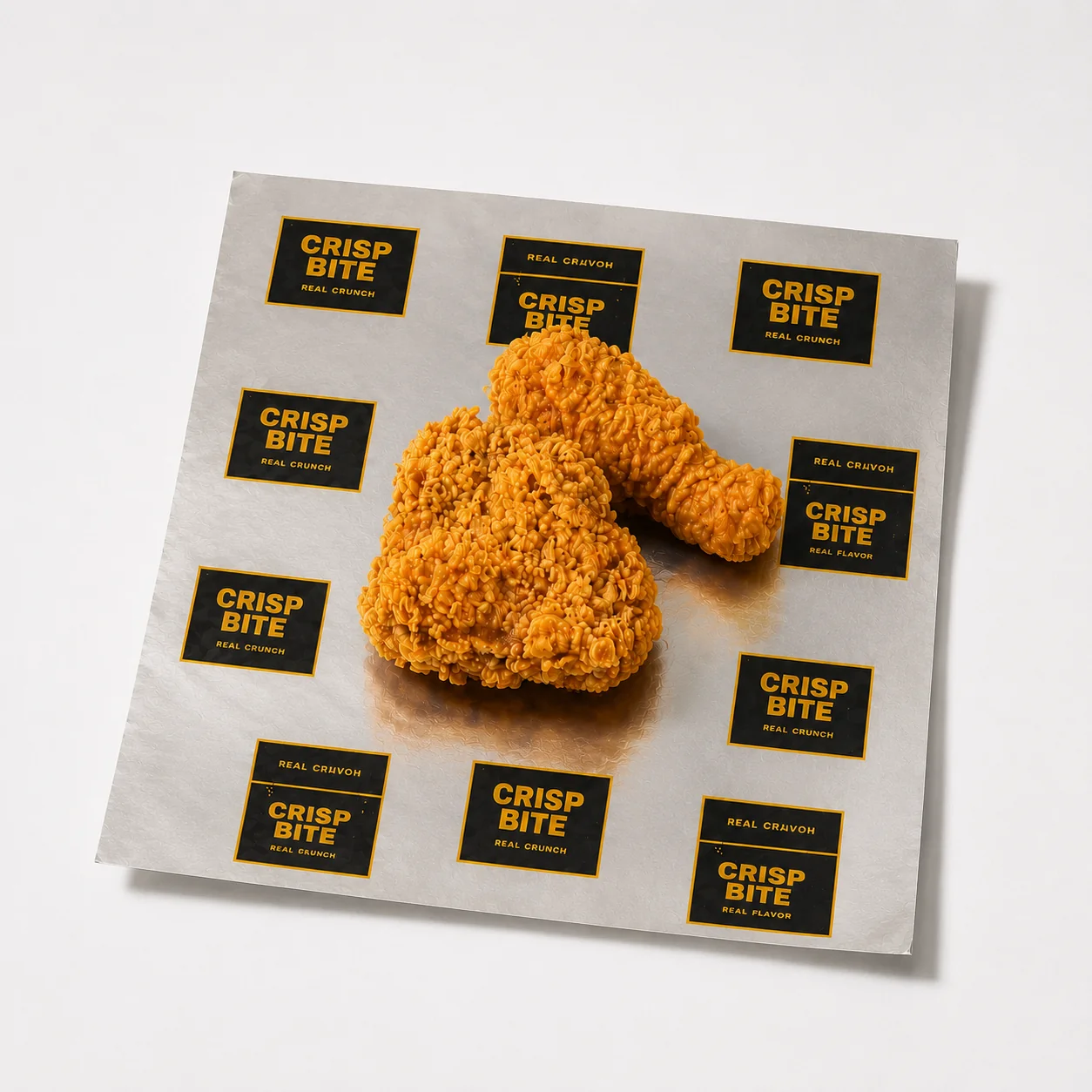
- Repeating patterns survive the fold. As with paper wraps, a single centered logo often ends up inside a crease; a step-and-repeat pattern shows the brand from every angle. Bags are different: the logo sits on the face panel and stays visible, so a single mark works.
- Match minimums to volume. Printed foil sheets start at 250, foil-lined SOS bags at 500, and gusseted insulated foil bags at 2,500. A single location testing foil should start with sheets, then add bags once delivery volume justifies a 2,500-bag run.
- Pair the wrap with the box. Fried chicken and loaded fries travel best in a fried chicken box or vented burger box inside a foil-lined bag; the box protects the coating while the bag holds the heat.
- Print the disposal line. "Foil-lined, please place in trash" on the bag is more honest than a leaf icon, and it costs nothing.
- Keep plain greaseproof for the counter. Running plain sandwich bags and greaseproof sheets in the same artwork for dine-in keeps the foil cost where it earns its keep. The full takeout lineup, container by container, is in our restaurant takeout packaging guide.
Frequently Asked Questions
Is it safe to wrap sandwiches in aluminum foil?
Yes for hot sandwiches eaten within hours, which is why foil has been the standard quick-service wrap for decades. Paper-backed foil sheets add a paper layer that keeps the foil from tearing against the food. Avoid microwaving foil, and avoid storing very acidic foods in direct foil contact for days.
Is it better to wrap sandwiches in foil or cling film?
Foil for hot sandwiches and anything that travels: it holds heat, blocks grease, and dead-folds closed. Cling film only for cold sandwiches held in a refrigerator; around hot food it traps steam and turns bread soft. For crisp items eaten at the counter within 15 minutes, plain greaseproof paper beats both.
How do you wrap a sandwich in foil?
Lay the sheet as a diamond with the foil side up, center the sandwich, fold the bottom corner over the top, fold the left and right corners across, then fold the top corner down and tuck it under. Leave the last fold loose for crisp items so steam can escape. Hot dogs and burritos are rolled from one edge with the ends folded in.
Where can I find insulated foil sandwich wrap sheets?
Restaurant supply houses sell unprinted sheets by the 500 to 2,000 case in 10.75 × 14 in, 12 × 12 in, and 14 × 16 in, typically for five to nine cents a sheet. Printed foil-lined sheets come from custom food paper printers; Ecoally prints them in eleven sizes from 250 sheets.
Are foil-lined bags recyclable?
Rarely through curbside programs, because the foil is laminated to the paper and sorting equipment cannot separate the layers. Check your local program's accepted list; most direct foil-lined bags and wraps to the trash. Clean plain aluminum foil is accepted by some programs, and unlined paper bags by most.
What is the disadvantage of foil insulation for food?
Three trade-offs: it holds steam as well as heat, so crisp foods soften unless the wrap is vented; it costs roughly 60% more than plain greaseproof paper in the same size; and the laminate is not recyclable in most programs. For counter service and short takeout, plain paper avoids all three.
Do insulated foil bags keep food cold as well as hot?
Yes, for short periods. The same foil face that reflects heat inward for a hot item reflects warmth outward for a cold one, so a foil-lined bag keeps a chilled sandwich or salad cooler for a counter-to-car trip. For anything longer, use an insulated carrier or ice packs; the bags are packaging, not coolers.
Keep the Order Hot and the Logo Visible
Decide by delivery time: plain greaseproof paper for anything eaten within 15 minutes, foil-lined wrap or a foil bag for anything that rides. Size sheets by the diagonal, bags by how they sit in the car, vent the fold for crisp items, and print a disposal line. Upload your artwork to Ecoally's custom foil-lined paper page to preview it on the sheet, and add insulated foil bags or foil-lined SOS bags in the same artwork once the delivery channel justifies the volume.