Custom Burger Boxes, Fry Boxes & Takeout Boxes: A 2026 Buyer's Guide
Custom burger boxes are the most visible packaging a quick-service kitchen owns: the box is in the customer's hands, in the delivery photo, and on the table for the entire meal. Prices online range from under a dime to more than a dollar per box, and the listings rarely explain why. The short answer: board weight, grease coating, print coverage, and quantity. Printed food boxes from short-run suppliers typically land between $0.20 and $0.90 per box at restaurant volumes, with minimums that have dropped to a few hundred units.
This guide covers the three boxes fast-food, food-truck, and delivery menus actually use — burger clamshells, fry cartons, and chicken or tender boxes — plus the takeout-box formats around them, with the sizing, venting, and material decisions that keep food crisp, and an honest read on 2026 costs, minimum orders, and eco-friendly choices.
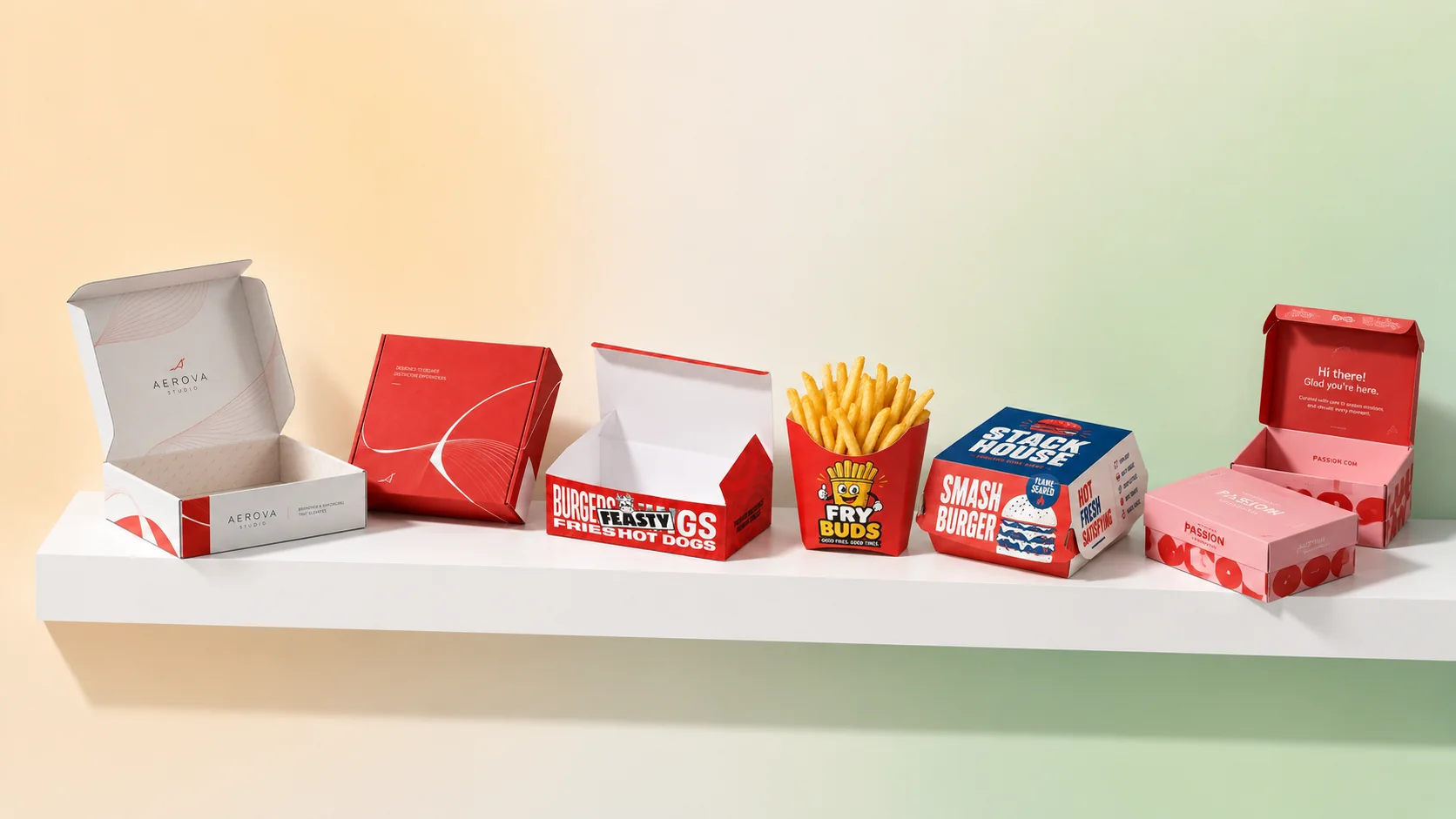
The Takeout Box Family, and Which One Each Menu Item Needs
| Box | Format | Typical board | Best for |
|---|---|---|---|
| Burger box | Hinged clamshell, tuck or lock closure | 200–350 gsm food-grade paperboard | Burgers, sliders, breakfast sandwiches |
| French fry box | Open-top scoop carton | Grease-resistant coated paperboard | Fries, tots, onion rings, churros |
| Chicken / tender box | Low clamshell or tuck-top tray | Coated paperboard, often vented | Wings, tenders, nuggets, fried chicken pieces |
| Takeout meal box | Tuck-top or lock-corner box | Heavier paperboard, sometimes corrugated | Entrees, rice boxes, combo meals |
| Pail-style takeout box | Folded pail with wire or paper handle | Poly- or aqueous-coated board | Noodles, rice, saucy dishes |
Two principles run through all five. Anything fried or hot needs a grease barrier in the board, and anything that steams needs a way to let steam out — a sealed box turns crisp fries soft in the four minutes between the pass and the car.
Custom Burger Boxes: Sizes, Closures, and Board
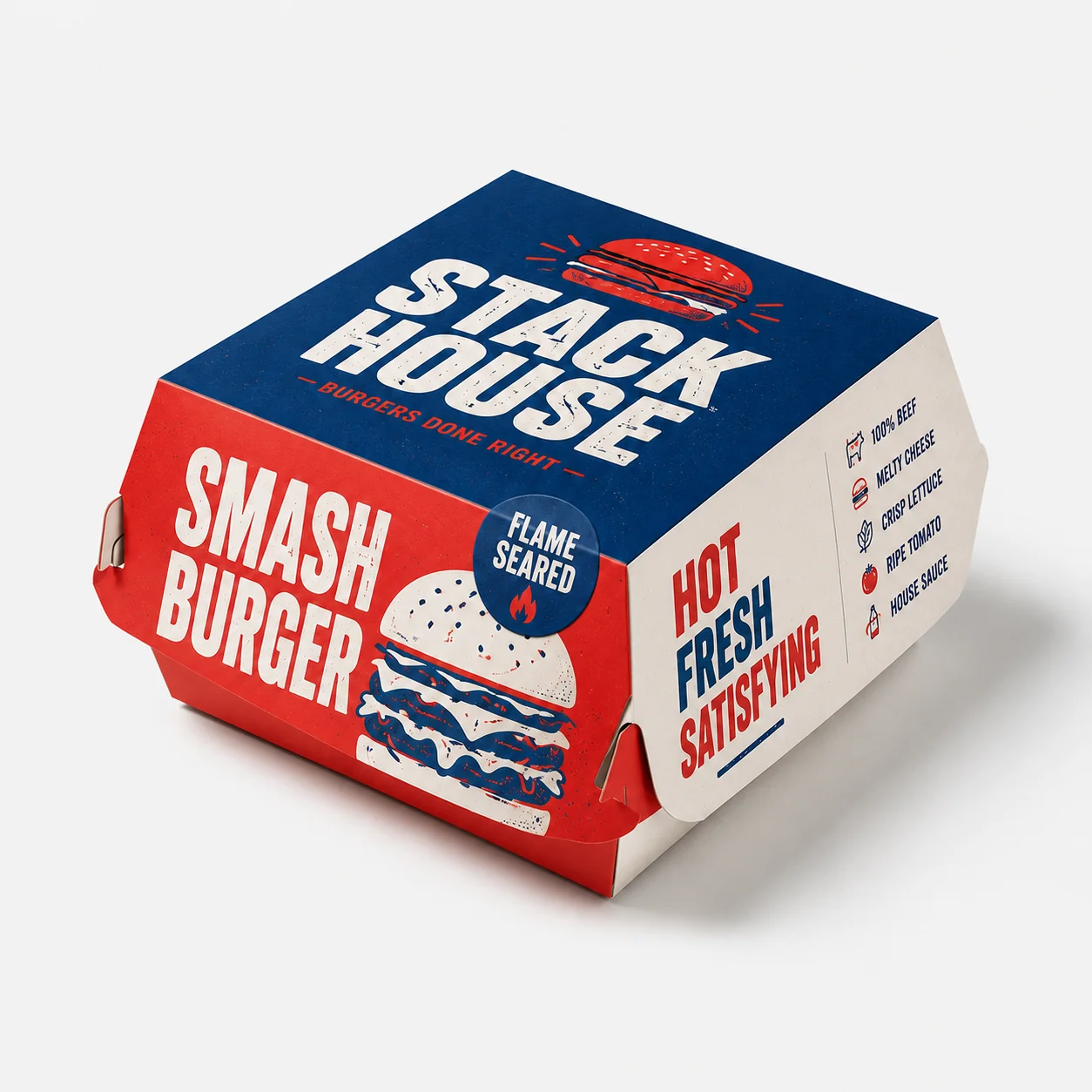
A burger box has one job harder than it looks: hold a stacked, sauced sandwich upright through a bag, a car ride, and a hand-off, then open cleanly. The decisions that matter:
- Interior size against your bun. Measure the finished burger, not the bun alone. Single patties on a 4-inch bun fit a box around 4 × 4 in; doubles and stacked builds need 4.5 in or more of height clearance so the lid does not crush the top bun. Ecoally's custom burger boxes come in two sizes (3.78 × 4.06 × 2.76 in and 4.33 × 4.53 × 3.15 in) on 205 gsm food-grade paperboard, which covers the single-and-double range most menus run.
- Closure. Tuck-in tabs are fastest on the line; lock-tab closures survive delivery bags better. If most orders leave in a driver's bag, pay for the lock.
- Board weight. Around 200 gsm is the sweet spot for burgers: stiff enough to hold shape in a stack, light enough to fold fast. Heavier board mostly helps oversized or double-decker builds.
- Print coverage. Full-color floods look strong in photos but cost more and need the right board and coating; a one- or two-color logo on kraft is the budget classic and hides scuffs.
Custom French Fry Boxes: Grease, Steam, and Capacity
Fries punish packaging. Oil migrates through untreated board within minutes, and trapped steam softens the crust. Fry cartons solve both with a grease-resistant coating and an open top, which is why they should never be fully sealed inside a bag while hot.
Size by portion weight, not by visual size: small cartons hold roughly 3–4 oz, mediums 5–6 oz, and the tall large formats 7 oz and up. Ecoally's custom french fry boxes run three sizes from 3.0 × 1.6 × 3.1 in up to 3.5 × 2.0 × 5.1 in on grease-resistant coated paperboard, which maps to a standard small-medium-large fry menu. If your menu sells loaded fries with sauce on top, consider the chicken or tender box format below instead; a scoop carton cannot hold a wet topping level.
Chicken, Wings, and Tender Boxes
Fried chicken packaging needs the grease barrier of a fry box with the closure of a burger box, plus venting so the coating stays crisp. Look for a low clamshell or tuck-top tray with a coated interior and, ideally, vent slots. Ecoally's custom fried chicken boxes use greaseproof coated paperboard in a 4.7 × 3.0 × 1.8 in tray, sized for tenders, wings, and nugget portions.
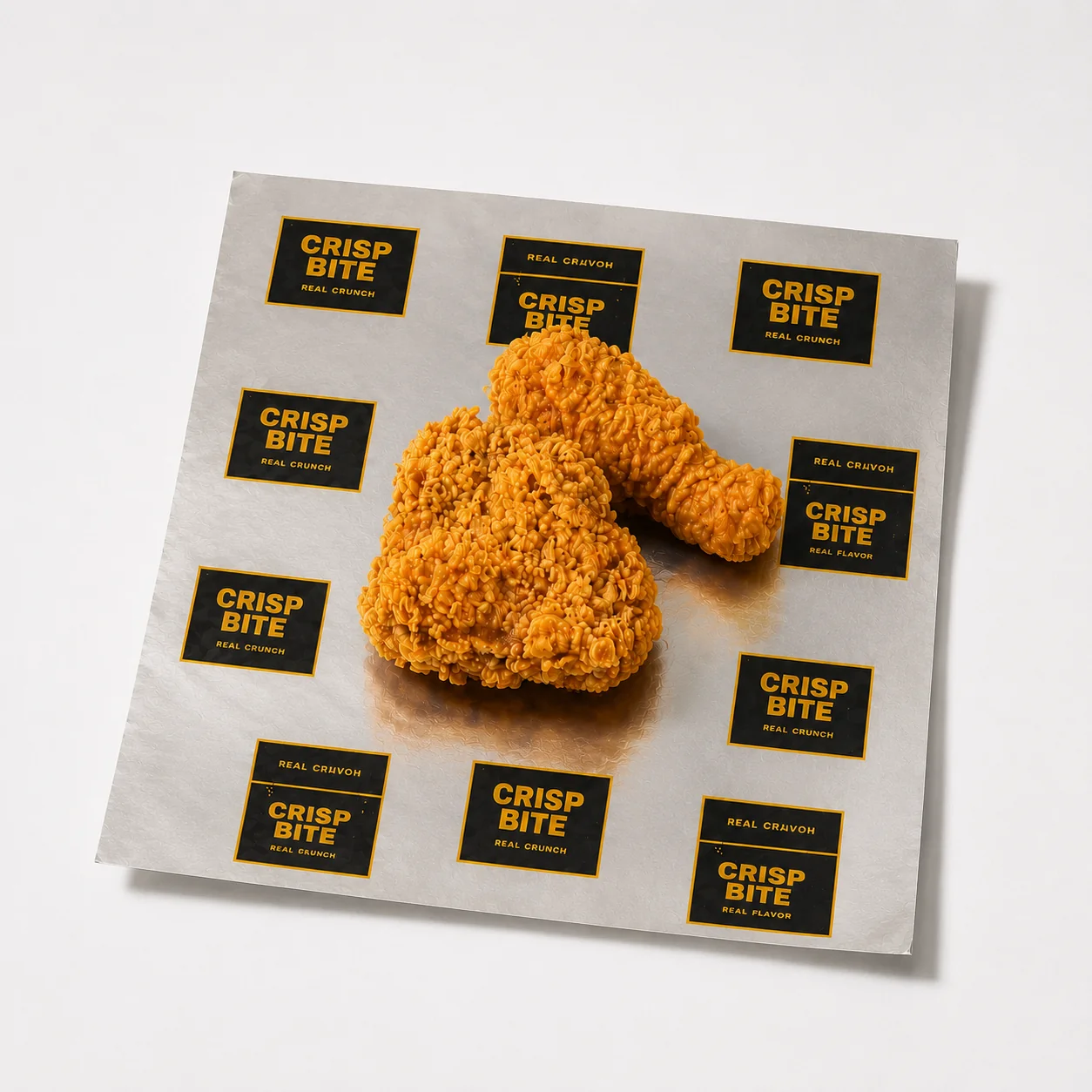
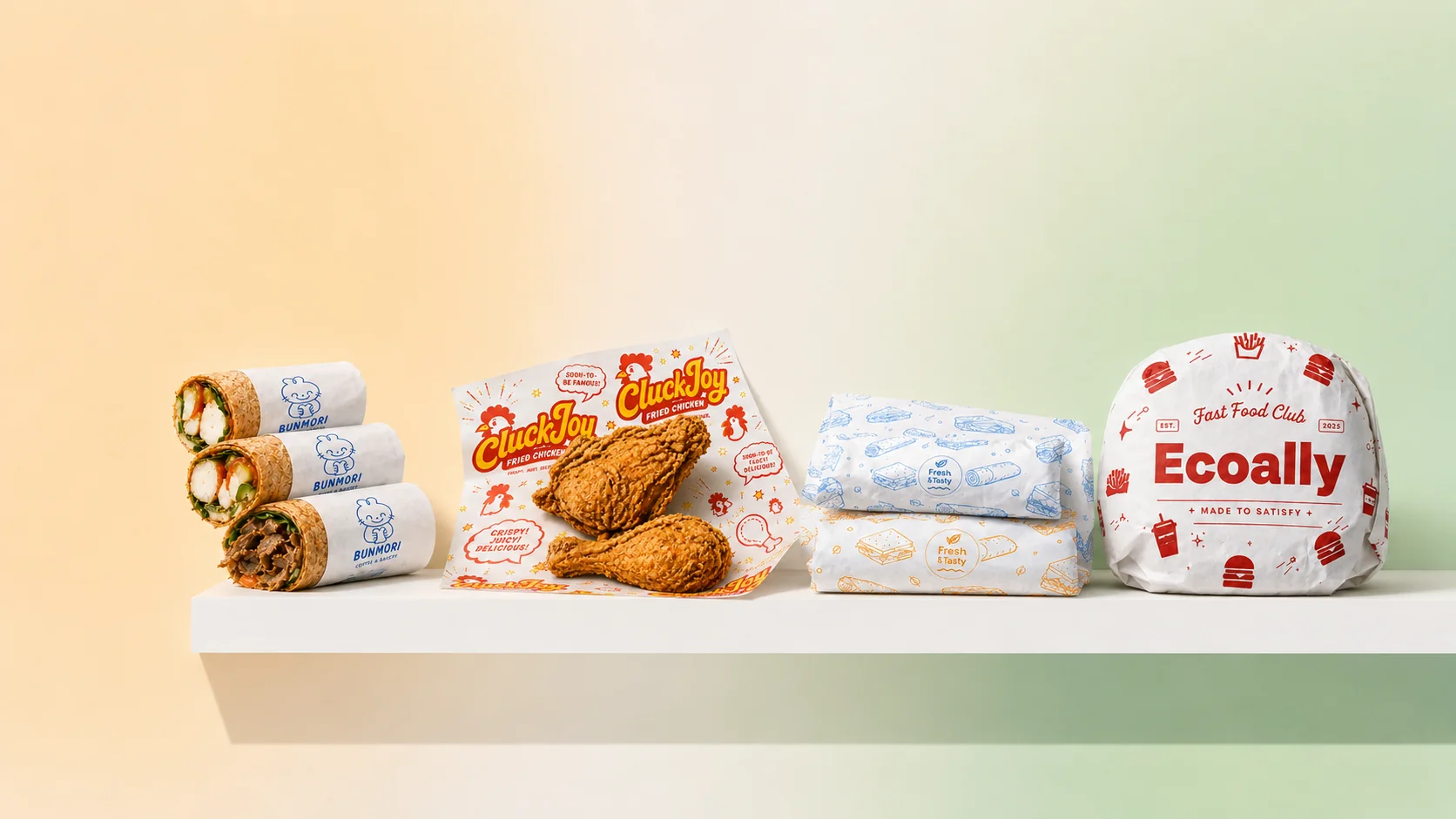
For combo meals, most operators pair one of these boxes with a printed liner sheet under the food and a paper bag around everything: the liner catches oil and adds a second branded surface. The sheet side of that setup is covered in our deli paper and food wrapping guide, and the bag side pairs naturally with SOS takeout bags.
What Custom Takeout Boxes Cost in 2026
Surveying published US prices in September 2026, printed food boxes separate into three tiers, and the spread is mostly about board, coating, and quantity rather than printing:
| Route | Typical price per box | Minimum | Notes |
|---|---|---|---|
| Short-run online printing | $0.30–$1.15 at 200–1,000 boxes | 100–500 boxes | Digital print, fast turnaround, best for testing |
| Mid-volume printing | $0.15–$0.50 at 2,000–10,000 boxes | 1,000+ boxes | Where most single-location operators settle |
| Wholesale / factory-direct | $0.09–$0.30 at 10,000+ boxes | 5,000–10,000+ | Cheapest per box; watch coating quality and lead time |
As a live example of the short-run curve, Ecoally's food boxes start at 200 units: burger boxes from about $0.65 per box at 200 down to about $0.31 at 10,000; fry boxes from about $0.85 down to about $0.19; chicken boxes from about $0.49 down to about $0.21, with the full tier tables shown on each product page. The steep drop is normal for die-cut boxes: tooling and setup dominate the first few hundred units, then the board itself is cheap.
Run the consumption math before choosing a tier. A counter selling 150 burgers a day uses roughly 4,500 boxes a month, so a 2,000–5,000 box order is a re-order rhythm, not inventory risk. For a new concept still changing its logo, start at the 200-unit tier, test the box with your actual burger and a real delivery bag, and scale once the design is stable. The same staged logic applies to every packaging type, covered in low-MOQ custom packaging.
Sizing, Dielines, and Templates
Most "burger box template" searches come from operators trying to size a box before ordering. The practical method: build your heaviest, tallest menu item, measure width, depth, and height with an extra half inch of clearance, and check whether it needs to stack (delivery bags) or stand alone (counter service). A supplier's dieline shows the flat cut-and-fold shape; the numbers that matter are the interior dimensions after folding, not the flat sheet. Online ordering has quietly made this easier — Ecoally previews your artwork on the folded box in 3D, so logo placement across the lid and sides is settled before production.
Eco-Friendly Takeout Boxes Without the Greenwashing
Paperboard boxes are already the eco-friendly default compared with foam clamshells, but three details decide whether the box is genuinely recyclable or compostable:
- What makes it grease-resistant. Aqueous (water-based) coatings keep the box recyclable in most paper streams; polyethylene lamination generally does not. A growing list of US states also bans PFAS grease treatments in food packaging, so "PFAS-free" is a standard question for any coated box.
- Board and inks. Uncoated kraft with water-based inks composts in industrial facilities where paper packaging is accepted; food-soiled board is better composted than recycled anyway.
- Bagasse as the alternative. Molded sugarcane fiber clamshells handle hot, wet food without a coating and are widely compostable, at the cost of less printable surface and a less crisp brand look.
Whatever you choose, print one disposal instruction on the box. The materials picture, including how long each option takes to break down, is in our compostable food packaging guide.
Frequently Asked Questions
What size custom burger box do I need?
Measure your finished burger. Single patties on a standard 4-inch bun fit a box around 4 × 4 in with 2.75 in of height; doubles and stacked builds need roughly 4.5 × 4.5 in and 3 in or more of height. When in doubt, size up half an inch so the lid never presses the bun.
Are custom burger boxes greaseproof?
They should be. Burger boxes use food-grade paperboard, and fry and chicken boxes add a grease-resistant coating because fried items release far more oil. Confirm the coating type on the listing; aqueous coatings are the recyclable option, and ask whether the treatment is PFAS-free.
How much do custom burger boxes cost?
In 2026, roughly $0.30–$1.15 per box in short runs of a few hundred, $0.15–$0.50 at a few thousand, and under $0.30 at 10,000+. Fry cartons and chicken boxes follow the same curve. Ecoally's burger boxes, for example, run from about $0.65 at 200 to about $0.31 at 10,000.
What is the minimum order for custom takeout boxes?
Short-run online printers commonly start between 100 and 500 boxes; Ecoally's burger, fry, and chicken boxes each start at 200. Traditional box plants typically require several thousand per size and design.
Can I get a burger box template or dieline before ordering?
Reputable suppliers share dielines on request, and online configurators show the folded box in 3D so you can check artwork placement. The dimensions to trust are interior sizes after folding; use them against your tallest menu item with half an inch of clearance.
Are paperboard takeout boxes recyclable or compostable?
Uncoated or aqueous-coated paperboard is generally recyclable when clean and compostable when food-soiled, where facilities accept paper packaging. Polyethylene-laminated boxes usually are not recyclable. Bagasse clamshells are the coating-free compostable alternative. Acceptance varies by city, so check local guidance before printing a claim.
Put Your Logo on the Box Customers Photograph
The box is the part of the meal that travels, gets photographed, and sits on the table for twenty minutes. Start with the item that leaves your kitchen most — usually the burger box — at the 200-unit tier, test it against your real menu and delivery bag, and build out fry and chicken boxes as the design settles. Upload your logo to Ecoally's custom burger boxes page or browse the full boxes and containers range to preview it in 3D; for the rest of the takeout kit, see the restaurant takeout packaging guide.